Right-side seats deliver superior views on both legs. Takeoff offers the dramatic Han River estuary and Yellow Sea approach, while landing still captures good Huangpu River perspective. The flight path itself crosses the Yellow Sea and approaches from the north, making right-side positioning advantageous for the majority of the journey.
Flown GMP to PVG? Did we get it right?
Flight Path
Seoul to Shanghai is 526 miles (847 km), a flight of about 2 hours 15 minutes.
The flight crosses the Yellow Sea at roughly 34°N latitude. En route, you'll pass over open water with occasional glimpses of Chinese coastal features—the Jiangsu Province coastline becomes visible on the right during descent, with the Yangtze River mouth appearing as a massive sediment plume in the water. The approach into Shanghai brings views of the Yangtze River Delta's extensive port infrastructure and industrial zones before reaching Pudong.
Great circle distance and headings ›

Phase by phase
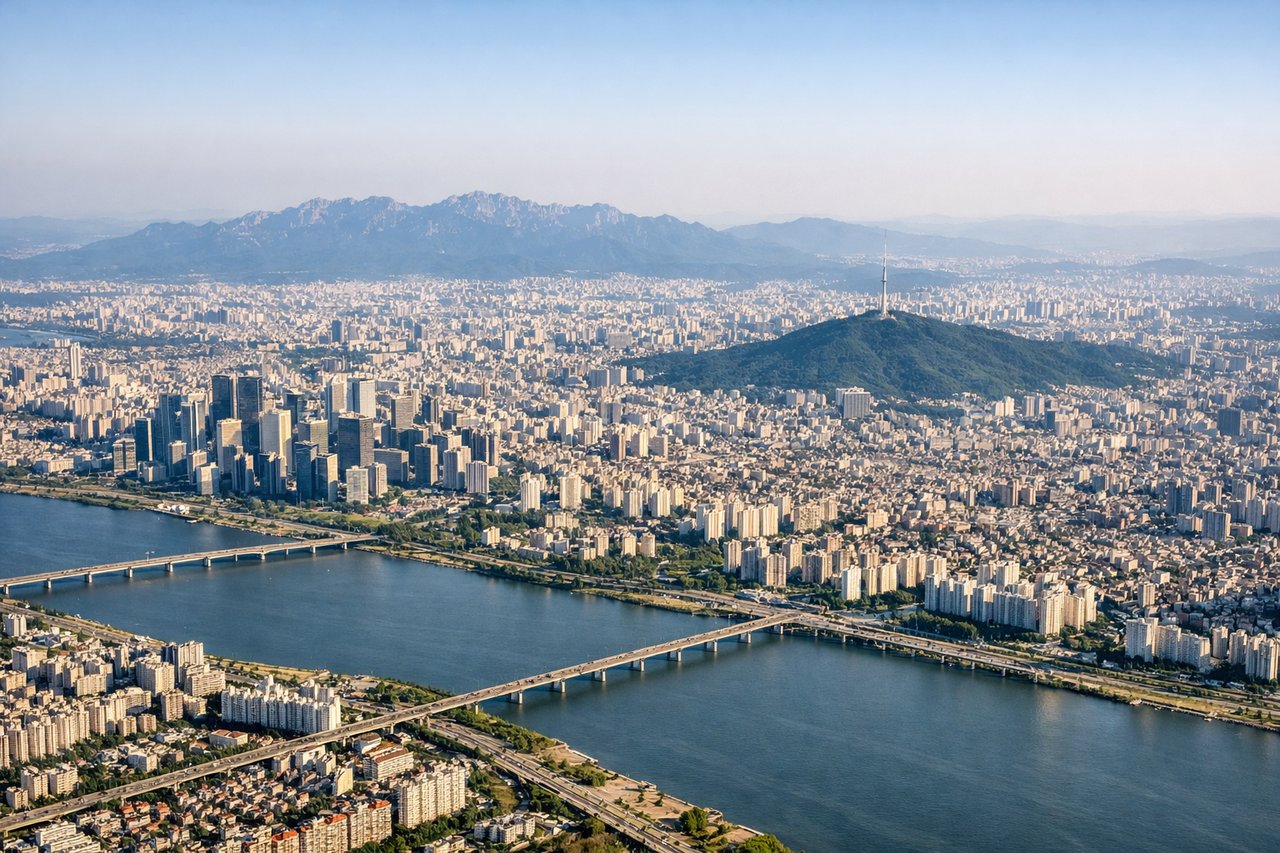
Takeoff from GMP
RIGHTRight-side seats capture the Han River estuary and Incheon's industrial waterfront during climb-out. GMP typically departs westbound (runways 14L/14R), so right seats face toward the Yellow Sea and the complex of islands and tidal flats that define the approach corridor.
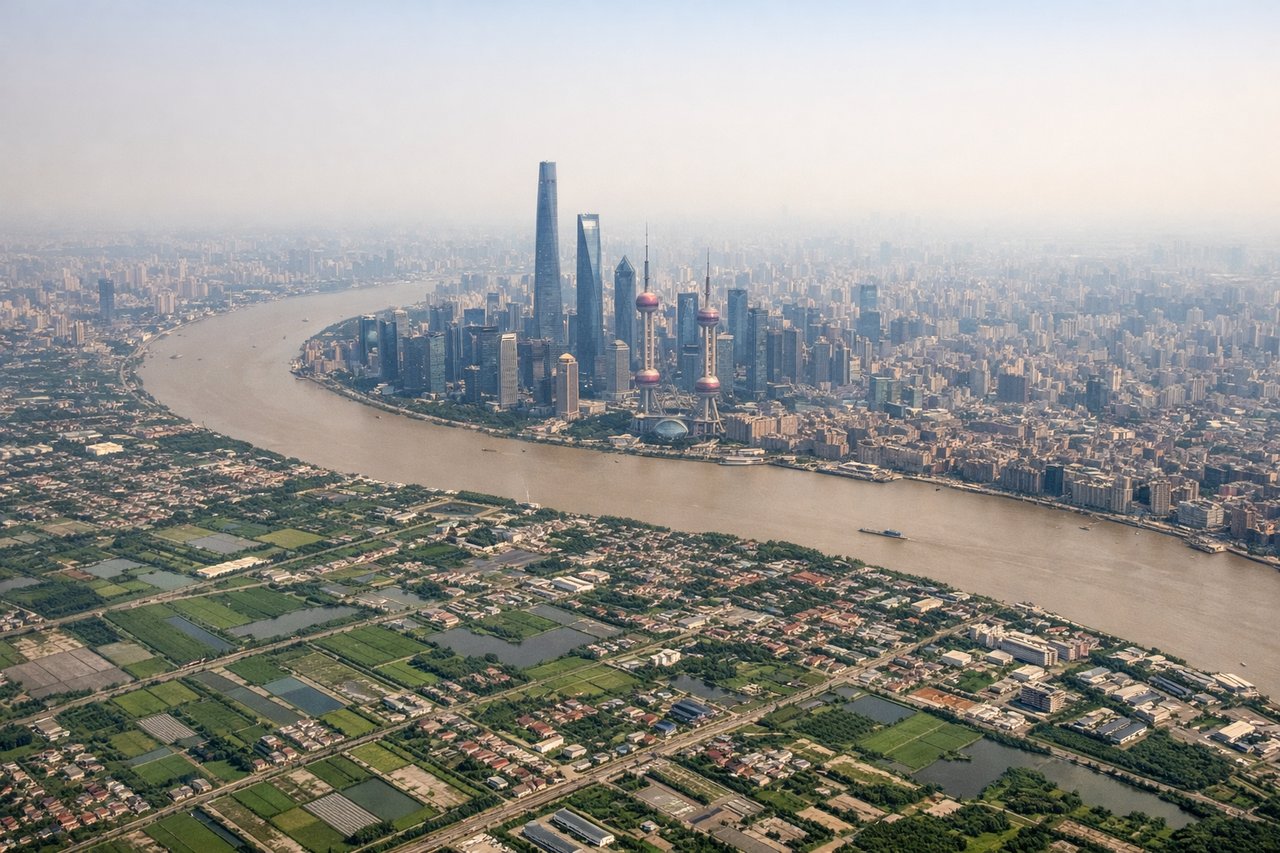
Landing at PVG
LEFTLeft-side seats offer the best approach view into PVG. Aircraft typically land on runways 08L/08R (eastbound), so left seats face south toward the Huangpu River and Pudong's skyline during descent. You'll see the river's distinctive curves and the financial district's tower clusters.
Will your flight be in sunlight?
Pick a date and time in the Sun Map to watch the sun move across your whole flight.
About This Route
Which side of the plane should I sit on flying from Gimpo (GMP) to Shanghai Pudong International (PVG)?
Sit on the Right side of the plane for the best views on flights from Seoul to Shanghai. Right-side seats deliver superior views on both legs. Takeoff offers the dramatic Han River estuary and Yellow Sea approach, while landing still captures good Huangpu River perspective. The flight path itself crosses the Yellow Sea and approaches from the north, making right-side positioning advantageous for the majority of the journey.
What can I see during takeoff from Gimpo in Seoul?
During takeoff from Gimpo (GMP), sit on the Right side for the best views. Right-side seats capture the Han River estuary and Incheon's industrial waterfront during climb-out. GMP typically departs westbound (runways 14L/14R), so right seats face toward the Yellow Sea and the complex of islands and tidal flats that define the approach corridor. Notable sights include: Han River estuary with its distinctive braided channels, Incheon's container port facilities, Ganghwa Island to the northwest, tidal mudflats of the Yellow Sea.
What can I see when landing at Shanghai Pudong International in Shanghai?
When landing at Shanghai Pudong International (PVG), sit on the Left side for the best views. Left-side seats offer the best approach view into PVG. Aircraft typically land on runways 08L/08R (eastbound), so left seats face south toward the Huangpu River and Pudong's skyline during descent. You'll see the river's distinctive curves and the financial district's tower clusters. Notable sights include: Huangpu River with its characteristic meanders, Pudong financial district skyline, Yangshan Deep Water Port to the southeast, Hangzhou Bay to the south.
How long is the flight from Seoul to Shanghai?
The flight from Gimpo (GMP) to Shanghai Pudong International (PVG) takes about 2 hours 15 minutes. The shortest flight path between them is 526 miles (847 km); winds and air traffic control usually add a few percent.
What does the Seoul to Shanghai flight path pass over?
The flight crosses the Yellow Sea at roughly 34°N latitude. En route, you'll pass over open water with occasional glimpses of Chinese coastal features—the Jiangsu Province coastline becomes visible on the right during descent, with the Yangtze River mouth appearing as a massive sediment plume in the water. The approach into Shanghai brings views of the Yangtze River Delta's extensive port infrastructure and industrial zones before reaching Pudong.