While takeoff favors the right for Shanghai's river views, the landing approach into Gimpo from the left provides more dramatic and sustained scenic value—the Han River crossing Seoul and the city's full urban extent are more visually impressive than the departure views. Left-side seats capture the better overall experience.
Flown PVG to GMP? Did we get it right?
Flight Path
Shanghai to Seoul is 526 miles (847 km), a flight of about 2 hours.
The flight path crosses the Yellow Sea (Huang Hai) heading northeast. At cruise altitude (around 30,000 feet), the sea itself is visible as a broad expanse of water, but few distinctive landmarks are visible in the midpoint—mostly open water with occasional cargo ship traffic visible as tiny dots. The Korean peninsula's western coastline becomes visible about 45 minutes into the flight as the aircraft approaches the Korean airspace, with the Incheon area and surrounding coastal plains appearing as the aircraft begins descent toward Gimpo.
Great circle distance and headings ›

Phase by phase
Takeoff from PVG
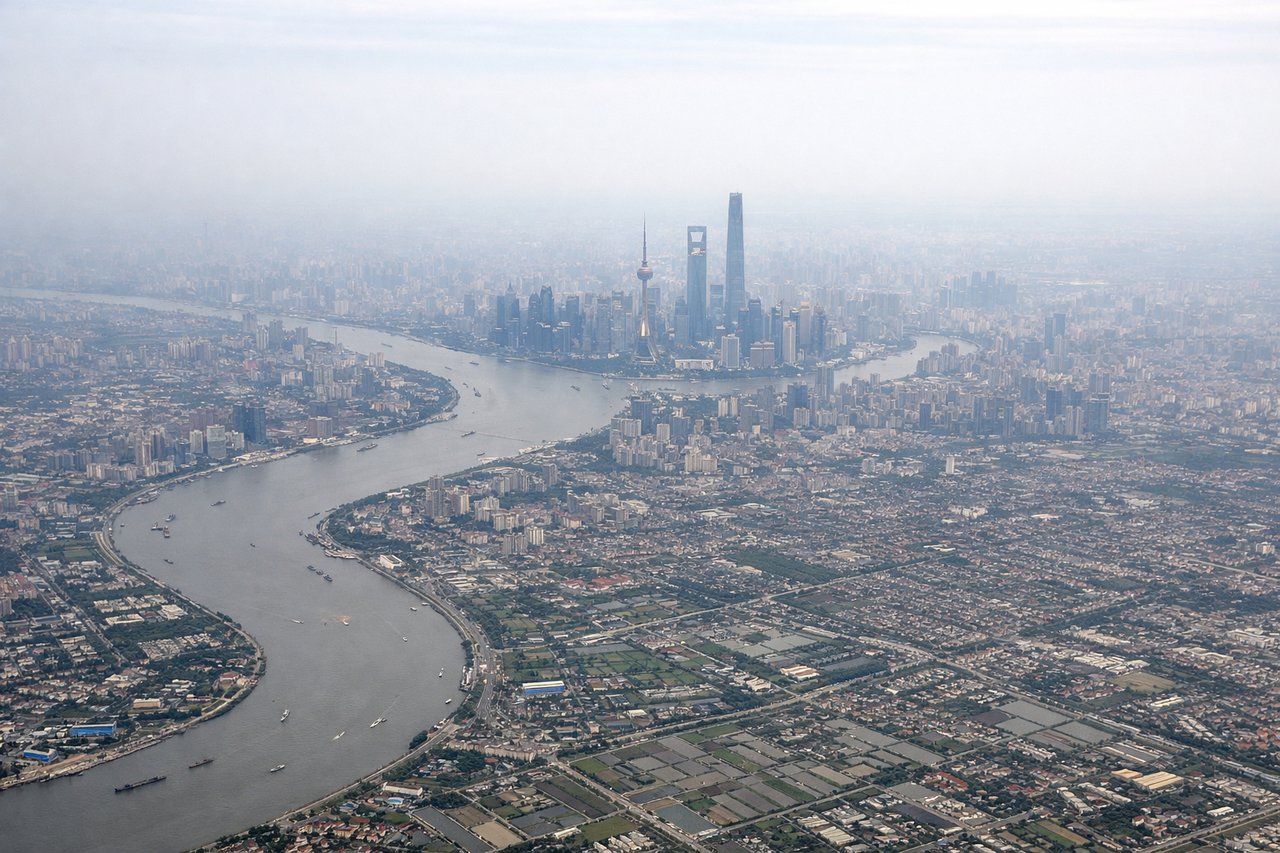
RIGHTRight-side seats offer views of the Huangpu River winding through central Shanghai and the Pudong skyline during climb-out. The river's distinctive curves and the contrast between developed districts and surrounding areas are clearly visible from 5,000-15,000 feet.
Landing at GMP
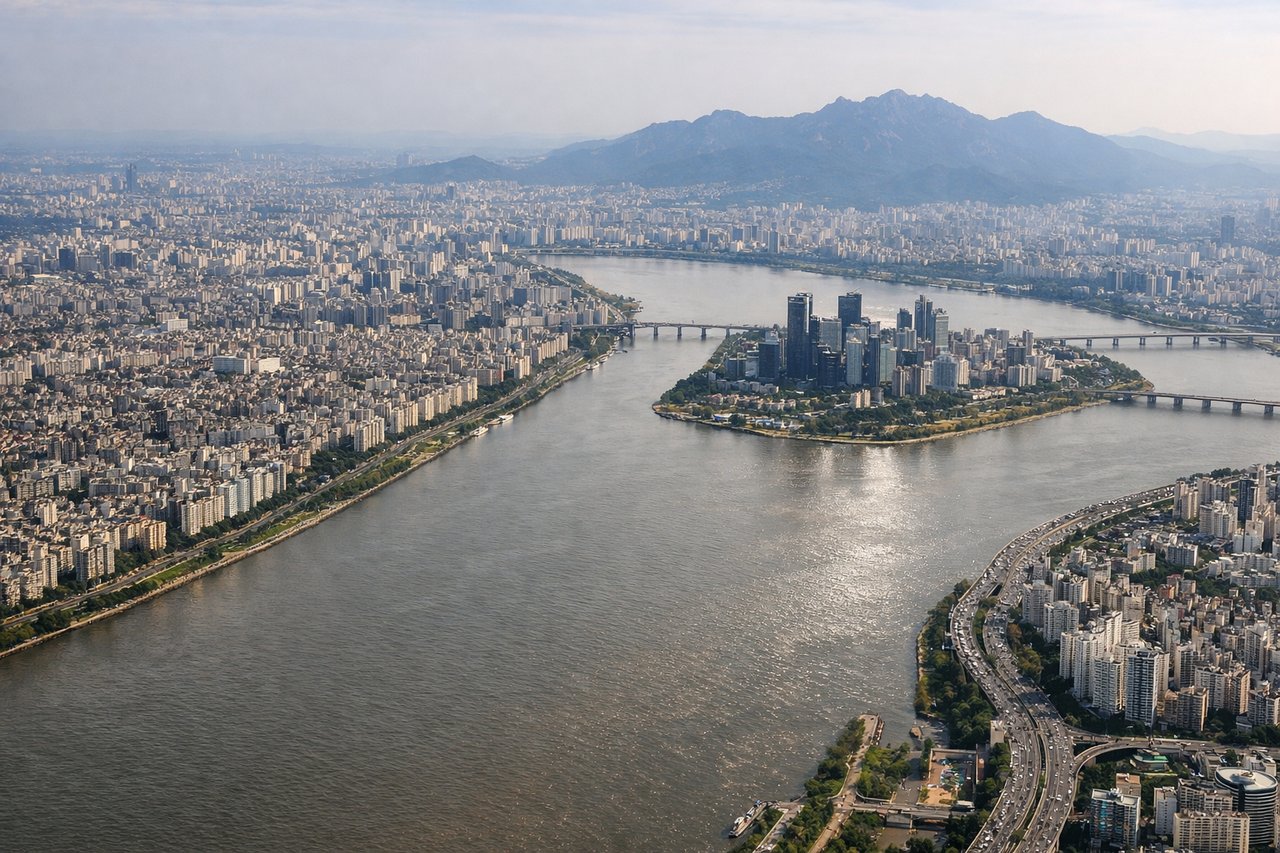
LEFTLeft-side seats provide excellent views during descent into Gimpo. You'll see the Han River (Hangang) cutting through Seoul's urban landscape, and the transition from Seoul's dense city center to the airport's location on the river's western bank. The river and surrounding districts are clearly visible from 10,000 feet down to final approach.
Will your flight be in sunlight?
Pick a date and time in the Sun Map to watch the sun move across your whole flight.
About This Route
Which side of the plane should I sit on flying from Shanghai Pudong International (PVG) to Gimpo (GMP)?
Sit on the Left side of the plane for the best views on flights from Shanghai to Seoul. While takeoff favors the right for Shanghai's river views, the landing approach into Gimpo from the left provides more dramatic and sustained scenic value—the Han River crossing Seoul and the city's full urban extent are more visually impressive than the departure views. Left-side seats capture the better overall experience.
What can I see during takeoff from Shanghai Pudong International in Shanghai?
During takeoff from Shanghai Pudong International (PVG), sit on the Right side for the best views. Right-side seats offer views of the Huangpu River winding through central Shanghai and the Pudong skyline during climb-out. The river's distinctive curves and the contrast between developed districts and surrounding areas are clearly visible from 5,000-15,000 feet. Notable sights include: Huangpu River, Pudong financial district, Yangtze River estuary to the north, Shanghai urban sprawl extending westward.
What can I see when landing at Gimpo in Seoul?
When landing at Gimpo (GMP), sit on the Left side for the best views. Left-side seats provide excellent views during descent into Gimpo. You'll see the Han River (Hangang) cutting through Seoul's urban landscape, and the transition from Seoul's dense city center to the airport's location on the river's western bank. The river and surrounding districts are clearly visible from 10,000 feet down to final approach. Notable sights include: Han River, Seoul city center (Gangnam and Jung districts), Gimpo Airport runways, Korean mountains (Bukhansan range) to the north.
How long is the flight from Shanghai to Seoul?
The flight from Shanghai Pudong International (PVG) to Gimpo (GMP) takes about 2 hours. The shortest flight path between them is 526 miles (847 km); winds and air traffic control usually add a few percent.
What does the Shanghai to Seoul flight path pass over?
The flight path crosses the Yellow Sea (Huang Hai) heading northeast. At cruise altitude (around 30,000 feet), the sea itself is visible as a broad expanse of water, but few distinctive landmarks are visible in the midpoint—mostly open water with occasional cargo ship traffic visible as tiny dots. The Korean peninsula's western coastline becomes visible about 45 minutes into the flight as the aircraft approaches the Korean airspace, with the Incheon area and surrounding coastal plains appearing as the aircraft begins descent toward Gimpo.