Right-side seats dominate both departure and arrival phases. The westbound flight path from Seoul to Salt Lake City means right-side passengers see the Han River estuary on departure and the Wasatch Range and Great Salt Lake on arrival—two of the most visually distinctive features of this route.
Flown GMP to SLC? Did we get it right?
Flight Path
Seoul to Salt Lake City is 5,873 miles (9,452 km), a flight of about 13 hours 30 minutes.
The flight crosses the North Pacific with views of the Aleutian Islands (if routed via Anchorage), then passes over western Canada and the Rocky Mountains. The Canadian Rockies (particularly the Cascade Range and peaks near the British Columbia-Alberta border) are visible during the mid-flight portion if conditions permit. The flight then crosses the Great Plains of Montana and Wyoming before descending into the Great Basin toward Salt Lake City.
Great circle distance and headings ›


Phase by phase
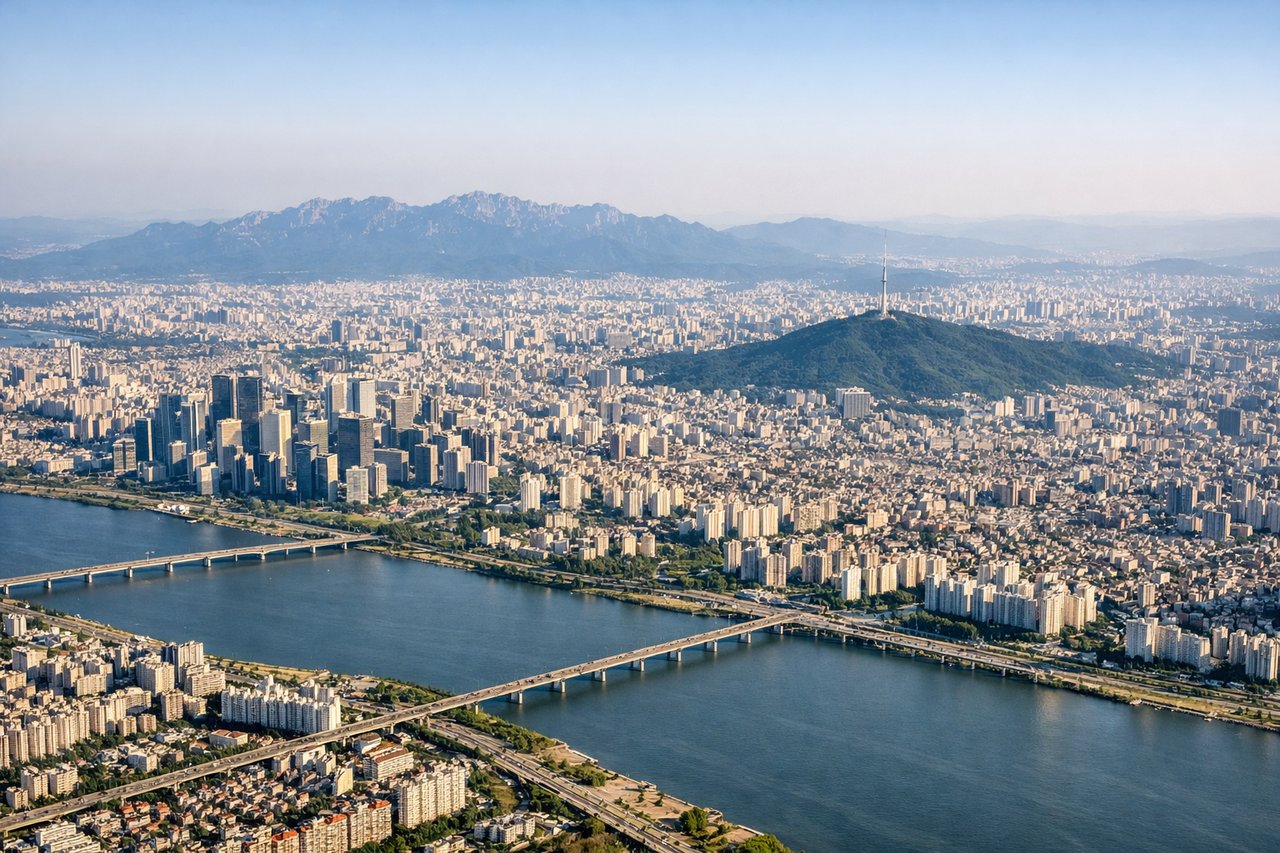
Takeoff from GMP
RIGHTRight-side seats offer views of the Han River estuary and Incheon's coastal geography as the aircraft climbs northwest from Gimpo. The river's distinctive braided channels and the surrounding reclaimed land areas are clearly visible during the initial climb.
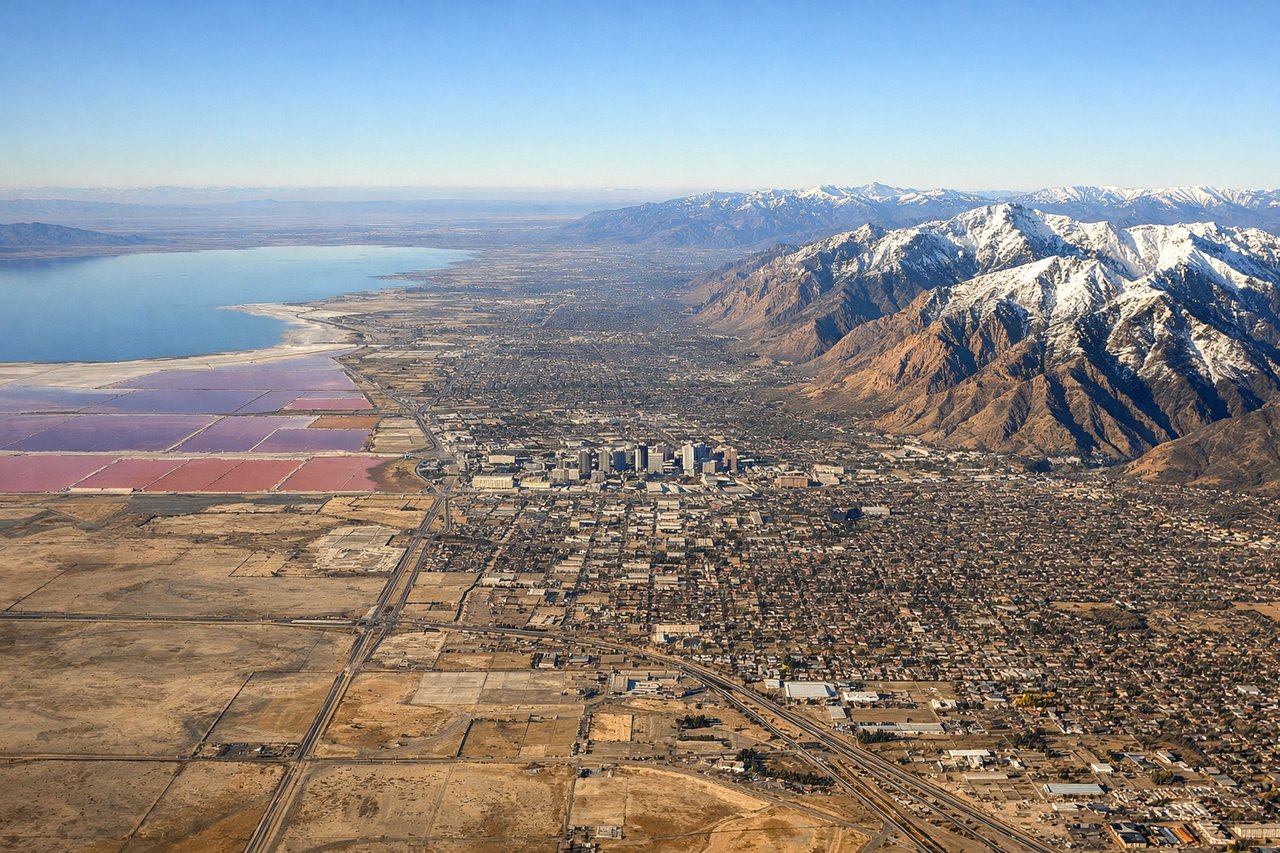
Landing at SLC
RIGHTRight-side seats provide excellent views of the Wasatch Range's eastern face and the Great Salt Lake during descent into Salt Lake City. The dramatic mountain escarpment and the lake's distinctive shape are prominent visual features on approach from the west.
Will your flight be in sunlight?
Pick a date and time in the Sun Map to watch the sun move across your whole flight.
About This Route
Which side of the plane should I sit on flying from Gimpo (GMP) to Salt Lake City International (SLC)?
Sit on the Right side of the plane for the best views on flights from Seoul to Salt Lake City. Right-side seats dominate both departure and arrival phases. The westbound flight path from Seoul to Salt Lake City means right-side passengers see the Han River estuary on departure and the Wasatch Range and Great Salt Lake on arrival—two of the most visually distinctive features of this route.
What can I see during takeoff from Gimpo in Seoul?
During takeoff from Gimpo (GMP), sit on the Right side for the best views. Right-side seats offer views of the Han River estuary and Incheon's coastal geography as the aircraft climbs northwest from Gimpo. The river's distinctive braided channels and the surrounding reclaimed land areas are clearly visible during the initial climb. Notable sights include: Han River estuary, Incheon Bay, Seoul metropolitan area sprawl to the southeast, Yellow Sea coastline.
What can I see when landing at Salt Lake City International in Salt Lake City?
When landing at Salt Lake City International (SLC), sit on the Right side for the best views. Right-side seats provide excellent views of the Wasatch Range's eastern face and the Great Salt Lake during descent into Salt Lake City. The dramatic mountain escarpment and the lake's distinctive shape are prominent visual features on approach from the west. Notable sights include: Wasatch Range (Oquirrh and Antelope mountains), Great Salt Lake, Salt Lake Valley floor, Traverse Mountains to the south.
How long is the flight from Seoul to Salt Lake City?
The flight from Gimpo (GMP) to Salt Lake City International (SLC) takes about 13 hours 30 minutes. The shortest flight path between them is 5,873 miles (9,452 km); winds and air traffic control usually add a few percent.
What does the Seoul to Salt Lake City flight path pass over?
The flight crosses the North Pacific with views of the Aleutian Islands (if routed via Anchorage), then passes over western Canada and the Rocky Mountains. The Canadian Rockies (particularly the Cascade Range and peaks near the British Columbia-Alberta border) are visible during the mid-flight portion if conditions permit. The flight then crosses the Great Plains of Montana and Wyoming before descending into the Great Basin toward Salt Lake City.