Right-side seats offer superior views during both takeoff and the northern portion of the flight. The climb-out over the Western Ghats and Arabian Sea is more dramatic than the landing approach, and right seats capture this better. Landing views are comparable on both sides, but the takeoff advantage makes right the overall choice.
Flight Path
The flight path runs north-northwest along the coast and inland. Notable features include the Western Ghats mountain range running parallel to the coast (visible from both sides at altitude), the Konkan coastal plain (narrow strip between mountains and sea), and the transition from Goa's lush vegetation to the drier terrain approaching Bombay. The Savitri River estuary and several smaller river valleys are visible from altitude as green corridors cutting through the terrain. At cruise altitude (around 15,000-20,000 feet), the curvature of the coastline becomes apparent, and the haze layer typical of the Arabian Sea coast creates a distinct visual boundary between the land and water.
Great circle distance and headings ›Phase by phase
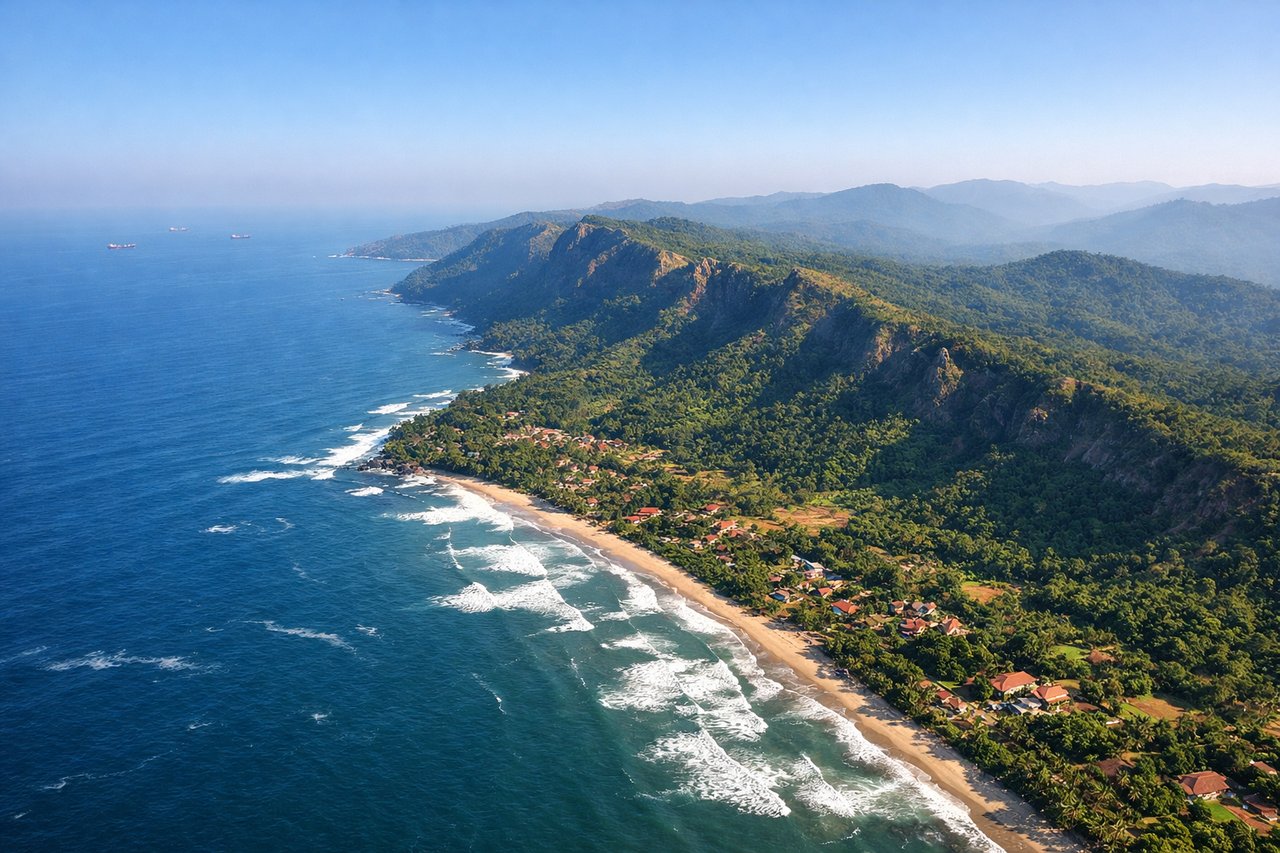
Takeoff from GOI
RIGHTGoa typically departs runway 09/27 depending on wind. Rightward seats capture the Arabian Sea coastline and the Western Ghats escarpment as you climb northward toward Bombay. The terrain rises dramatically inland, creating strong visual contrast.
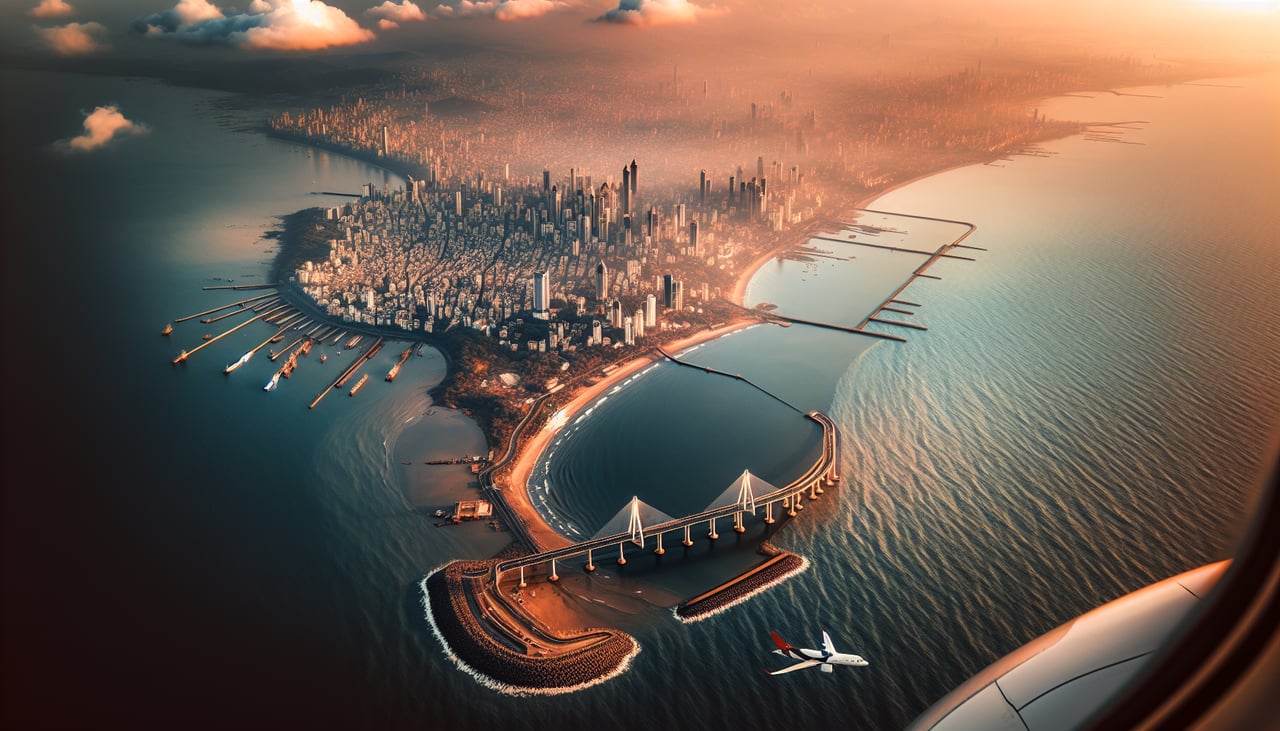
Landing at BOM
LEFTBombay typically lands runway 09L/27R or 09R/27L depending on wind. Left-side seats during descent capture the Thane Creek, Ulhas River estuary, and the industrial landscape of Navi Mumbai before final approach into the airport on the northern peninsula.
Landmarks on this routeAll landmarks →
Will your flight be in sunlight?
See exactly which side of the plane gets sun and shade at your departure time.
About This Route
Which side of the plane should I sit on flying from Goa Dabolim International Airport (GOI) to Chhatrapati Shivaji International (BOM)?
Sit on the Right side of the plane for the best views on flights from Goa to Bombay. Right-side seats offer superior views during both takeoff and the northern portion of the flight. The climb-out over the Western Ghats and Arabian Sea is more dramatic than the landing approach, and right seats capture this better. Landing views are comparable on both sides, but the takeoff advantage makes right the overall choice.
What can I see during takeoff from Goa Dabolim International Airport in Goa?
During takeoff from Goa Dabolim International Airport (GOI), sit on the Right side for the best views. Goa typically departs runway 09/27 depending on wind. Rightward seats capture the Arabian Sea coastline and the Western Ghats escarpment as you climb northward toward Bombay. The terrain rises dramatically inland, creating strong visual contrast. Notable sights include: Arabian Sea (immediate west), Mormugao Harbor (visible below during initial climb), Western Ghats mountain range (eastern horizon during climb-out), Zuari River estuary (southern approach).
What can I see when landing at Chhatrapati Shivaji International in Bombay?
When landing at Chhatrapati Shivaji International (BOM), sit on the Left side for the best views. Bombay typically lands runway 09L/27R or 09R/27L depending on wind. Left-side seats during descent capture the Thane Creek, Ulhas River estuary, and the industrial landscape of Navi Mumbai before final approach into the airport on the northern peninsula. Notable sights include: Thane Creek (major water body east of airport), Ulhas River estuary (southeast approach), Navi Mumbai industrial zone (visible during descent), Arabian Sea (western boundary of airport).
How long is the flight from Goa to Bombay?
The flight from Goa Dabolim International Airport (GOI) to Chhatrapati Shivaji International (BOM) takes Approximately 1 hour.
What does the Goa to Bombay flight path pass over?
The flight path runs north-northwest along the coast and inland. Notable features include the Western Ghats mountain range running parallel to the coast (visible from both sides at altitude), the Konkan coastal plain (narrow strip between mountains and sea), and the transition from Goa's lush vegetation to the drier terrain approaching Bombay. The Savitri River estuary and several smaller river valleys are visible from altitude as green corridors cutting through the terrain. At cruise altitude (around 15,000-20,000 feet), the curvature of the coastline becomes apparent, and the haze layer typical of the Arabian Sea coast creates a distinct visual boundary between the land and water.