Gothenborg to Frankfurt is 549 miles (883 km), a flight of about 2 hours.
The right side wins overall because the Gothenburg departure view over the city, harbor, and archipelago is more visually rewarding than the left side offers at any single point. During cruise the flight tracks roughly south-southeast over Sweden and Denmark, and the right side also picks up glimpses of the Danish coast and Kattegat. The left side's Frankfurt approach advantage is real but shorter in duration.
Flight Path
The flight tracks south-southeast from Gothenburg, crossing the Kattegat strait between Sweden and Denmark, then over the Danish islands of Sjælland or Fyn depending on routing, before crossing into northern Germany over Schleswig-Holstein. The flat North German Plain dominates the mid-flight view, with the Elbe river visible as a broad waterway near Hamburg. No significant mountain ranges are crossed on this route.
Great circle distance and headings ›Phase by phase
Takeoff from GOT
RIGHTLandvetter's primary departure runway 21 heads southwest, and a right-side seat gives you a view back over Gothenburg city and the Göta älv river estuary as you climb out. The archipelago of Gothenburg's southern skerries is also visible to the right during the initial turn southward.
Landing at FRA
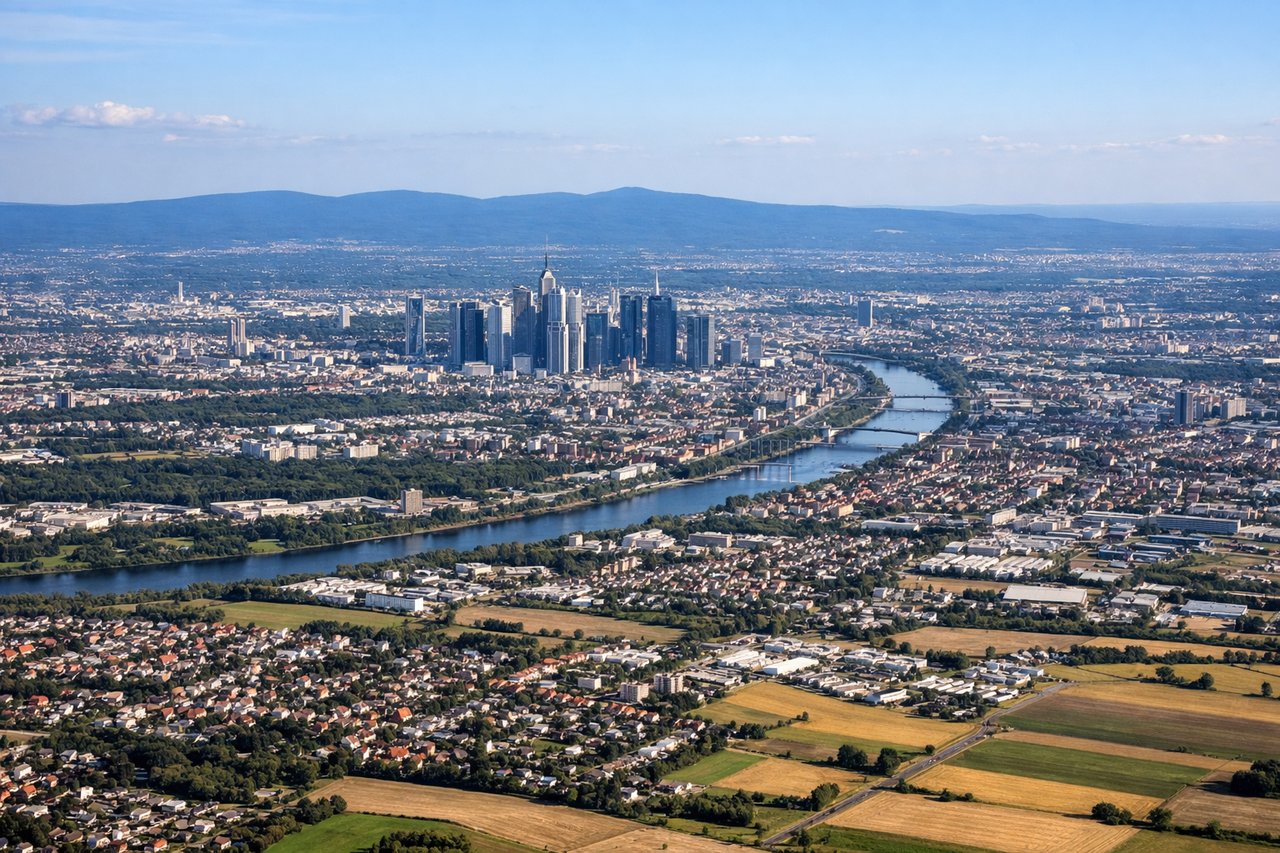
LEFTFrankfurt typically uses runway 25L or 07R for arrivals from the north. On approach from the north-northwest, a left-side seat gives you a view over the Rhine-Main plain, the Frankfurt skyline, and the Rhine river bend near Mainz. The Taunus hills are visible to the left on final approach.
Will your flight be in sunlight?
Pick a date and time in the Sun Map to watch the sun move across your whole flight.
About This Route
Which side of the plane should I sit on flying from Landvetter (GOT) to Frankfurt Main (FRA)?
Sit on the Right side of the plane for the best views on flights from Gothenborg to Frankfurt. The right side wins overall because the Gothenburg departure view over the city, harbor, and archipelago is more visually rewarding than the left side offers at any single point. During cruise the flight tracks roughly south-southeast over Sweden and Denmark, and the right side also picks up glimpses of the Danish coast and Kattegat. The left side's Frankfurt approach advantage is real but shorter in duration.
What can I see during takeoff from Landvetter in Gothenborg?
During takeoff from Landvetter (GOT), sit on the Right side for the best views. Landvetter's primary departure runway 21 heads southwest, and a right-side seat gives you a view back over Gothenburg city and the Göta älv river estuary as you climb out. The archipelago of Gothenburg's southern skerries is also visible to the right during the initial turn southward. Notable sights include: Gothenburg city center and harbor, Göta älv river, southern Gothenburg archipelago skerries, Lake Landvetter (Landvettersjön) directly below.
What can I see when landing at Frankfurt Main in Frankfurt?
When landing at Frankfurt Main (FRA), sit on the Left side for the best views. Frankfurt typically uses runway 25L or 07R for arrivals from the north. On approach from the north-northwest, a left-side seat gives you a view over the Rhine-Main plain, the Frankfurt skyline, and the Rhine river bend near Mainz. The Taunus hills are visible to the left on final approach. Notable sights include: Frankfurt city skyline (Bankenviertel high-rises), Rhine river near Mainz-Wiesbaden, Taunus hills, Main river through Frankfurt.
How long is the flight from Gothenborg to Frankfurt?
The flight from Landvetter (GOT) to Frankfurt Main (FRA) takes about 2 hours. The shortest flight path between them is 549 miles (883 km); winds and air traffic control usually add a few percent.
What does the Gothenborg to Frankfurt flight path pass over?
The flight tracks south-southeast from Gothenburg, crossing the Kattegat strait between Sweden and Denmark, then over the Danish islands of Sjælland or Fyn depending on routing, before crossing into northern Germany over Schleswig-Holstein. The flat North German Plain dominates the mid-flight view, with the Elbe river visible as a broad waterway near Hamburg. No significant mountain ranges are crossed on this route.