Gothenborg to London is 664 miles (1,069 km), a flight of about 2 hours 15 minutes.
While the takeoff offers coastal scenery, the landing approach provides more dramatic and sustained visual interest with the Thames estuary and London's distinctive urban geography. The left side captures the river's most visually striking feature—its meanders—which are iconic and clearly visible during descent.
Flight Path
The flight path crosses the North Sea, passing over the Skagerrak strait and Danish airspace. Notable features include the Danish coastline (visible from altitude), the Kattegat strait, and the transition from Scandinavian terrain to the flatter North European Plain. Over the North Sea itself, water features dominate, with occasional shipping lanes visible. As the aircraft approaches UK airspace, the English coastline becomes visible—typically the Norfolk coast or Suffolk coast depending on exact routing—before the aircraft turns southwest toward London. The Midlands and southern English landscape (rolling hills, patchwork farmland, river valleys) are visible during the descent phase.
Great circle distance and headings ›Phase by phase
Takeoff from GOT
RIGHTRight-side seats offer views of the Göta Älv estuary and the archipelago east of Gothenburg as the aircraft climbs on its typical southwesterly departure. The water features and coastal islands provide immediate visual interest during climb-out.
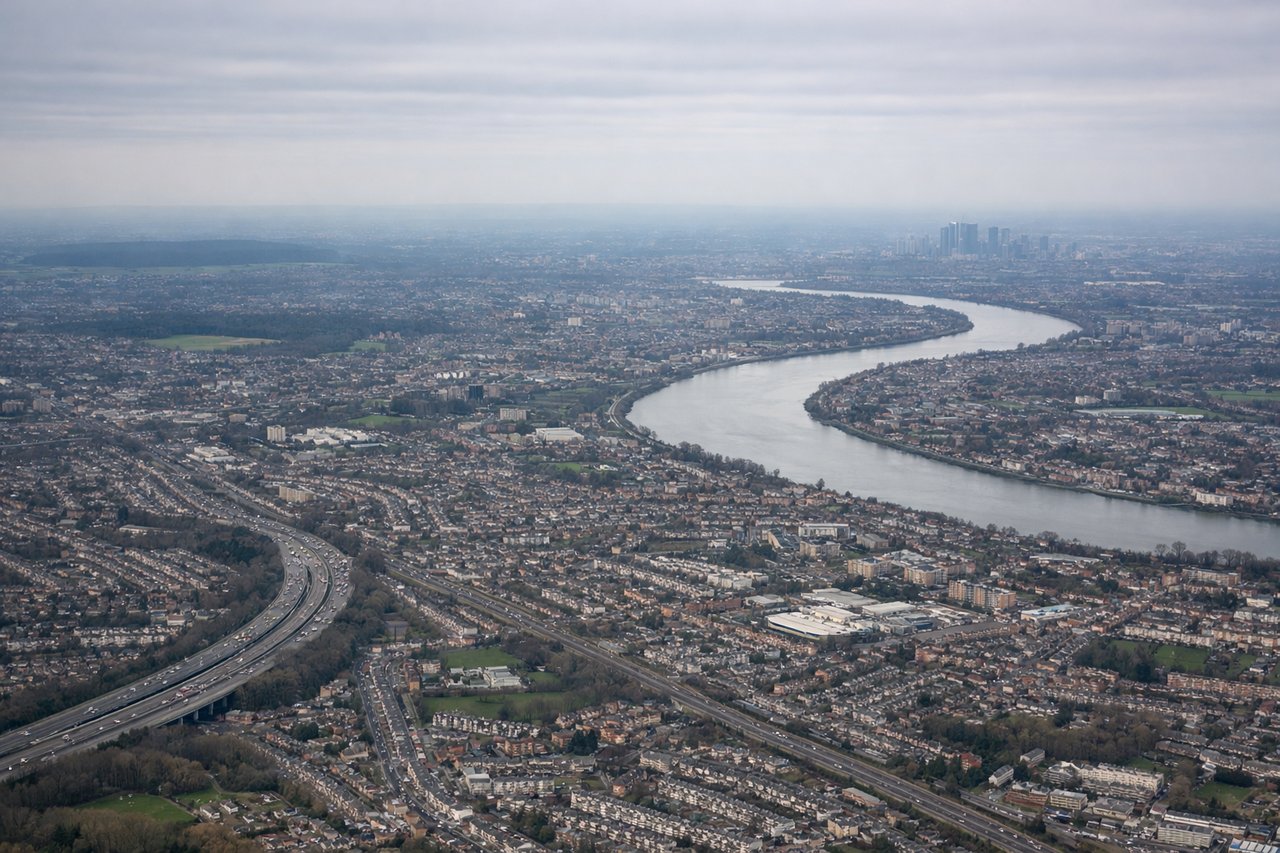
Landing at LHR
LEFTLeft-side seats provide views of the Thames estuary, London's urban sprawl, and the distinctive meanders of the Thames as the aircraft descends on its typical approach from the northeast. The river's curves and the city's grid pattern are clearly visible during final descent.
Landmarks on this routeAll landmarks →
Will your flight be in sunlight?
Pick a date and time in the Sun Map to watch the sun move across your whole flight.
About This Route
Which side of the plane should I sit on flying from Landvetter (GOT) to Heathrow (LHR)?
Sit on the Left side of the plane for the best views on flights from Gothenborg to London. While the takeoff offers coastal scenery, the landing approach provides more dramatic and sustained visual interest with the Thames estuary and London's distinctive urban geography. The left side captures the river's most visually striking feature—its meanders—which are iconic and clearly visible during descent.
What can I see during takeoff from Landvetter in Gothenborg?
During takeoff from Landvetter (GOT), sit on the Right side for the best views. Right-side seats offer views of the Göta Älv estuary and the archipelago east of Gothenburg as the aircraft climbs on its typical southwesterly departure. The water features and coastal islands provide immediate visual interest during climb-out. Notable sights include: Göta Älv estuary, Stockholm archipelago islands (distant), North Sea coastline, Gothenburg urban sprawl.
What can I see when landing at Heathrow in London?
When landing at Heathrow (LHR), sit on the Left side for the best views. Left-side seats provide views of the Thames estuary, London's urban sprawl, and the distinctive meanders of the Thames as the aircraft descends on its typical approach from the northeast. The river's curves and the city's grid pattern are clearly visible during final descent. Notable sights include: River Thames with characteristic meanders, Greater London urban area, North Downs ridge (distant), Essex flatlands.
How long is the flight from Gothenborg to London?
The flight from Landvetter (GOT) to Heathrow (LHR) takes about 2 hours 15 minutes. The shortest flight path between them is 664 miles (1,069 km); winds and air traffic control usually add a few percent.
What does the Gothenborg to London flight path pass over?
The flight path crosses the North Sea, passing over the Skagerrak strait and Danish airspace. Notable features include the Danish coastline (visible from altitude), the Kattegat strait, and the transition from Scandinavian terrain to the flatter North European Plain. Over the North Sea itself, water features dominate, with occasional shipping lanes visible. As the aircraft approaches UK airspace, the English coastline becomes visible—typically the Norfolk coast or Suffolk coast depending on exact routing—before the aircraft turns southwest toward London. The Midlands and southern English landscape (rolling hills, patchwork farmland, river valleys) are visible during the descent phase.