The landing approach into Doha on the right side delivers the most dramatic and concentrated visual payoff — turquoise Gulf waters, the Pearl-Qatar island, and the Doha skyline all in one approach sequence. The takeoff left side is worthwhile over São Paulo but the city is often hazy. Over the Atlantic and Africa the views are geographic rather than landmark-specific, so the arrival side tips the balance.
Flown GRU to DOH? Did we get it right?
Flight Path
Sao Paulo to Doha is 7,368 miles (11,858 km), a flight of about 14 hours 30 minutes.
The route crosses the South Atlantic Ocean, makes landfall over West Africa near the Gulf of Guinea coast (Nigeria or Cameroon region), then tracks northeast across Central Africa over the Congo Basin rainforest, crosses the Sahel and Sahara Desert through Chad and Sudan showing vast sand seas and ergs, crosses the Red Sea near its southern end, then transits the Arabian Peninsula desert before descending into Qatar
Great circle distance and headings ›


Phase by phase
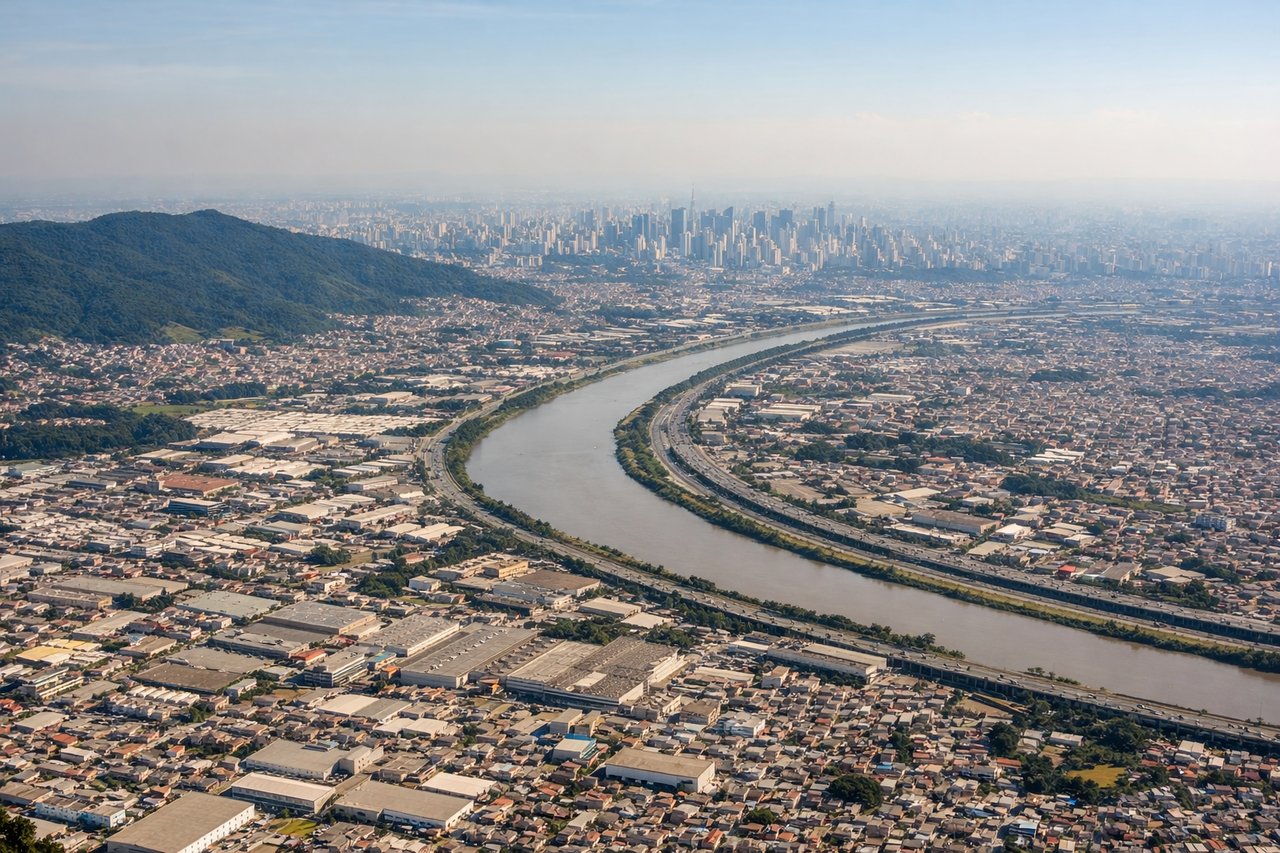
Takeoff from GRU
LEFTGRU typically departs on runway 09R/27L or 10/28. Northeastbound departures toward DOH mean the aircraft turns north, putting the Serra da Cantareira and greater São Paulo metro to the left (west/southwest). You get a sweeping view of the sprawling São Paulo urban grid and the green ridgelines of the Atlantic Forest escarpment.
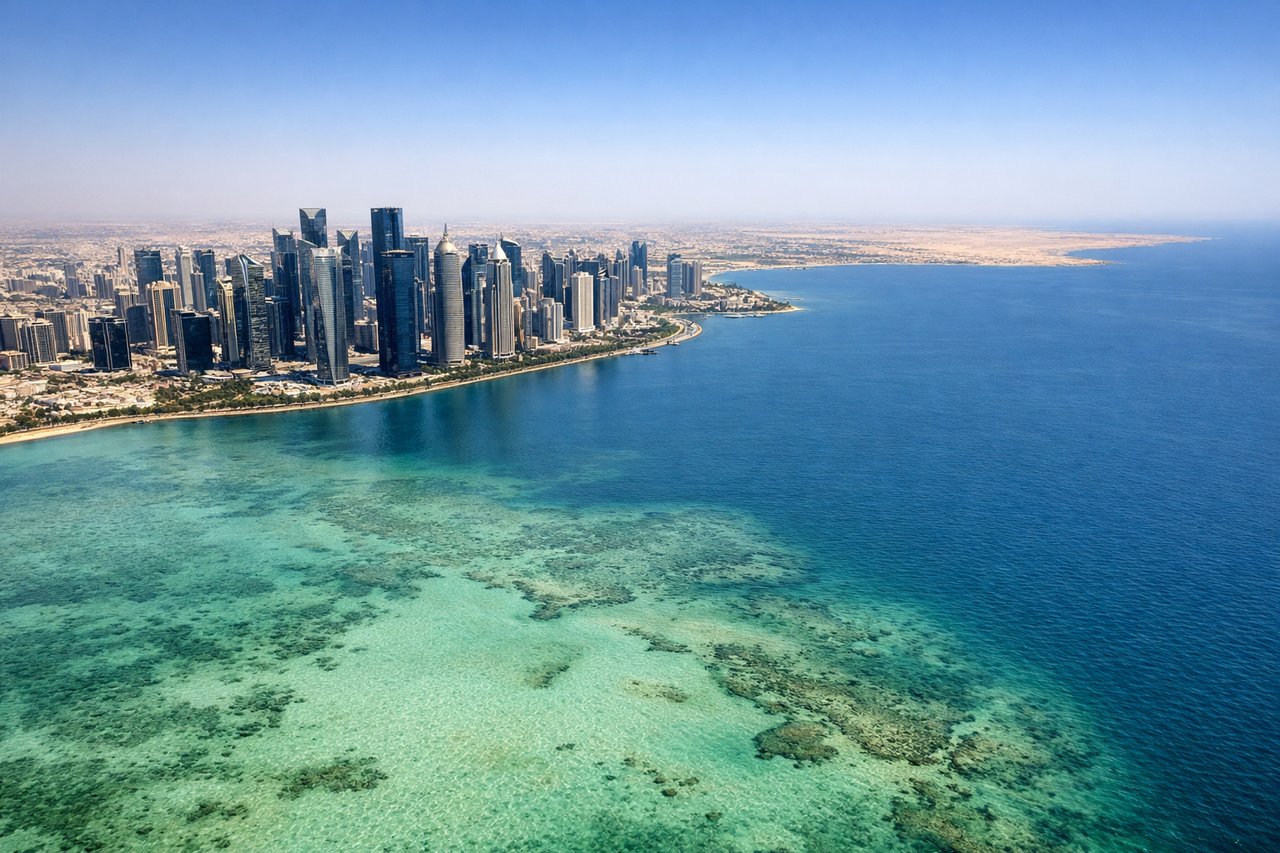
Landing at DOH
RIGHTHamad International (DOH) approaches are typically from the west or northwest over the Qatar peninsula. A right-side seat gives views of Doha's downtown skyline along the corniche, the shallow turquoise waters of the Persian Gulf, and the distinctive geometry of the Pearl-Qatar artificial island just offshore.
Will your flight be in sunlight?
Pick a date and time in the Sun Map to watch the sun move across your whole flight.
About This Route
Which side of the plane should I sit on flying from Guarulhos (GRU) to Hamad International Airport (DOH)?
Sit on the Right side of the plane for the best views on flights from Sao Paulo to Doha. The landing approach into Doha on the right side delivers the most dramatic and concentrated visual payoff — turquoise Gulf waters, the Pearl-Qatar island, and the Doha skyline all in one approach sequence. The takeoff left side is worthwhile over São Paulo but the city is often hazy. Over the Atlantic and Africa the views are geographic rather than landmark-specific, so the arrival side tips the balance.
What can I see during takeoff from Guarulhos in Sao Paulo?
During takeoff from Guarulhos (GRU), sit on the Left side for the best views. GRU typically departs on runway 09R/27L or 10/28. Northeastbound departures toward DOH mean the aircraft turns north, putting the Serra da Cantareira and greater São Paulo metro to the left (west/southwest). You get a sweeping view of the sprawling São Paulo urban grid and the green ridgelines of the Atlantic Forest escarpment. Notable sights include: São Paulo city center skyline to the southwest, Serra da Cantareira forested ridge to the northwest, Guarulhos urban sprawl below, Tietê River valley cutting through the basin.
What can I see when landing at Hamad International Airport in Doha?
When landing at Hamad International Airport (DOH), sit on the Right side for the best views. Hamad International (DOH) approaches are typically from the west or northwest over the Qatar peninsula. A right-side seat gives views of Doha's downtown skyline along the corniche, the shallow turquoise waters of the Persian Gulf, and the distinctive geometry of the Pearl-Qatar artificial island just offshore. Notable sights include: Doha downtown skyline and West Bay district, The Pearl-Qatar artificial island, Persian Gulf shallow turquoise shallows, Qatar peninsula coastline.
How long is the flight from Sao Paulo to Doha?
The flight from Guarulhos (GRU) to Hamad International Airport (DOH) takes about 14 hours 30 minutes. The shortest flight path between them is 7,368 miles (11,858 km); winds and air traffic control usually add a few percent.
What does the Sao Paulo to Doha flight path pass over?
The route crosses the South Atlantic Ocean, makes landfall over West Africa near the Gulf of Guinea coast (Nigeria or Cameroon region), then tracks northeast across Central Africa over the Congo Basin rainforest, crosses the Sahel and Sahara Desert through Chad and Sudan showing vast sand seas and ergs, crosses the Red Sea near its southern end, then transits the Arabian Peninsula desert before descending into Qatar