Sao Paulo to Mexicali is 5,959 miles (9,591 km), a flight of about 11 hours 35 minutes.
Right-side seats capture the more dramatic geography: the São Paulo mountain escarpment on departure and the Colorado River delta and Salton Sea on arrival. The left side offers less distinctive views on both legs.
Flight Path
The flight path crosses central Mexico at cruise altitude (35,000+ feet). Notable features include the Sierra Madre Occidental running north-south through western Mexico (visible as a distant ridge line during cruise), the high plateau of the Mexican Altiplano, and the transition from tropical/subtropical vegetation near São Paulo to arid desert landscape approaching Mexicali. The Río Bravo (Rio Grande) valley becomes visible during descent into Mexicali, marking the US-Mexico border.
Great circle distance and headings ›Phase by phase
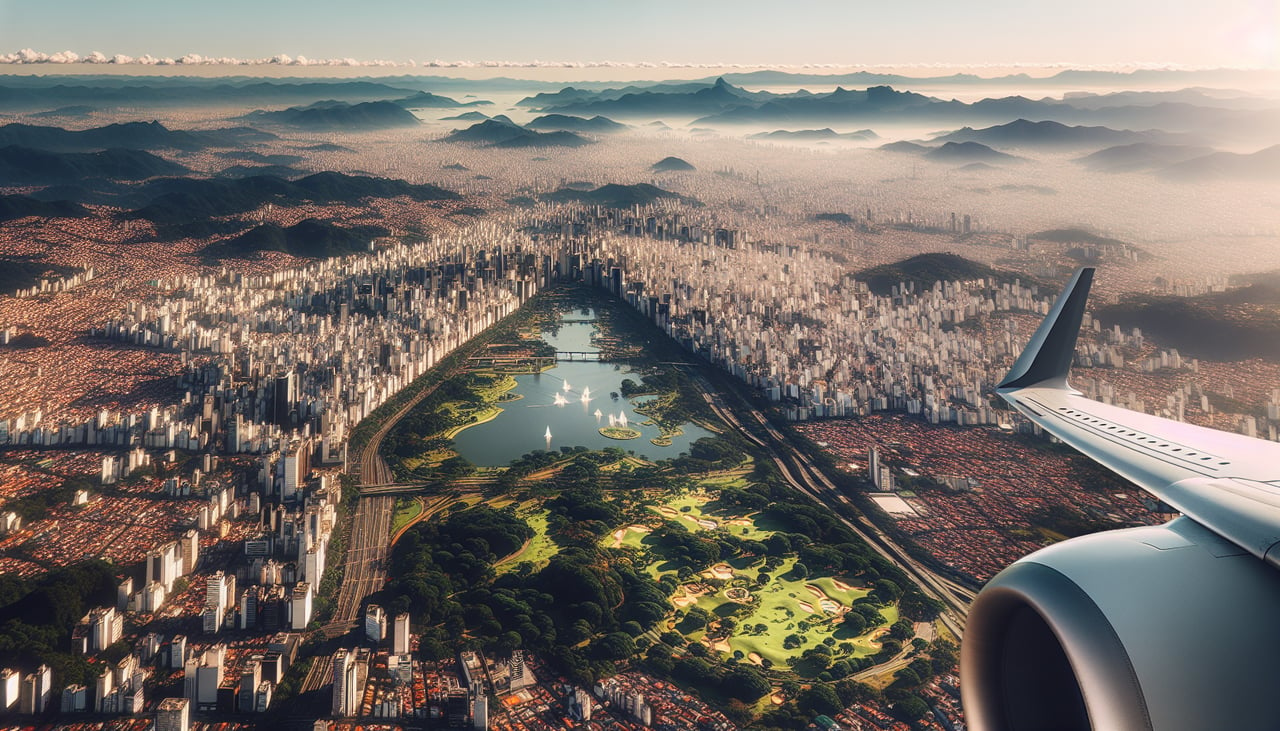
Takeoff from GRU
RIGHTGRU typically departs runways 09L/09R heading west. Right-side seats offer views of the Serra da Cantareira mountain range and the sprawling São Paulo metropolitan area receding eastward as you climb. Left seats face inland toward less distinctive terrain.
Landing at MXL
LEFTMXL approaches from the east on runways 24L/24R heading west. Left-side seats provide views of the Colorado River delta, the Salton Sea's northern edge, and the Imperial Valley's agricultural grid. Right seats face the barren desert interior with minimal visual interest.
Landmarks on this routeAll landmarks →
Will your flight be in sunlight?
Pick a date and time in the Sun Map to watch the sun move across your whole flight.
About This Route
Which side of the plane should I sit on flying from Guarulhos (GRU) to General Rodolfo Sanchez Taboada International (MXL)?
Sit on the Right side of the plane for the best views on flights from Sao Paulo to Mexicali. Right-side seats capture the more dramatic geography: the São Paulo mountain escarpment on departure and the Colorado River delta and Salton Sea on arrival. The left side offers less distinctive views on both legs.
What can I see during takeoff from Guarulhos in Sao Paulo?
During takeoff from Guarulhos (GRU), sit on the Right side for the best views. GRU typically departs runways 09L/09R heading west. Right-side seats offer views of the Serra da Cantareira mountain range and the sprawling São Paulo metropolitan area receding eastward as you climb. Left seats face inland toward less distinctive terrain. Notable sights include: Serra da Cantareira (northern escarpment), Guarulhos city grid, Pinheiros River valley, São Paulo urban sprawl extending south and east.
What can I see when landing at General Rodolfo Sanchez Taboada International in Mexicali?
When landing at General Rodolfo Sanchez Taboada International (MXL), sit on the Left side for the best views. MXL approaches from the east on runways 24L/24R heading west. Left-side seats provide views of the Colorado River delta, the Salton Sea's northern edge, and the Imperial Valley's agricultural grid. Right seats face the barren desert interior with minimal visual interest. Notable sights include: Colorado River delta (braided channels and wetlands), Salton Sea (northern portion), Imperial Valley agricultural fields, Sierra de Juárez mountain range (distant southern horizon).
How long is the flight from Sao Paulo to Mexicali?
The flight from Guarulhos (GRU) to General Rodolfo Sanchez Taboada International (MXL) takes about 11 hours 35 minutes. The shortest flight path between them is 5,959 miles (9,591 km); winds and air traffic control usually add a few percent.
What does the Sao Paulo to Mexicali flight path pass over?
The flight path crosses central Mexico at cruise altitude (35,000+ feet). Notable features include the Sierra Madre Occidental running north-south through western Mexico (visible as a distant ridge line during cruise), the high plateau of the Mexican Altiplano, and the transition from tropical/subtropical vegetation near São Paulo to arid desert landscape approaching Mexicali. The Río Bravo (Rio Grande) valley becomes visible during descent into Mexicali, marking the US-Mexico border.