Left side wins both ends of the flight. At takeoff you get Guam's harbor and western reef, and on approach into Haneda you get Tokyo Bay and the Yokohama-Tokyo urban panorama. The right side offers open Pacific ocean for most of the flight with little to differentiate it.
Flight Path
The flight tracks north-northwest across the open western Pacific, passing over the Mariana Trench region (not visible but the deepest water on Earth lies below), then over the Bonin Islands (Ogasawara Islands) roughly two-thirds of the way, which may be faintly visible as small dark specks in the ocean on a clear day. The Izu Islands chain becomes visible in the final hour as the flight approaches the Japanese archipelago from the south.
Great circle distance and headings ›Phase by phase
Takeoff from GUM
LEFTGuam's main runway 06L/24R means northbound departures typically head northeast, putting the left side facing northwest over Apra Harbor and the island's western coastline. You get a clear view of the harbor, the reef line, and the island's full profile as you climb out over the Philippine Sea.
Landing at HND
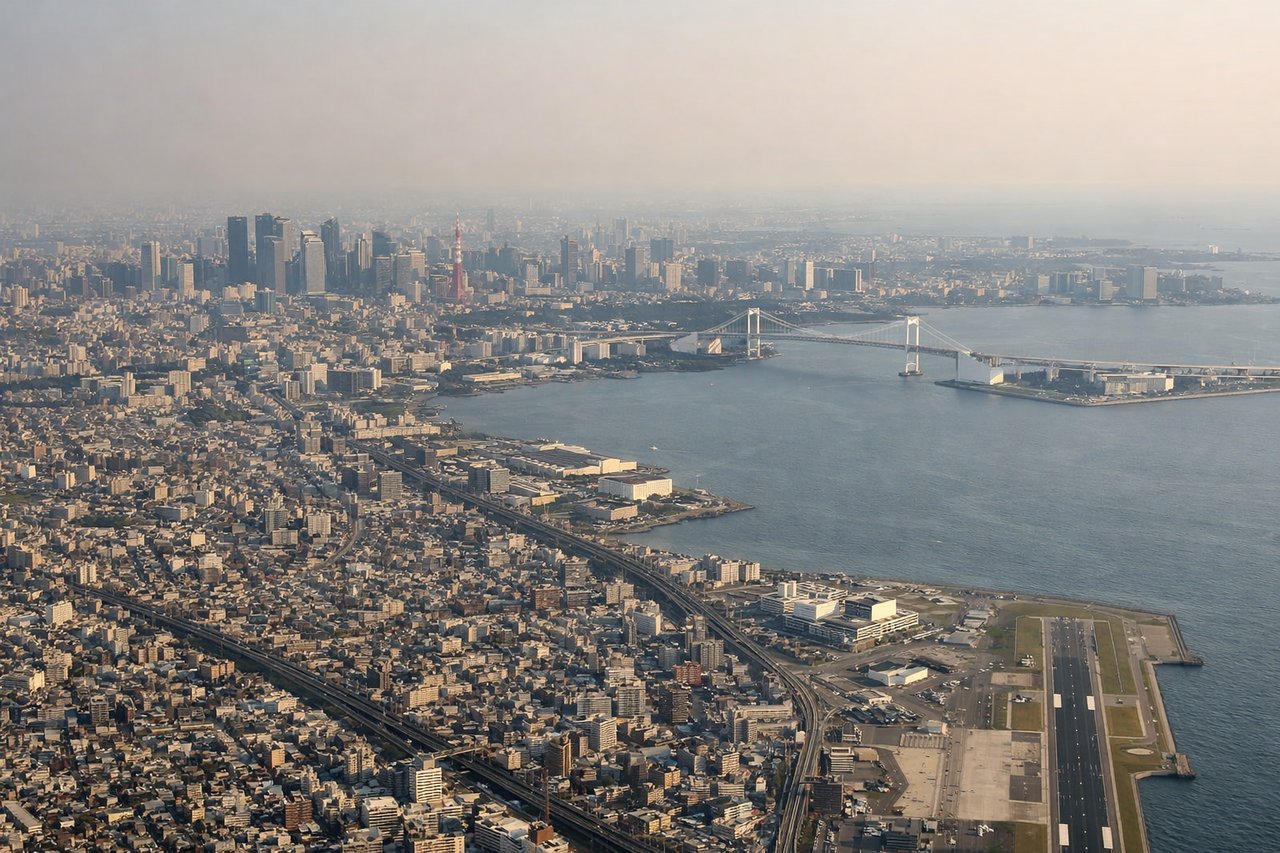
LEFTFlights from Guam approach Tokyo Haneda typically from the south or southeast, with the standard approach to runways 34L/34R heading northward. The left side faces west over Tokyo Bay and gives you the city skyline, the bay's industrial waterfront, and the Yokohama urban area spreading inland.
Landmarks on this routeAll landmarks →
Will your flight be in sunlight?
See exactly which side of the plane gets sun and shade at your departure time.
About This Route
Which side of the plane should I sit on flying from Guam International (GUM) to Tokyo International (HND)?
Sit on the Left side of the plane for the best views on flights from Agana to Tokyo. Left side wins both ends of the flight. At takeoff you get Guam's harbor and western reef, and on approach into Haneda you get Tokyo Bay and the Yokohama-Tokyo urban panorama. The right side offers open Pacific ocean for most of the flight with little to differentiate it.
What can I see during takeoff from Guam International in Agana?
During takeoff from Guam International (GUM), sit on the Left side for the best views. Guam's main runway 06L/24R means northbound departures typically head northeast, putting the left side facing northwest over Apra Harbor and the island's western coastline. You get a clear view of the harbor, the reef line, and the island's full profile as you climb out over the Philippine Sea. Notable sights include: Apra Harbor (US Naval Base), Orote Peninsula, Guam's western reef and lagoon, Agana Bay.
What can I see when landing at Tokyo International in Tokyo?
When landing at Tokyo International (HND), sit on the Left side for the best views. Flights from Guam approach Tokyo Haneda typically from the south or southeast, with the standard approach to runways 34L/34R heading northward. The left side faces west over Tokyo Bay and gives you the city skyline, the bay's industrial waterfront, and the Yokohama urban area spreading inland. Notable sights include: Tokyo Bay, Yokohama city and port, Tokyo city skyline to the north, Kawasaki industrial waterfront.
How long is the flight from Agana to Tokyo?
The flight from Guam International (GUM) to Tokyo International (HND) takes Approximately 3 hours 30 minutes to 3 hours 45 minutes.
What does the Agana to Tokyo flight path pass over?
The flight tracks north-northwest across the open western Pacific, passing over the Mariana Trench region (not visible but the deepest water on Earth lies below), then over the Bonin Islands (Ogasawara Islands) roughly two-thirds of the way, which may be faintly visible as small dark specks in the ocean on a clear day. The Izu Islands chain becomes visible in the final hour as the flight approaches the Japanese archipelago from the south.