While the left side offers a dramatic Alpine departure, the right side delivers superior overall scenery across the full flight. The cruise phase over the Atlantic (5+ hours) is ocean-only on both sides, but the right side's landing approach into Miami—featuring Biscayne Bay's turquoise waters, the Miami Beach skyline, and the Port of Miami—provides significantly more visual interest than the left side's Everglades approach. The takeoff advantage on the left (Alps) is outweighed by the landing advantage on the right (coastal urban and marine scenery).
Flight Path
The flight crosses the Atlantic Ocean for approximately 5.5 hours with no significant landmarks visible—open ocean dominates the midpoint. Departing Geneva, the route initially crosses the Alps and French Alps, then descends over the Atlantic. Approaching Miami, the Bahamas' shallow banks and islands (Bimini, Grand Bahama) may be visible 1-2 hours before landing, appearing as low, sandy features with turquoise surrounding waters. The final 90 minutes show the Florida peninsula, with the Everglades' dark wetlands and the Miami metropolitan area's urban sprawl becoming increasingly distinct.
Great circle distance and headings ›_Panoramica_del_centro_della_citt%C3%A0_dal_lago.jpg?width=600)


Phase by phase
Takeoff from GVA
LEFTDeparture to the southwest on runway 22 (typical) positions the left side to view the Alps during initial climb. The right side faces away from mountains toward the Jura and flat French terrain.
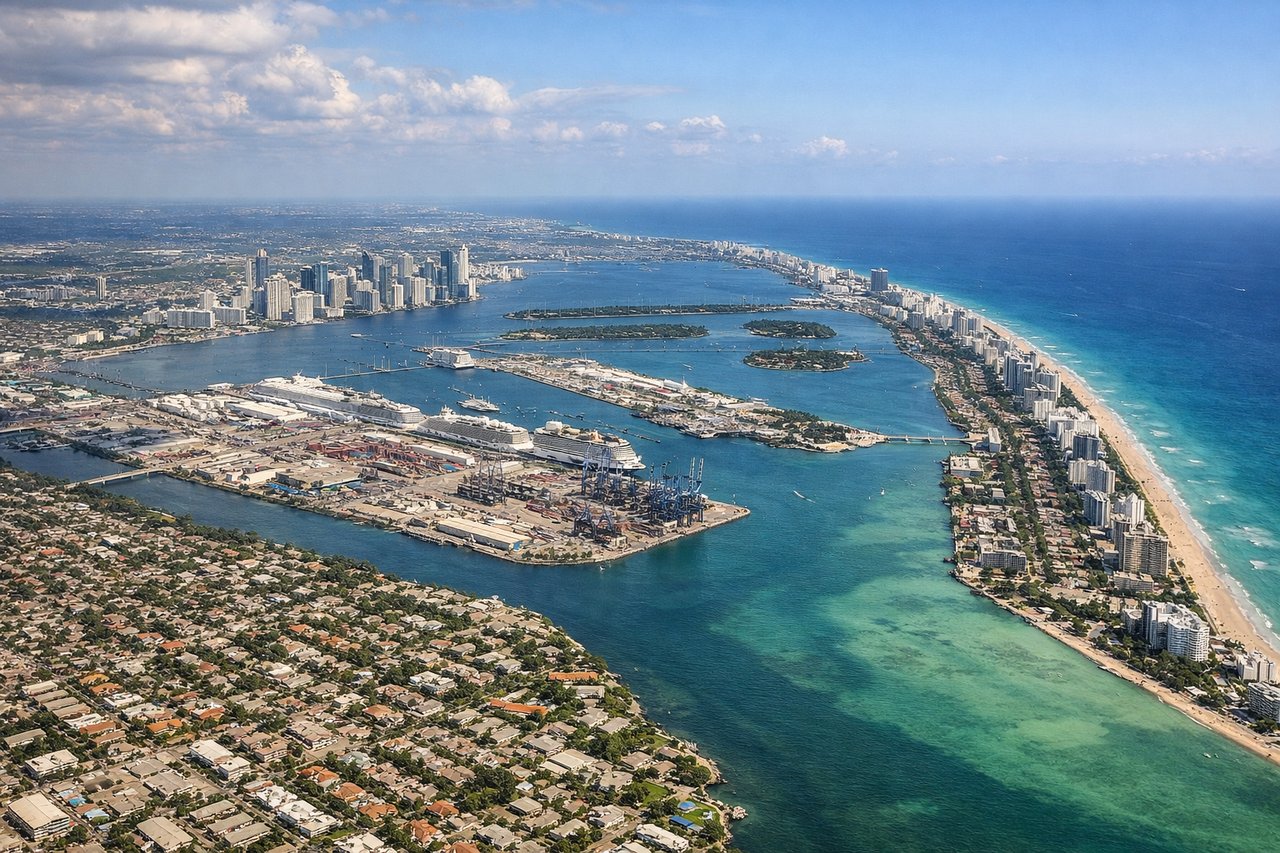
Landing at MIA
RIGHTApproach to Miami typically uses runways 08/09 (easterly flow), requiring a descent from the northwest. The right side faces southeast toward Biscayne Bay, Miami Beach, and the Atlantic Ocean during the final approach turn and landing. The left side views the Everglades and inland terrain.
Landmarks on this routeAll landmarks →
Will your flight be in sunlight?
See exactly which side of the plane gets sun and shade at your departure time.
About This Route
Which side of the plane should I sit on flying from Geneva Cointrin (GVA) to Miami International (MIA)?
Sit on the Right side of the plane for the best views on flights from Geneva to Miami. While the left side offers a dramatic Alpine departure, the right side delivers superior overall scenery across the full flight. The cruise phase over the Atlantic (5+ hours) is ocean-only on both sides, but the right side's landing approach into Miami—featuring Biscayne Bay's turquoise waters, the Miami Beach skyline, and the Port of Miami—provides significantly more visual interest than the left side's Everglades approach. The takeoff advantage on the left (Alps) is outweighed by the landing advantage on the right (coastal urban and marine scenery).
What can I see during takeoff from Geneva Cointrin in Geneva?
During takeoff from Geneva Cointrin (GVA), sit on the Left side for the best views. Departure to the southwest on runway 22 (typical) positions the left side to view the Alps during initial climb. The right side faces away from mountains toward the Jura and flat French terrain. Notable sights include: Mont Blanc (visible as a distant peak on the left during climb), Lake Geneva (Lac Léman) receding below, Jura Mountains (low, forested ridges on the right horizon).
What can I see when landing at Miami International in Miami?
When landing at Miami International (MIA), sit on the Right side for the best views. Approach to Miami typically uses runways 08/09 (easterly flow), requiring a descent from the northwest. The right side faces southeast toward Biscayne Bay, Miami Beach, and the Atlantic Ocean during the final approach turn and landing. The left side views the Everglades and inland terrain. Notable sights include: Biscayne Bay (turquoise shallow waters), Miami Beach barrier island with high-rise hotels and beachfront development, Port of Miami container terminals and cruise ship docks, Atlantic Ocean horizon.
How long is the flight from Geneva to Miami?
The flight from Geneva Cointrin (GVA) to Miami International (MIA) takes 9h 15m.
What does the Geneva to Miami flight path pass over?
The flight crosses the Atlantic Ocean for approximately 5.5 hours with no significant landmarks visible—open ocean dominates the midpoint. Departing Geneva, the route initially crosses the Alps and French Alps, then descends over the Atlantic. Approaching Miami, the Bahamas' shallow banks and islands (Bimini, Grand Bahama) may be visible 1-2 hours before landing, appearing as low, sandy features with turquoise surrounding waters. The final 90 minutes show the Florida peninsula, with the Everglades' dark wetlands and the Miami metropolitan area's urban sprawl becoming increasingly distinct.