Left side scores higher due to superior takeoff scenery (Miami's urban waterfront and Biscayne Bay are far more visually engaging than the Everglades), and while the landing favors the right side with alpine views, the takeoff experience is more dramatic and memorable. The cruise phase over the Atlantic and European continent offers limited scenic variation on either side, so the departure advantage is decisive.
Flight Path
Transatlantic crossing over the North Atlantic (minimal landmarks, open ocean for approximately 5 hours); European landfall over Ireland or UK; crossing the English Channel or North Sea; views of the Pyrenees or Massif Central during descent into France; final approach over the Jura Mountains and Lake Geneva basin into Switzerland.
Great circle distance and headings ›_Panoramica_del_centro_della_citt%C3%A0_dal_lago.jpg?width=600)


Phase by phase
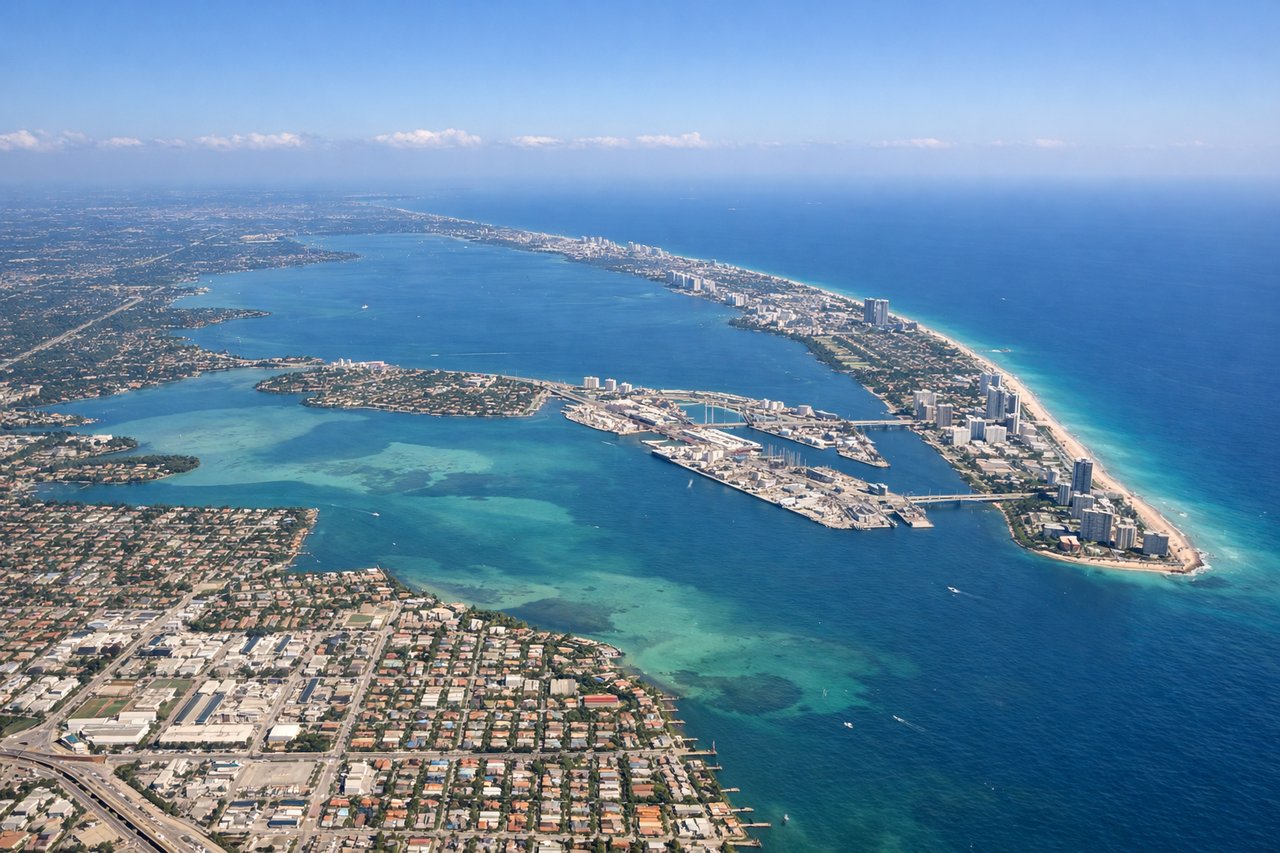
Takeoff from MIA
LEFTLeft side captures Miami's urban waterfront and Biscayne Bay during typical eastward departure, with clear views of downtown Miami, barrier islands, and the Atlantic coastline. Right side faces inland toward the Everglades—flat, featureless wetland with minimal visual interest.
Landing at GVA
RIGHTRight side (north-facing approach to runway 22) offers views of the Alps during descent into Geneva, including Mont Blanc and the Jura Mountains. Left side faces the Rhône Valley and French lowlands—scenic but less dramatic than alpine terrain.
Landmarks on this routeAll landmarks →
Will your flight be in sunlight?
See exactly which side of the plane gets sun and shade at your departure time.
About This Route
Which side of the plane should I sit on flying from Miami International (MIA) to Geneva Cointrin (GVA)?
Sit on the Left side of the plane for the best views on flights from Miami to Geneva. Left side scores higher due to superior takeoff scenery (Miami's urban waterfront and Biscayne Bay are far more visually engaging than the Everglades), and while the landing favors the right side with alpine views, the takeoff experience is more dramatic and memorable. The cruise phase over the Atlantic and European continent offers limited scenic variation on either side, so the departure advantage is decisive.
What can I see during takeoff from Miami International in Miami?
During takeoff from Miami International (MIA), sit on the Left side for the best views. Left side captures Miami's urban waterfront and Biscayne Bay during typical eastward departure, with clear views of downtown Miami, barrier islands, and the Atlantic coastline. Right side faces inland toward the Everglades—flat, featureless wetland with minimal visual interest. Notable sights include: Downtown Miami skyline, Biscayne Bay, Miami Beach and barrier islands, Atlantic Ocean horizon.
What can I see when landing at Geneva Cointrin in Geneva?
When landing at Geneva Cointrin (GVA), sit on the Right side for the best views. Right side (north-facing approach to runway 22) offers views of the Alps during descent into Geneva, including Mont Blanc and the Jura Mountains. Left side faces the Rhône Valley and French lowlands—scenic but less dramatic than alpine terrain. Notable sights include: Mont Blanc, Alps mountain range, Lake Geneva (Lac Léman), Jura Mountains.
How long is the flight from Miami to Geneva?
The flight from Miami International (MIA) to Geneva Cointrin (GVA) takes 9h 15m.
What does the Miami to Geneva flight path pass over?
Transatlantic crossing over the North Atlantic (minimal landmarks, open ocean for approximately 5 hours); European landfall over Ireland or UK; crossing the English Channel or North Sea; views of the Pyrenees or Massif Central during descent into France; final approach over the Jura Mountains and Lake Geneva basin into Switzerland.