Hangzhou to Guilin is 723 miles (1,164 km), a flight of about 2 hours 10 minutes.
While takeoff offers scenic estuary views, the landing approach over the Li River and karst landscape is geographically more distinctive and memorable. The karst peaks are Guilin's defining feature and far more visually striking than Hangzhou's departure zone.
Flight Path
The flight path crosses the Zhejiang-Jiangxi provincial border around the midpoint. Notable features include the Quzhou region's hilly terrain, the Ganjiang River valley (visible as a north-south trending water feature), and gradual transition from developed Zhejiang lowlands to the more mountainous Jiangxi landscape. The terrain becomes progressively more karst-influenced as you approach Guilin from the northeast.
Great circle distance and headings ›Phase by phase
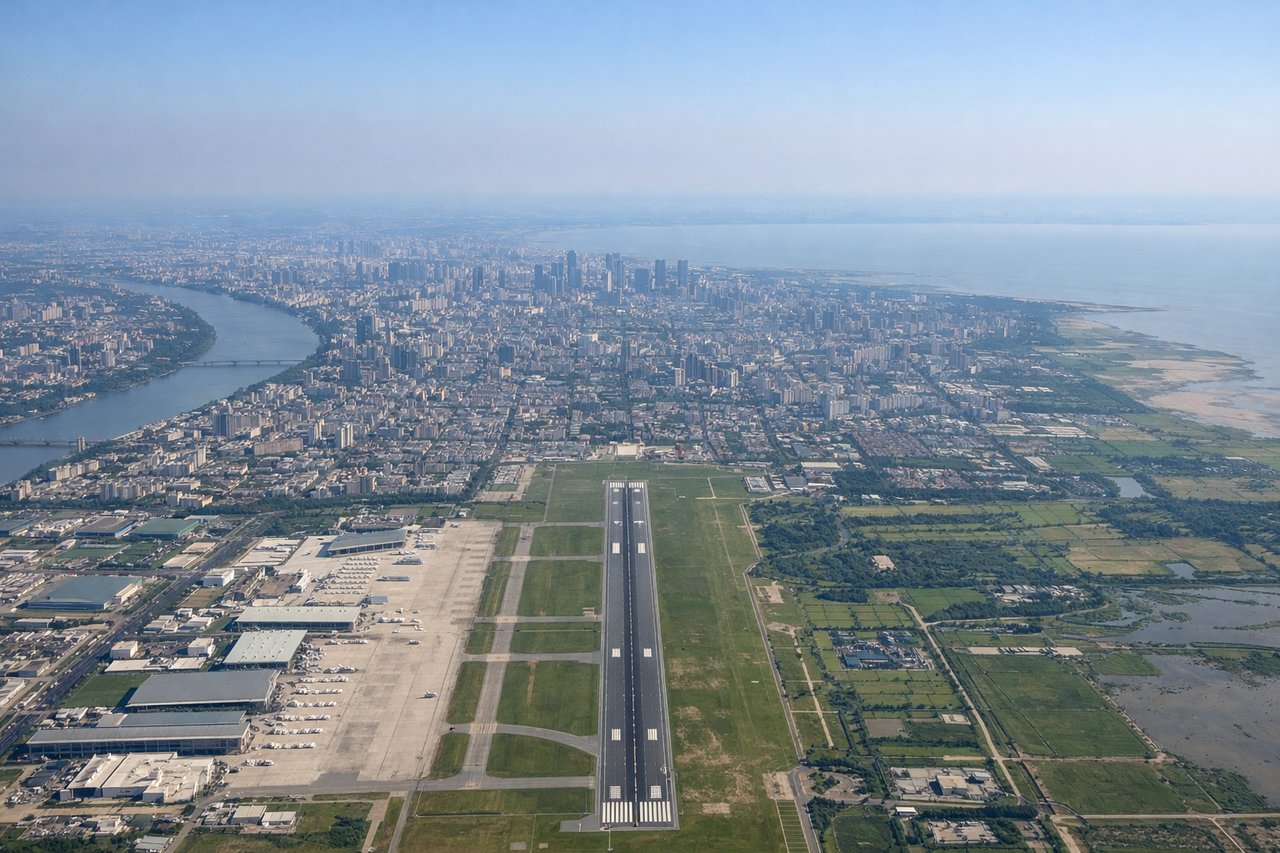
Takeoff from HGH
RIGHTHangzhou typically departs runway 20L/20R (southwesterly). Right-side seats face the Qiantang River estuary and West Lake district as you climb. Left seats see industrial zones and urban sprawl with less geographic interest.
Landing at KWL
LEFTGuilin typically lands runway 02 (northbound approach). Left-side seats descend over the Li River valley with its iconic karst peaks. Right seats approach over flatter terrain with less distinctive geography.
Landmarks on this routeAll landmarks →
Will your flight be in sunlight?
Pick a date and time in the Sun Map to watch the sun move across your whole flight.
About This Route
Which side of the plane should I sit on flying from Xiaoshan (HGH) to Liangjiang (KWL)?
Sit on the Left side of the plane for the best views on flights from Hangzhou to Guilin. While takeoff offers scenic estuary views, the landing approach over the Li River and karst landscape is geographically more distinctive and memorable. The karst peaks are Guilin's defining feature and far more visually striking than Hangzhou's departure zone.
What can I see during takeoff from Xiaoshan in Hangzhou?
During takeoff from Xiaoshan (HGH), sit on the Right side for the best views. Hangzhou typically departs runway 20L/20R (southwesterly). Right-side seats face the Qiantang River estuary and West Lake district as you climb. Left seats see industrial zones and urban sprawl with less geographic interest. Notable sights include: Qiantang River estuary (muddy tidal flats), West Lake (Xihu) with its distinctive circular shape, Hangzhou urban grid extending south, distant Kuaiji Mountains to the south-southwest.
What can I see when landing at Liangjiang in Guilin?
When landing at Liangjiang (KWL), sit on the Left side for the best views. Guilin typically lands runway 02 (northbound approach). Left-side seats descend over the Li River valley with its iconic karst peaks. Right seats approach over flatter terrain with less distinctive geography. Notable sights include: Li River (Lijiang) with its serpentine meanders, karst limestone peaks (Guilin's signature landscape), Guilin city center along the river, Liangjiang International Airport runways.
How long is the flight from Hangzhou to Guilin?
The flight from Xiaoshan (HGH) to Liangjiang (KWL) takes about 2 hours 10 minutes. The shortest flight path between them is 723 miles (1,164 km); winds and air traffic control usually add a few percent.
What does the Hangzhou to Guilin flight path pass over?
The flight path crosses the Zhejiang-Jiangxi provincial border around the midpoint. Notable features include the Quzhou region's hilly terrain, the Ganjiang River valley (visible as a north-south trending water feature), and gradual transition from developed Zhejiang lowlands to the more mountainous Jiangxi landscape. The terrain becomes progressively more karst-influenced as you approach Guilin from the northeast.