While takeoff offers good views on the right, the landing approach on the left provides more dramatic and sustained scenery—the Longquan Mountains and the Chengdu Plain's agricultural landscape are more visually distinctive than Hangzhou's urban sprawl. The left side captures the geographic transition that defines this route.
Flown HGH to TFU? Did we get it right?
Flight Path
Hangzhou to Chengdu is 953 miles (1,534 km), a flight of about 2 hours 35 minutes.
The flight path westward crosses the Yangtze River valley and enters the Sichuan Basin. Notable midpoint features include the Yangtze River itself (visible around 45 minutes into flight), the transition from coastal-plain terrain to basin topography, and the gradual appearance of the Longquan and Qinling mountain ranges on the western horizon as the aircraft approaches Chengdu airspace. The terrain shifts from densely populated eastern plains to more agricultural and forested landscape typical of central Sichuan.
Great circle distance and headings ›


Phase by phase
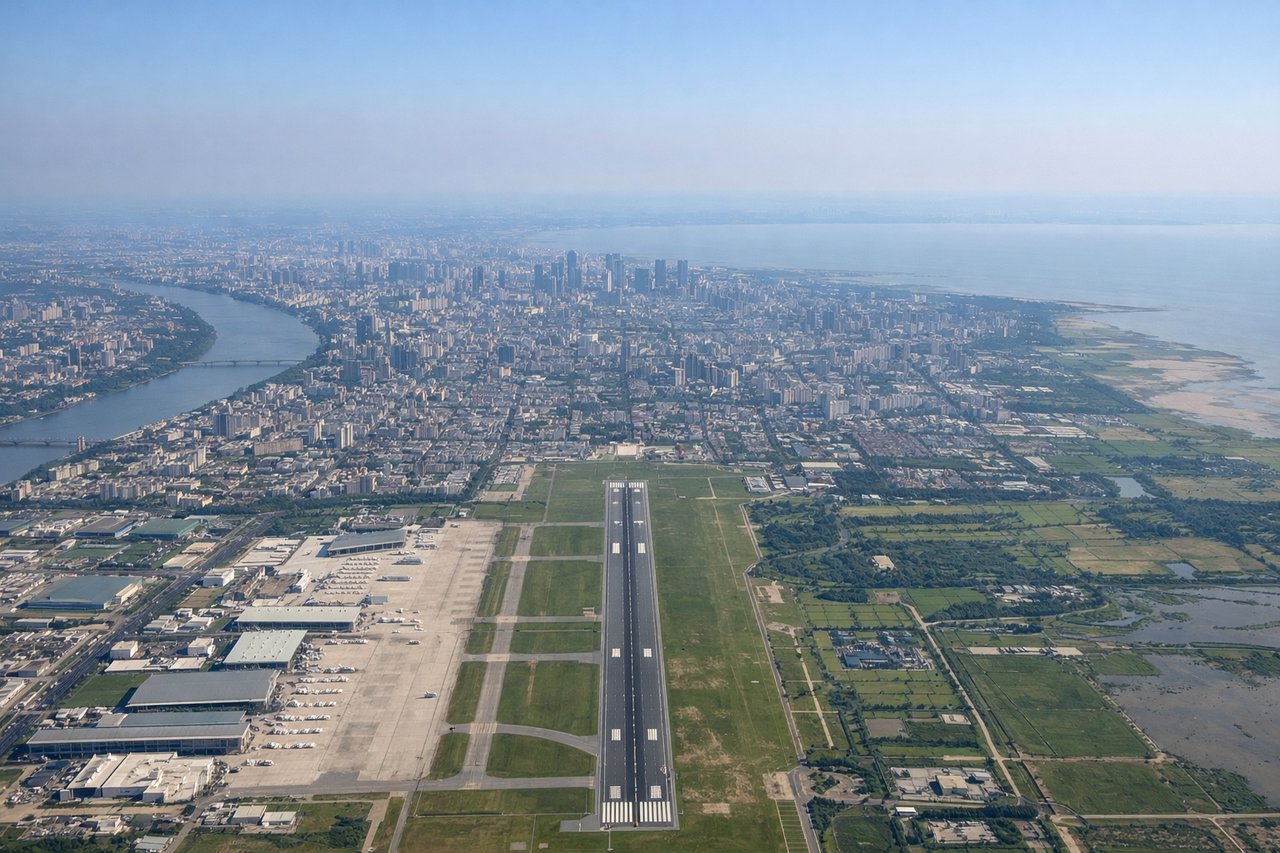
Takeoff from HGH
RIGHTRight-side seats offer views of Hangzhou's urban sprawl and the northern shore of West Lake as the aircraft climbs westward. The lake's distinctive shape and surrounding hills provide immediate visual interest during the initial climb.
Landing at TFU
LEFTLeft-side seats provide excellent views during descent into Chengdu Tianfu. The approach from the east reveals the Chengdu Plain's agricultural patchwork and the Longquan Mountains rising to the west, with the city's urban expansion clearly visible as the aircraft descends toward the airport.
Will your flight be in sunlight?
Pick a date and time in the Sun Map to watch the sun move across your whole flight.
About This Route
Which side of the plane should I sit on flying from Xiaoshan (HGH) to Chengdu Tianfu International Airport (TFU)?
Sit on the Left side of the plane for the best views on flights from Hangzhou to Chengdu. While takeoff offers good views on the right, the landing approach on the left provides more dramatic and sustained scenery—the Longquan Mountains and the Chengdu Plain's agricultural landscape are more visually distinctive than Hangzhou's urban sprawl. The left side captures the geographic transition that defines this route.
What can I see during takeoff from Xiaoshan in Hangzhou?
During takeoff from Xiaoshan (HGH), sit on the Right side for the best views. Right-side seats offer views of Hangzhou's urban sprawl and the northern shore of West Lake as the aircraft climbs westward. The lake's distinctive shape and surrounding hills provide immediate visual interest during the initial climb. Notable sights include: West Lake (Xihu), Hangzhou urban grid, Qiantang River to the south, Northern hills of the Hangzhou basin.
What can I see when landing at Chengdu Tianfu International Airport in Chengdu?
When landing at Chengdu Tianfu International Airport (TFU), sit on the Left side for the best views. Left-side seats provide excellent views during descent into Chengdu Tianfu. The approach from the east reveals the Chengdu Plain's agricultural patchwork and the Longquan Mountains rising to the west, with the city's urban expansion clearly visible as the aircraft descends toward the airport. Notable sights include: Longquan Mountains (western horizon), Chengdu Plain agricultural grid, Chengdu urban districts, Jianyang city area near airport.
How long is the flight from Hangzhou to Chengdu?
The flight from Xiaoshan (HGH) to Chengdu Tianfu International Airport (TFU) takes about 2 hours 35 minutes. The shortest flight path between them is 953 miles (1,534 km); winds and air traffic control usually add a few percent.
What does the Hangzhou to Chengdu flight path pass over?
The flight path westward crosses the Yangtze River valley and enters the Sichuan Basin. Notable midpoint features include the Yangtze River itself (visible around 45 minutes into flight), the transition from coastal-plain terrain to basin topography, and the gradual appearance of the Longquan and Qinling mountain ranges on the western horizon as the aircraft approaches Chengdu airspace. The terrain shifts from densely populated eastern plains to more agricultural and forested landscape typical of central Sichuan.