Right-side seats deliver superior scenery for both segments: the Hong Kong harbor departure and the approach to Cairns over the Coral Sea and reef structures. The takeoff views are particularly strong, and the landing approach over the reef system is equally compelling from the right side.
Flight Path
The flight path crosses the South China Sea, passes over or near the Philippines (depending on routing), then crosses the Celebes Sea and Banda Sea. You may see Luzon or Mindanao if the aircraft tracks through Philippine airspace. The Moluccas (Spice Islands) and northern coast of Australia's Cape York Peninsula are potential midpoint landmarks, though they're often below cruise altitude visibility or distant from typical flight corridors. Most of the midpoint crossing is open ocean with limited distinctive landmarks.
Great circle distance and headings ›
.jpg?width=600)
Phase by phase
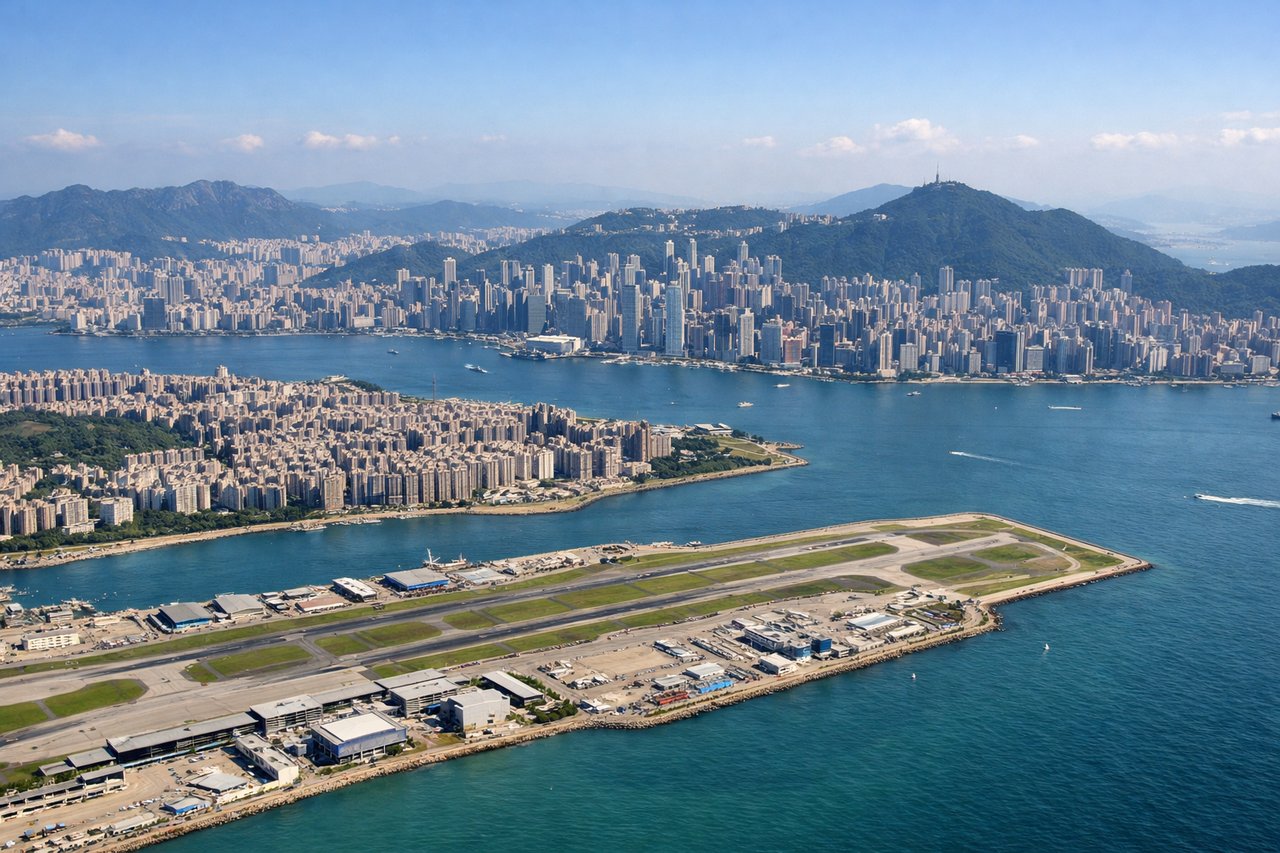
Takeoff from HKG
RIGHTRight-side seats capture the Victoria Harbour waterfront and Kowloon Peninsula as the aircraft climbs out westward over the South China Sea. You'll see the dense urban grid of Hong Kong Island and the container terminals that define the harbor.
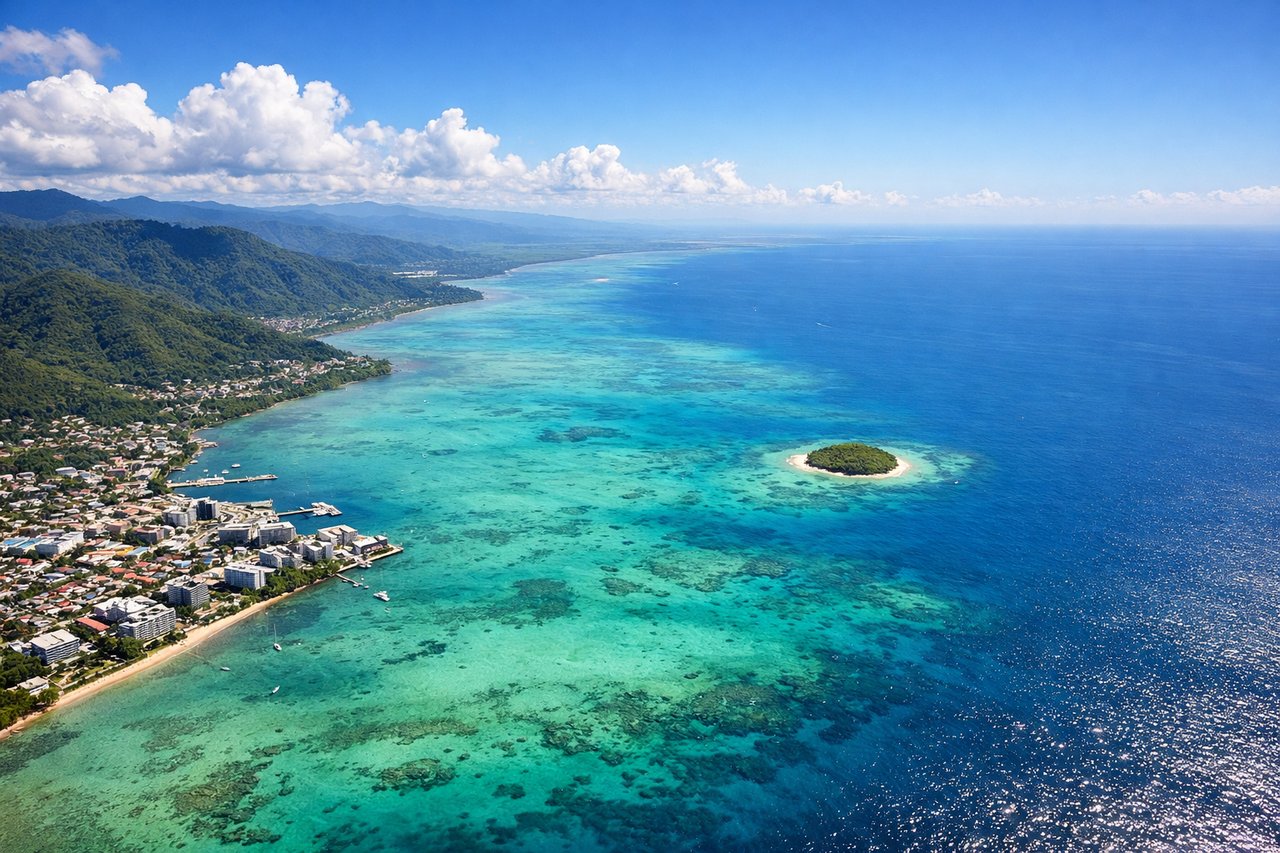
Landing at CNS
LEFTLeft-side seats offer views of the Great Barrier Reef's outer edges and the Coral Sea as you approach from the northeast. During descent into Cairns, you'll see the reef structure, Trinity Inlet, and the coastal rainforest meeting the shoreline.
Landmarks on this routeAll landmarks →
Will your flight be in sunlight?
See exactly which side of the plane gets sun and shade at your departure time.
About This Route
Which side of the plane should I sit on flying from Hong Kong International (HKG) to Cairns International (CNS)?
Sit on the Right side of the plane for the best views on flights from Hong Kong to Cairns. Right-side seats deliver superior scenery for both segments: the Hong Kong harbor departure and the approach to Cairns over the Coral Sea and reef structures. The takeoff views are particularly strong, and the landing approach over the reef system is equally compelling from the right side.
What can I see during takeoff from Hong Kong International in Hong Kong?
During takeoff from Hong Kong International (HKG), sit on the Right side for the best views. Right-side seats capture the Victoria Harbour waterfront and Kowloon Peninsula as the aircraft climbs out westward over the South China Sea. You'll see the dense urban grid of Hong Kong Island and the container terminals that define the harbor. Notable sights include: Victoria Harbour, Kowloon Peninsula, Hong Kong Island skyline, South China Sea coastline.
What can I see when landing at Cairns International in Cairns?
When landing at Cairns International (CNS), sit on the Left side for the best views. Left-side seats offer views of the Great Barrier Reef's outer edges and the Coral Sea as you approach from the northeast. During descent into Cairns, you'll see the reef structure, Trinity Inlet, and the coastal rainforest meeting the shoreline. Notable sights include: Great Barrier Reef (outer reef structures), Coral Sea, Trinity Inlet, Cairns waterfront and rainforest hinterland.
How long is the flight from Hong Kong to Cairns?
The flight from Hong Kong International (HKG) to Cairns International (CNS) takes Approximately 7.5 to 8 hours.
What does the Hong Kong to Cairns flight path pass over?
The flight path crosses the South China Sea, passes over or near the Philippines (depending on routing), then crosses the Celebes Sea and Banda Sea. You may see Luzon or Mindanao if the aircraft tracks through Philippine airspace. The Moluccas (Spice Islands) and northern coast of Australia's Cape York Peninsula are potential midpoint landmarks, though they're often below cruise altitude visibility or distant from typical flight corridors. Most of the midpoint crossing is open ocean with limited distinctive landmarks.