Hong Kong to Kimhae is 1,269 miles (2,043 km), a flight of about 3 hours 15 minutes.
While takeoff from Hong Kong favors the right side, the landing approach into Busan from the left provides more dramatic and varied scenery—the Nakdong River estuary, coastal mountains, and harbor geography create a more visually rewarding final descent than the relatively uniform northern approach from Hong Kong.
Flight Path
The flight path crosses the East China Sea heading northeast. Notable features include the Korean Strait (visible as the water boundary between mainland and Korean peninsula), the approach to the southern Korean coastline with its numerous small islands and rocky inlets, and the transition from open water to the complex estuarine and mountainous terrain surrounding Busan. The Tsushima Strait region (between Japan and Korea) may be visible on clear days, though typically at the edge of visibility. The flight maintains altitude over open water for most of the journey, making midpoint window views less dramatic than departure and arrival phases.
Great circle distance and headings ›

Phase by phase
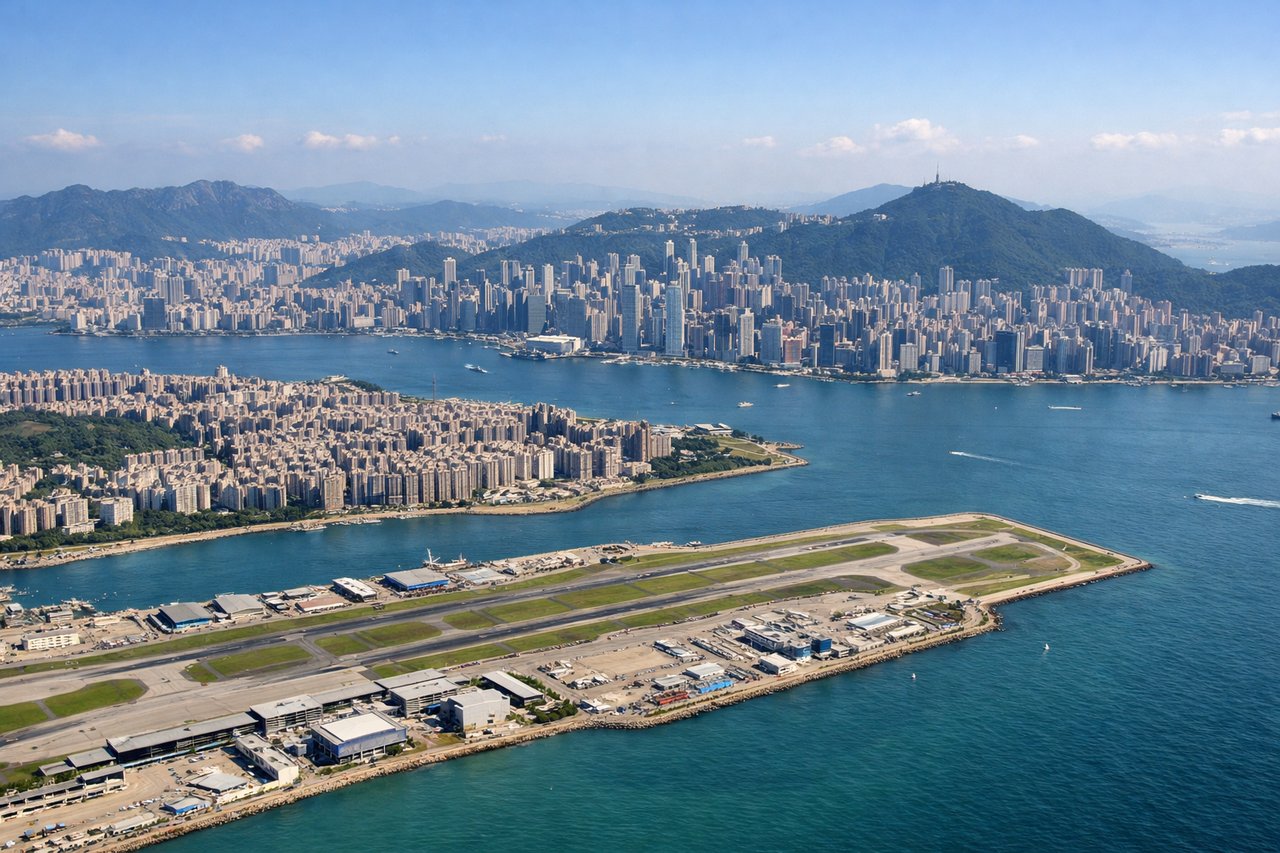
Takeoff from HKG
RIGHTRight-side seats capture the Victoria Harbour waterfront and Kowloon Peninsula as the aircraft climbs northward out of Hong Kong. The urban sprawl and harbor geometry are most dramatic from this angle during the initial climb.
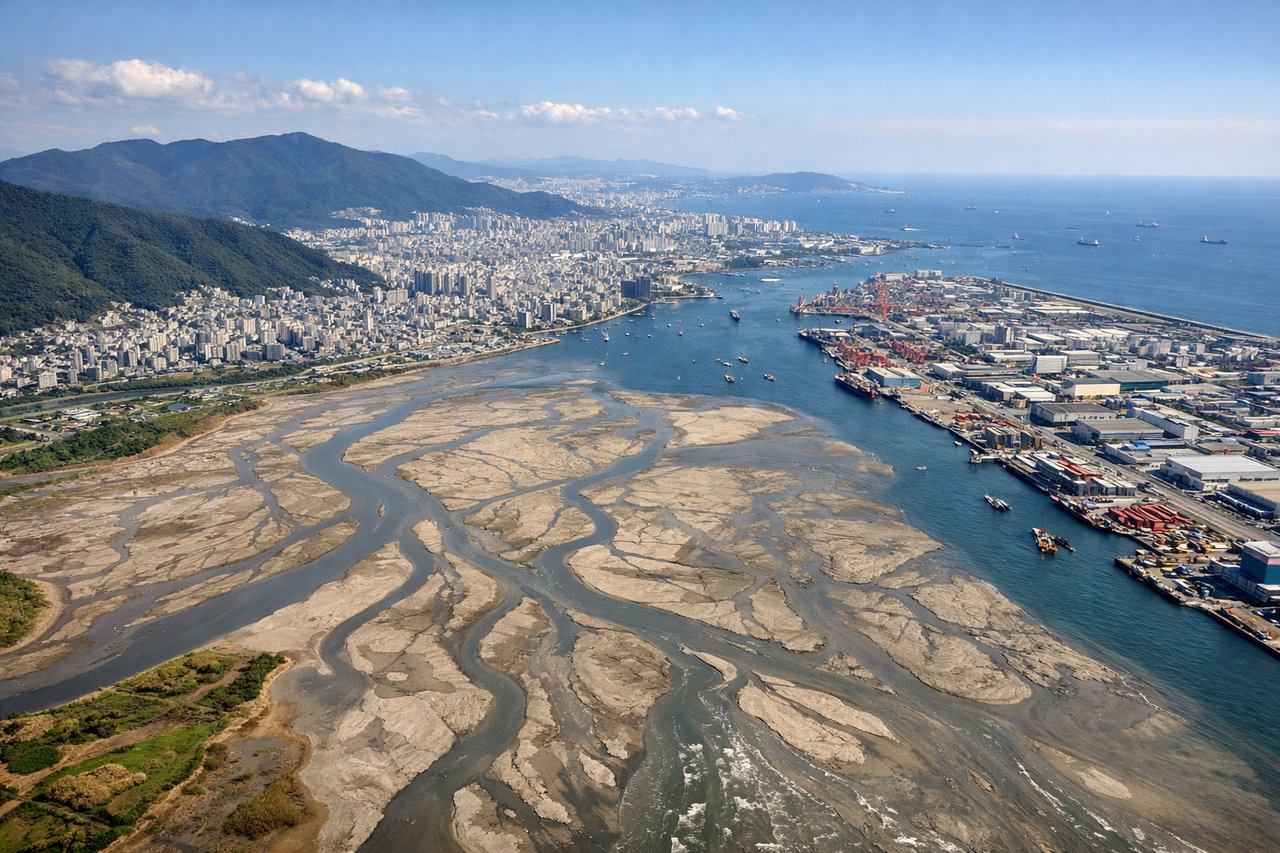
Landing at PUS
LEFTLeft-side seats offer the best approach views of the Nakdong River estuary, Busan's coastal geography, and the mountainous terrain surrounding Gimhae Airport. The descent path from the south provides excellent visibility of the Geoje Island and the complex waterway system.
Landmarks on this routeAll landmarks →
Will your flight be in sunlight?
Pick a date and time in the Sun Map to watch the sun move across your whole flight.
About This Route
Which side of the plane should I sit on flying from Hong Kong International (HKG) to Gimhae International (PUS)?
Sit on the Left side of the plane for the best views on flights from Hong Kong to Kimhae. While takeoff from Hong Kong favors the right side, the landing approach into Busan from the left provides more dramatic and varied scenery—the Nakdong River estuary, coastal mountains, and harbor geography create a more visually rewarding final descent than the relatively uniform northern approach from Hong Kong.
What can I see during takeoff from Hong Kong International in Hong Kong?
During takeoff from Hong Kong International (HKG), sit on the Right side for the best views. Right-side seats capture the Victoria Harbour waterfront and Kowloon Peninsula as the aircraft climbs northward out of Hong Kong. The urban sprawl and harbor geometry are most dramatic from this angle during the initial climb. Notable sights include: Victoria Harbour, Kowloon Peninsula, Hong Kong Island skyline, New Territories urban grid.
What can I see when landing at Gimhae International in Kimhae?
When landing at Gimhae International (PUS), sit on the Left side for the best views. Left-side seats offer the best approach views of the Nakdong River estuary, Busan's coastal geography, and the mountainous terrain surrounding Gimhae Airport. The descent path from the south provides excellent visibility of the Geoje Island and the complex waterway system. Notable sights include: Nakdong River estuary, Busan harbor and coastline, Geoje Island, surrounding mountain ridges.
How long is the flight from Hong Kong to Kimhae?
The flight from Hong Kong International (HKG) to Gimhae International (PUS) takes about 3 hours 15 minutes. The shortest flight path between them is 1,269 miles (2,043 km); winds and air traffic control usually add a few percent.
What does the Hong Kong to Kimhae flight path pass over?
The flight path crosses the East China Sea heading northeast. Notable features include the Korean Strait (visible as the water boundary between mainland and Korean peninsula), the approach to the southern Korean coastline with its numerous small islands and rocky inlets, and the transition from open water to the complex estuarine and mountainous terrain surrounding Busan. The Tsushima Strait region (between Japan and Korea) may be visible on clear days, though typically at the edge of visibility. The flight maintains altitude over open water for most of the journey, making midpoint window views less dramatic than departure and arrival phases.