Kimhae to Hong Kong is 1,269 miles (2,043 km), a flight of about 3 hours 15 minutes.
Left seats capture the dramatic Victoria Harbour approach and Hong Kong's iconic skyline on arrival, which outweighs the moderate takeoff advantage on the right. The landing view is more visually distinctive and memorable.
Flight Path
The flight path crosses the Korea Strait (visible as open water 30-40 minutes after departure), then tracks south-southwest over the East China Sea. Around the midpoint, the Jeju Island volcanic plateau may be visible to the west (depending on exact routing), appearing as a dark, roughly circular landmass. The flight then continues over open water with no major landmarks until approaching the Pearl River Delta region. The delta itself becomes visible 30-40 minutes before landing—a complex network of rivers, islands, and reclaimed land in tan and green tones, with Macau visible as a peninsula on the western side and Zhuhai's urban development inland.
Great circle distance and headings ›

Phase by phase
Takeoff from PUS
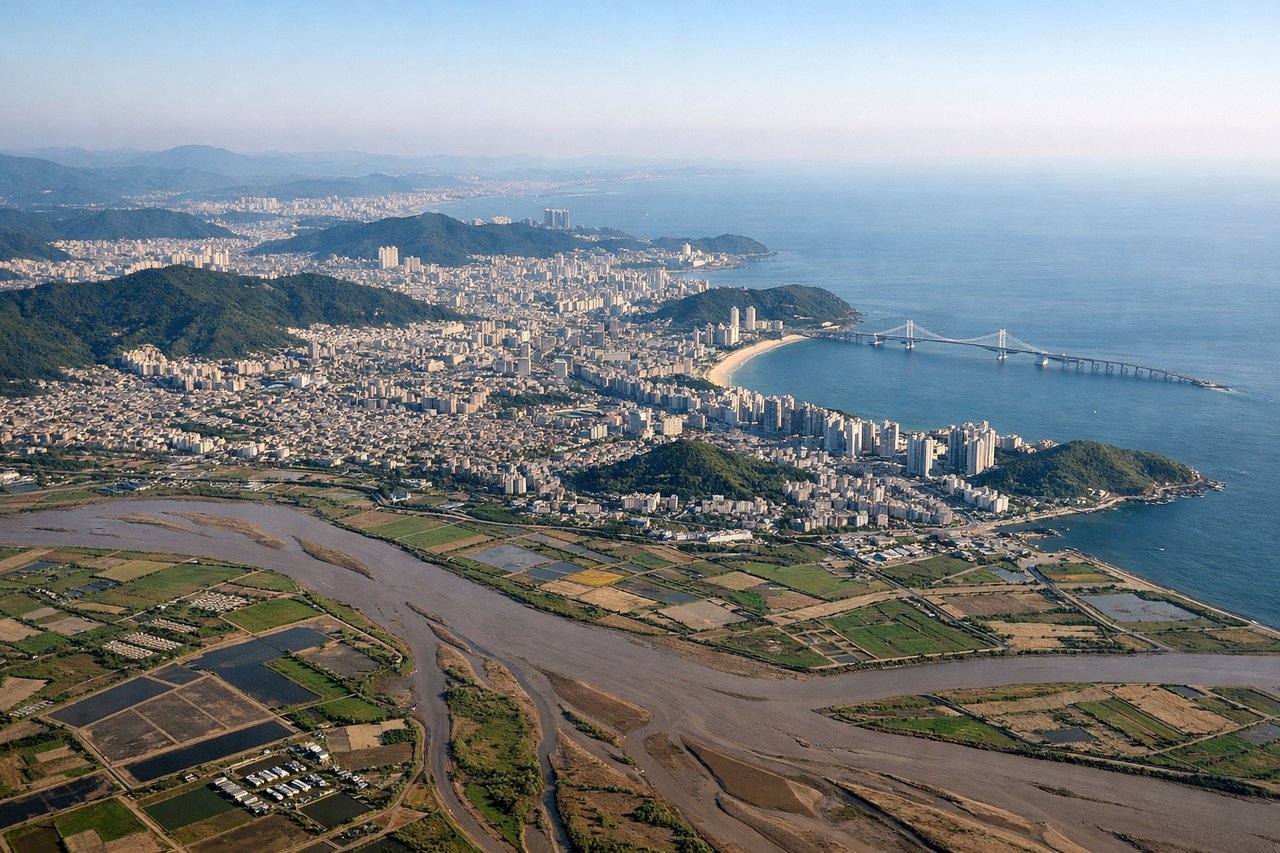
RIGHTGimhae typically departs runways 18L/R (southbound) or 36L/R (northbound). Right-side seats on southbound departures offer views of Nakdong River estuary and Busan's harbor. Northbound departures favor right seats for the Geumjeong Mountains and Busan cityscape before turning toward Hong Kong.
Landing at HKG
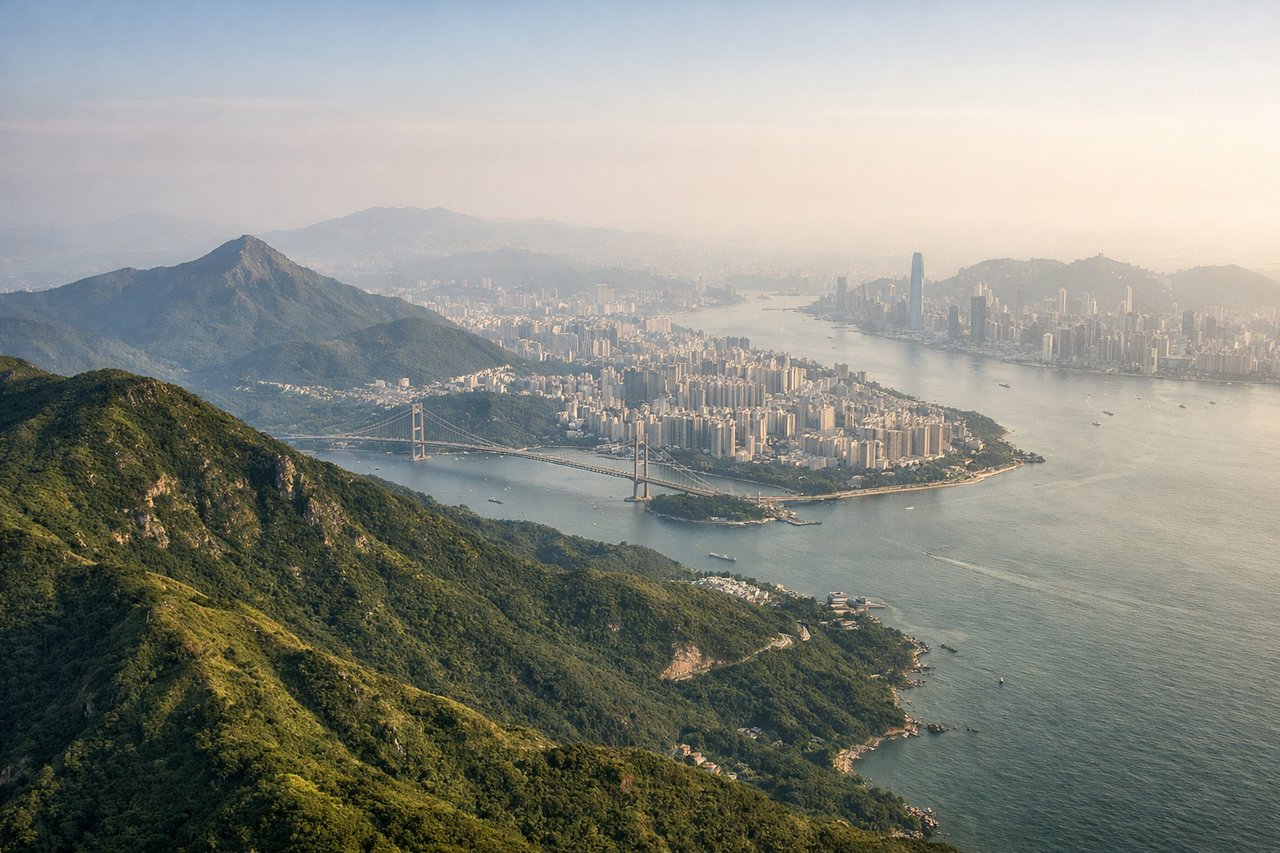
LEFTHong Kong International uses runways 07L/R (eastbound) or 25L/R (westbound). Most arrivals use 07L/R from the northwest. Left-side seats provide excellent views of Victoria Harbour, Hong Kong Island's skyline, and Kowloon Peninsula during final approach over the water.
Landmarks on this routeAll landmarks →
Will your flight be in sunlight?
Pick a date and time in the Sun Map to watch the sun move across your whole flight.
About This Route
Which side of the plane should I sit on flying from Gimhae International (PUS) to Hong Kong International (HKG)?
Sit on the Left side of the plane for the best views on flights from Kimhae to Hong Kong. Left seats capture the dramatic Victoria Harbour approach and Hong Kong's iconic skyline on arrival, which outweighs the moderate takeoff advantage on the right. The landing view is more visually distinctive and memorable.
What can I see during takeoff from Gimhae International in Kimhae?
During takeoff from Gimhae International (PUS), sit on the Right side for the best views. Gimhae typically departs runways 18L/R (southbound) or 36L/R (northbound). Right-side seats on southbound departures offer views of Nakdong River estuary and Busan's harbor. Northbound departures favor right seats for the Geumjeong Mountains and Busan cityscape before turning toward Hong Kong. Notable sights include: Nakdong River estuary (wide braided delta immediately south of airport), Busan harbor and container terminals (southeast), Geumjeong Mountains (north, distinctive ridgeline), Korea Strait (southern horizon).
What can I see when landing at Hong Kong International in Hong Kong?
When landing at Hong Kong International (HKG), sit on the Left side for the best views. Hong Kong International uses runways 07L/R (eastbound) or 25L/R (westbound). Most arrivals use 07L/R from the northwest. Left-side seats provide excellent views of Victoria Harbour, Hong Kong Island's skyline, and Kowloon Peninsula during final approach over the water. Notable sights include: Victoria Harbour (iconic deep-water harbor between Hong Kong Island and Kowloon), Hong Kong Island skyline (Central District towers, Peak), Kowloon Peninsula (dense urban grid), New Territories (northern background, green hills).
How long is the flight from Kimhae to Hong Kong?
The flight from Gimhae International (PUS) to Hong Kong International (HKG) takes about 3 hours 15 minutes. The shortest flight path between them is 1,269 miles (2,043 km); winds and air traffic control usually add a few percent.
What does the Kimhae to Hong Kong flight path pass over?
The flight path crosses the Korea Strait (visible as open water 30-40 minutes after departure), then tracks south-southwest over the East China Sea. Around the midpoint, the Jeju Island volcanic plateau may be visible to the west (depending on exact routing), appearing as a dark, roughly circular landmass. The flight then continues over open water with no major landmarks until approaching the Pearl River Delta region. The delta itself becomes visible 30-40 minutes before landing—a complex network of rivers, islands, and reclaimed land in tan and green tones, with Macau visible as a peninsula on the western side and Zhuhai's urban development inland.