The right side wins overall. The Busan harbor and Korea Strait departure is visually strong, and crucially, the right side tracks the Japanese coastline on approach — you pick up the Kii Peninsula and Ise Bay if routing south, or the Izu Peninsula and Sagami Bay on the more direct northern routing. The left side at Haneda is excellent but the right side delivers more sustained coastal scenery across the Sea of Japan crossing.
Flown PUS to HND? Did we get it right?
Flight Path
Kimhae to Tokyo is 612 miles (984 km), a flight of about 1 hour 55 minutes.
The flight crosses the Korea Strait (Tsushima Strait), passing near or over Tsushima Island and Iki Island — both clearly visible as forested islands in the strait. The aircraft then crosses Kyushu's northern coastline near Fukuoka, traverses the Seto Inland Sea or tracks northeast over Honshu depending on routing, with the Japanese Alps visible as a snow-capped ridgeline to the north on clear days before descending toward Tokyo Bay.
Great circle distance and headings ›

Phase by phase
Takeoff from PUS
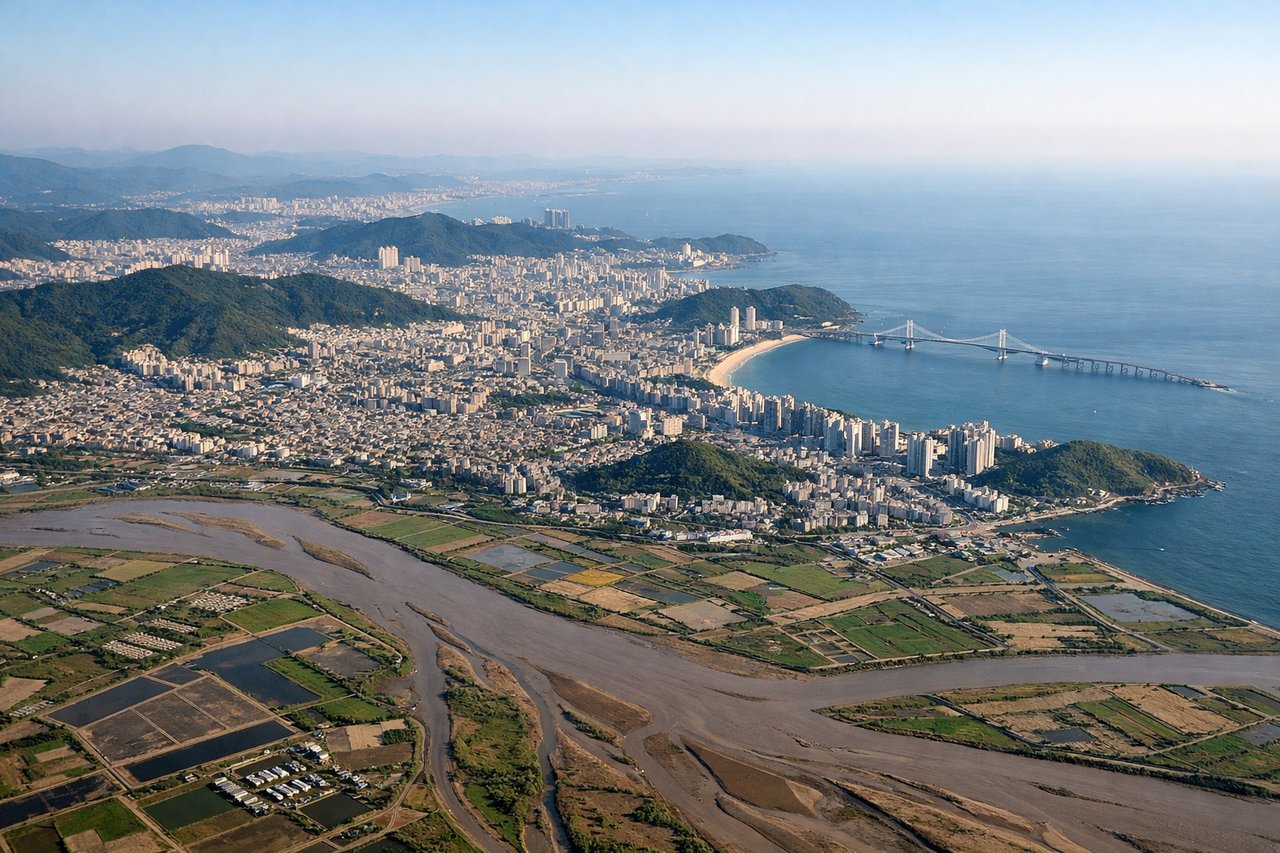
RIGHTGimhae typically departs on runway 36L/36R heading north, or runway 18 heading south. For the eastbound departure toward Japan, aircraft usually climb out heading northeast over the Nakdong River estuary. The right side gives you views over Busan's harbor, the Gwangan Bridge, and the coastline of the Korea Strait as the aircraft banks east.
Landing at HND
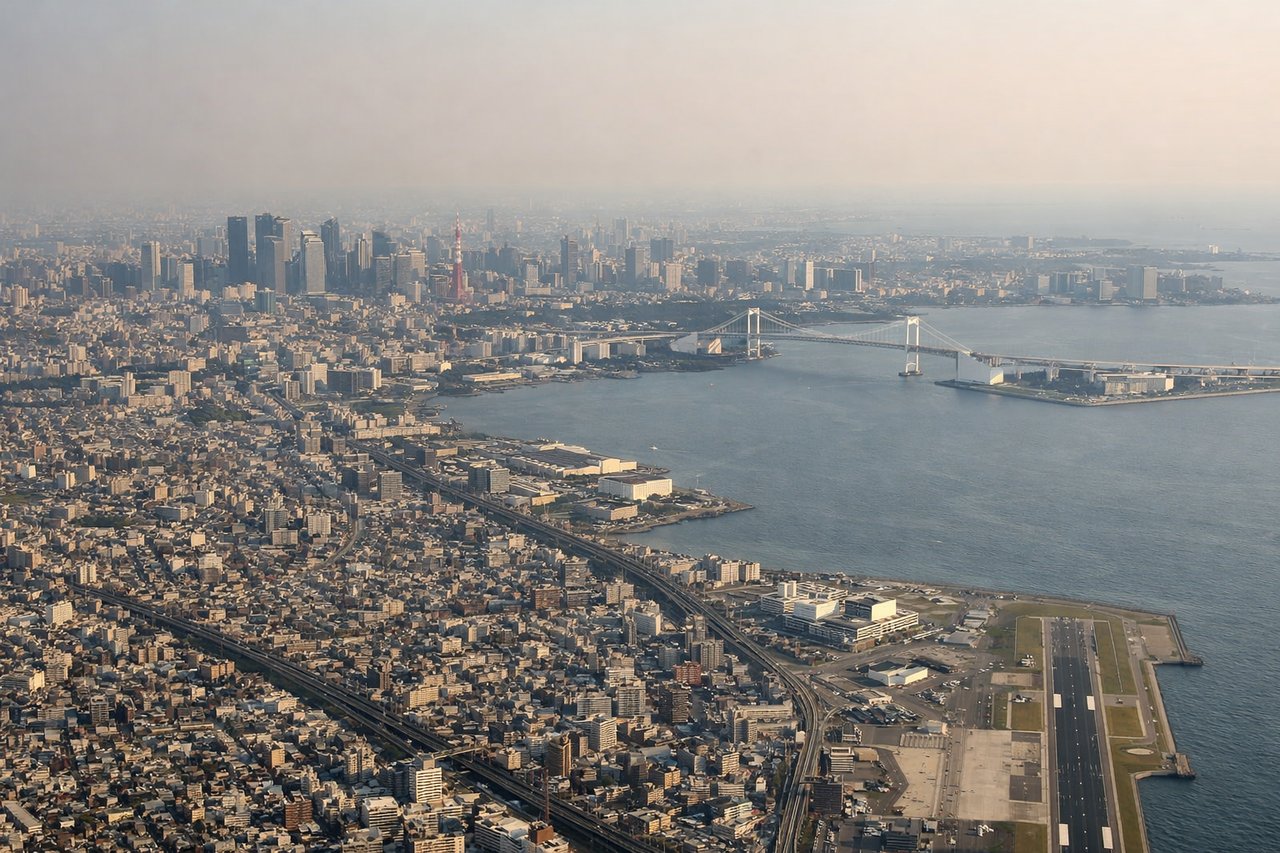
LEFTHND runway 34L/34R is the most common arrival from the west, with aircraft approaching from the southwest over Tokyo Bay. The left side faces east toward the bay and gives a clear view of the Tokyo skyline, Rainbow Bridge, and the reclaimed island runways themselves. Right side faces inland toward suburban Kawasaki and Yokohama.
Will your flight be in sunlight?
Pick a date and time in the Sun Map to watch the sun move across your whole flight.
About This Route
Which side of the plane should I sit on flying from Gimhae International (PUS) to Tokyo International (HND)?
Sit on the Right side of the plane for the best views on flights from Kimhae to Tokyo. The right side wins overall. The Busan harbor and Korea Strait departure is visually strong, and crucially, the right side tracks the Japanese coastline on approach — you pick up the Kii Peninsula and Ise Bay if routing south, or the Izu Peninsula and Sagami Bay on the more direct northern routing. The left side at Haneda is excellent but the right side delivers more sustained coastal scenery across the Sea of Japan crossing.
What can I see during takeoff from Gimhae International in Kimhae?
During takeoff from Gimhae International (PUS), sit on the Right side for the best views. Gimhae typically departs on runway 36L/36R heading north, or runway 18 heading south. For the eastbound departure toward Japan, aircraft usually climb out heading northeast over the Nakdong River estuary. The right side gives you views over Busan's harbor, the Gwangan Bridge, and the coastline of the Korea Strait as the aircraft banks east. Notable sights include: Nakdong River delta and estuary, Busan New Port container terminal, Gwangan Bridge and Haeundae Beach coastline, Korea Strait opening to the southeast.
What can I see when landing at Tokyo International in Tokyo?
When landing at Tokyo International (HND), sit on the Left side for the best views. HND runway 34L/34R is the most common arrival from the west, with aircraft approaching from the southwest over Tokyo Bay. The left side faces east toward the bay and gives a clear view of the Tokyo skyline, Rainbow Bridge, and the reclaimed island runways themselves. Right side faces inland toward suburban Kawasaki and Yokohama. Notable sights include: Tokyo Bay and reclaimed airport islands, Rainbow Bridge and Odaiba waterfront, Tokyo city skyline including Tokyo Tower and Skytree on the horizon, Yokohama Bay Bridge to the south.
How long is the flight from Kimhae to Tokyo?
The flight from Gimhae International (PUS) to Tokyo International (HND) takes about 1 hour 55 minutes. The shortest flight path between them is 612 miles (984 km); winds and air traffic control usually add a few percent.
What does the Kimhae to Tokyo flight path pass over?
The flight crosses the Korea Strait (Tsushima Strait), passing near or over Tsushima Island and Iki Island — both clearly visible as forested islands in the strait. The aircraft then crosses Kyushu's northern coastline near Fukuoka, traverses the Seto Inland Sea or tracks northeast over Honshu depending on routing, with the Japanese Alps visible as a snow-capped ridgeline to the north on clear days before descending toward Tokyo Bay.