While takeoff from Haneda favors the right, the landing approach into Gimhae on the left provides more dramatic and sustained scenery—the Korea Strait crossing, river delta, and mountain transition are more visually distinctive than Tokyo's urban sprawl. Left seats capture the most geographically significant features of this 90-minute route.
Flown HND to PUS? Did we get it right?
Flight Path
Tokyo to Kimhae is 612 miles (984 km), a flight of about 1 hour 30 minutes.
The flight path crosses the Korea Strait (Tsushima Strait) at roughly the midpoint. At cruise altitude (around 25,000-30,000 feet), you may see Tsushima Island below as a small landmass in the strait, though it's often obscured by haze. The strait itself shows shipping lanes with visible vessel traffic. The Japanese coast near Nagasaki Prefecture is visible on the southern horizon during the westbound leg. The Korean peninsula's western coastline becomes visible as you approach Gimhae, with the Nakdong River estuary being the most distinctive geographic marker before descent.
Great circle distance and headings ›

Phase by phase
Takeoff from HND
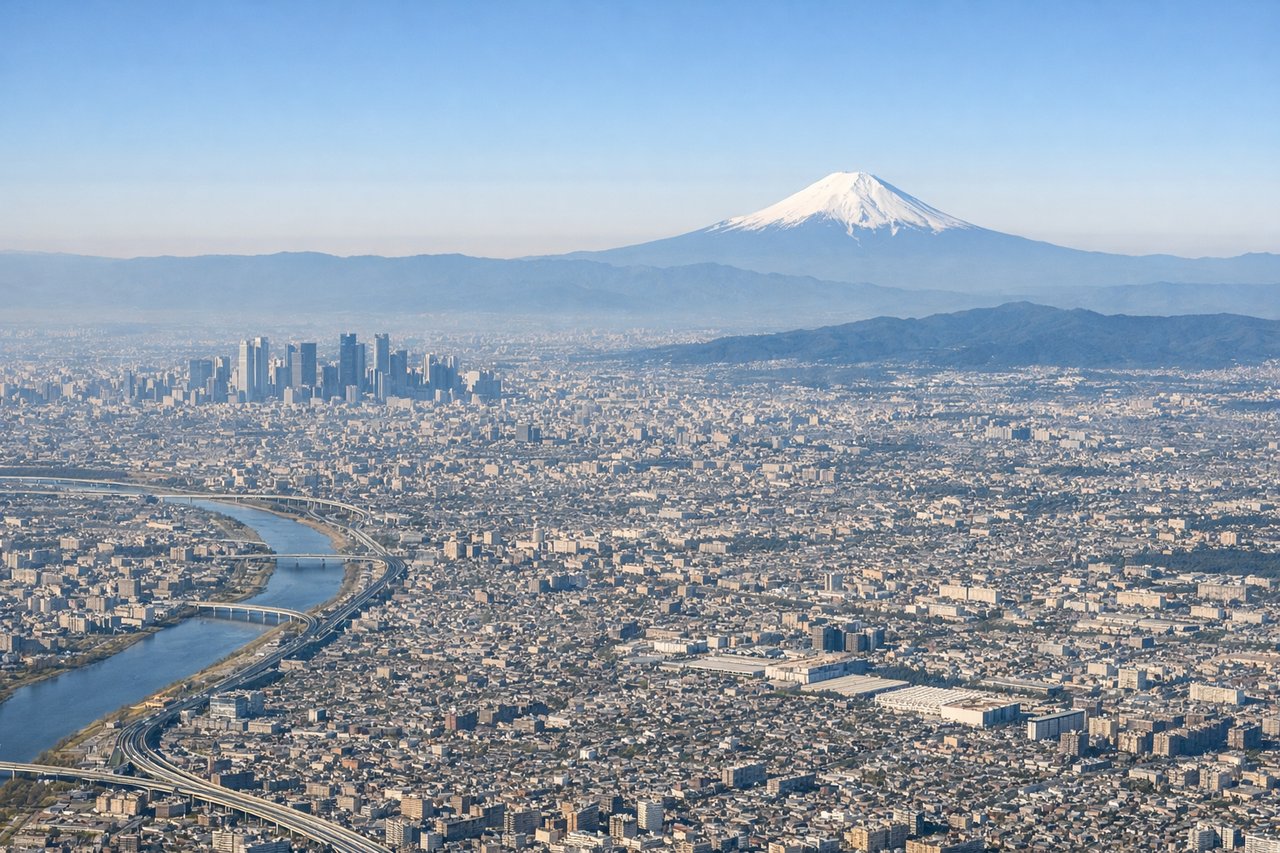
RIGHTRight-side seats capture the Tokyo Bay coastline and urban sprawl as you climb out westbound. You'll see the distinctive geometry of Tokyo's harbor, Rainbow Bridge, and the Kanto Plain extending inland.
Landing at PUS
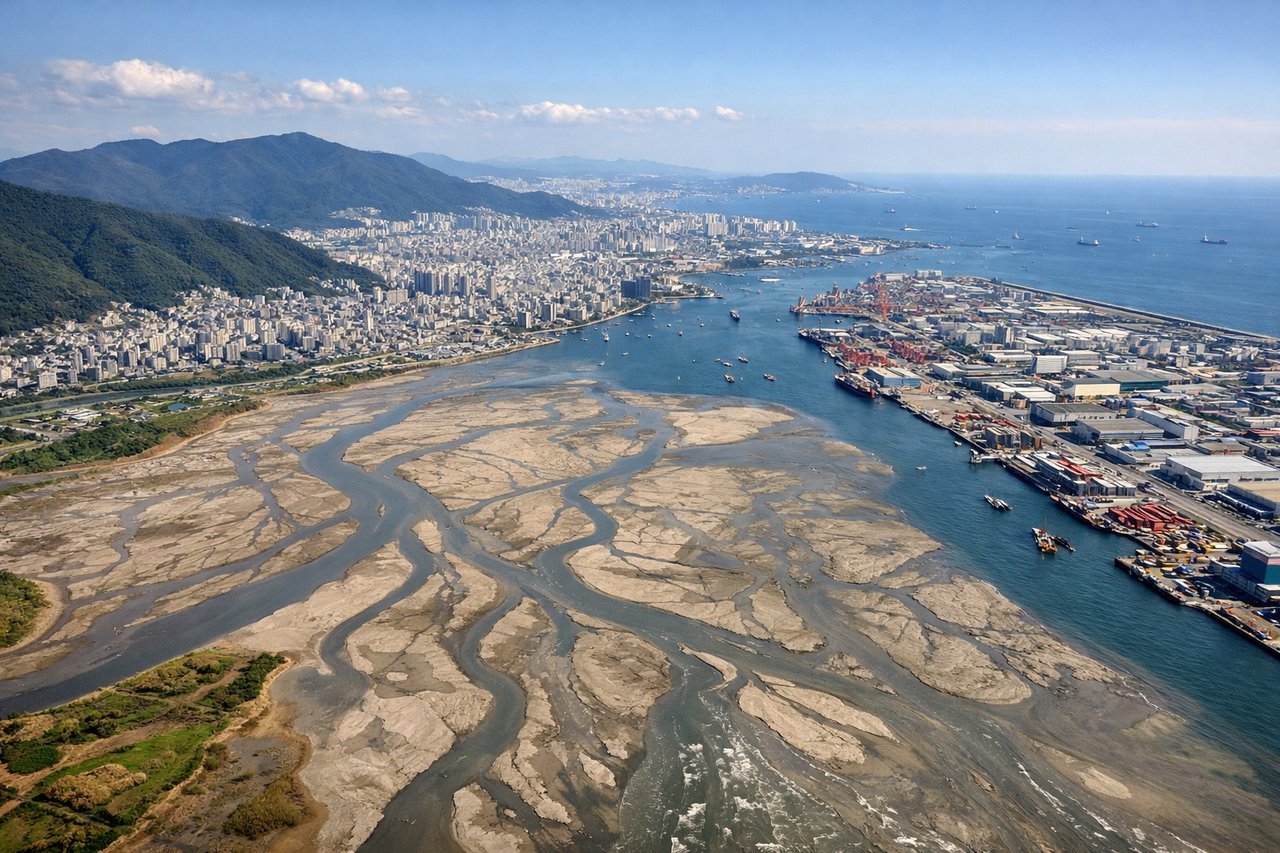
LEFTLeft-side seats on approach to Gimhae offer views of the Korea Strait, Busan's coastal geography, and the Nakdong River delta. You'll see the transition from open water to the mountainous Korean peninsula and Busan's harbor.
Will your flight be in sunlight?
Pick a date and time in the Sun Map to watch the sun move across your whole flight.
About This Route
Which side of the plane should I sit on flying from Tokyo International (HND) to Gimhae International (PUS)?
Sit on the Left side of the plane for the best views on flights from Tokyo to Kimhae. While takeoff from Haneda favors the right, the landing approach into Gimhae on the left provides more dramatic and sustained scenery—the Korea Strait crossing, river delta, and mountain transition are more visually distinctive than Tokyo's urban sprawl. Left seats capture the most geographically significant features of this 90-minute route.
What can I see during takeoff from Tokyo International in Tokyo?
During takeoff from Tokyo International (HND), sit on the Right side for the best views. Right-side seats capture the Tokyo Bay coastline and urban sprawl as you climb out westbound. You'll see the distinctive geometry of Tokyo's harbor, Rainbow Bridge, and the Kanto Plain extending inland. Notable sights include: Tokyo Bay with its reclaimed islands and port infrastructure, Rainbow Bridge and Odaiba district, Kanto Plain urban grid, Mount Fuji (visible on clear days, 60+ miles southwest on horizon).
What can I see when landing at Gimhae International in Kimhae?
When landing at Gimhae International (PUS), sit on the Left side for the best views. Left-side seats on approach to Gimhae offer views of the Korea Strait, Busan's coastal geography, and the Nakdong River delta. You'll see the transition from open water to the mountainous Korean peninsula and Busan's harbor. Notable sights include: Korea Strait (Tsushima Strait) with shipping lanes, Nakdong River delta and estuary, Busan harbor and port facilities, Geumjeong Mountain and surrounding Yeongnam Alps ridgeline.
How long is the flight from Tokyo to Kimhae?
The flight from Tokyo International (HND) to Gimhae International (PUS) takes about 1 hour 30 minutes. The shortest flight path between them is 612 miles (984 km); winds and air traffic control usually add a few percent.
What does the Tokyo to Kimhae flight path pass over?
The flight path crosses the Korea Strait (Tsushima Strait) at roughly the midpoint. At cruise altitude (around 25,000-30,000 feet), you may see Tsushima Island below as a small landmass in the strait, though it's often obscured by haze. The strait itself shows shipping lanes with visible vessel traffic. The Japanese coast near Nagasaki Prefecture is visible on the southern horizon during the westbound leg. The Korean peninsula's western coastline becomes visible as you approach Gimhae, with the Nakdong River estuary being the most distinctive geographic marker before descent.