While Phuket's departure offers dramatic karst scenery, the landing approach into Copenhagen provides superior variety and landmark density. The Øresund strait crossing, the iconic bridge, the Malmö-Copenhagen urban corridor, and the harbor approach deliver more sustained visual interest across the final descent. The cruise segment over Central Europe (though not detailed in landing focus) also offers more terrain variety than the long ocean crossing westbound from Thailand.
Flight Path
The flight path crosses the Indian subcontinent (Himalayas visible on clear days), the Middle East (Persian Gulf, Zagros Mountains), the Caucasus region, Eastern Europe (Carpathians), and Central Europe (Alps, Danube valley) before reaching Scandinavia. Major water crossings include the Arabian Sea, Persian Gulf, and Baltic approaches. The route typically passes near or over significant mountain ranges including the Hindu Kush, Elburz, and Carpathians.
Great circle distance and headings ›

.jpg?width=600)

.jpg?width=600)


Phase by phase
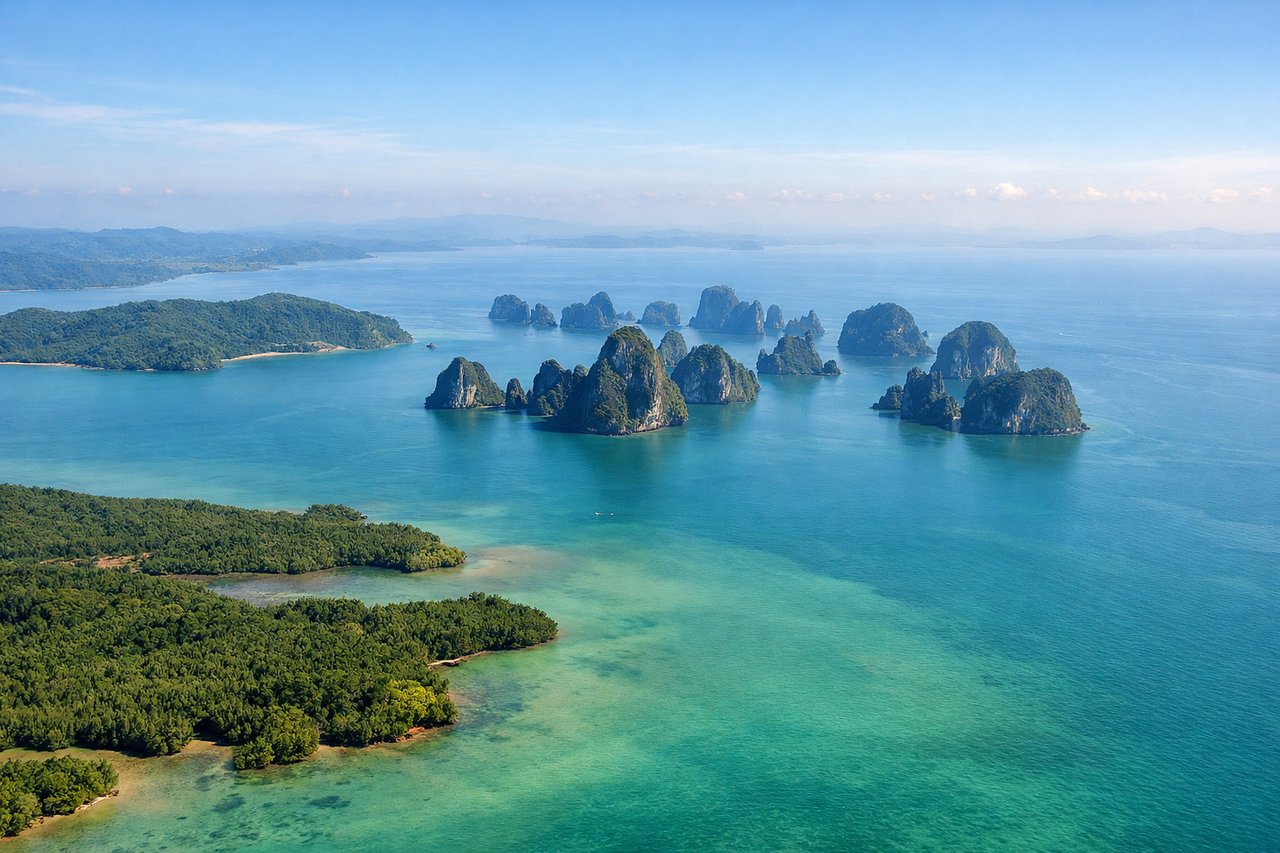
Takeoff from HKT
LEFTPhuket's departure over the Andaman Sea and nearby coastal islands provides immediate water scenery and the dramatic limestone karst formations visible from the airport vicinity. The left side captures the Phang Nga Bay area with its distinctive steep-sided islands.
Landing at CPH
RIGHTThe approach to Copenhagen from the southeast crosses the Danish countryside, the Great Belt strait, and the Øresund strait, offering varied terrain including agricultural plains, water crossings, and the Malmö-Copenhagen urban corridor. The right side captures the Øresund Bridge and the transition into the Copenhagen metropolitan area with Amager Island and the city's harbor districts.
Landmarks on this routeAll landmarks →
Will your flight be in sunlight?
See exactly which side of the plane gets sun and shade at your departure time.
About This Route
Which side of the plane should I sit on flying from Phuket International (HKT) to Kastrup (CPH)?
Sit on the Right side of the plane for the best views on flights from Phuket to Copenhagen. While Phuket's departure offers dramatic karst scenery, the landing approach into Copenhagen provides superior variety and landmark density. The Øresund strait crossing, the iconic bridge, the Malmö-Copenhagen urban corridor, and the harbor approach deliver more sustained visual interest across the final descent. The cruise segment over Central Europe (though not detailed in landing focus) also offers more terrain variety than the long ocean crossing westbound from Thailand.
What can I see during takeoff from Phuket International in Phuket?
During takeoff from Phuket International (HKT), sit on the Left side for the best views. Phuket's departure over the Andaman Sea and nearby coastal islands provides immediate water scenery and the dramatic limestone karst formations visible from the airport vicinity. The left side captures the Phang Nga Bay area with its distinctive steep-sided islands. Notable sights include: Phang Nga Bay limestone karsts, Andaman Sea coastline, Phuket town and harbor, nearby island clusters.
What can I see when landing at Kastrup in Copenhagen?
When landing at Kastrup (CPH), sit on the Right side for the best views. The approach to Copenhagen from the southeast crosses the Danish countryside, the Great Belt strait, and the Øresund strait, offering varied terrain including agricultural plains, water crossings, and the Malmö-Copenhagen urban corridor. The right side captures the Øresund Bridge and the transition into the Copenhagen metropolitan area with Amager Island and the city's harbor districts. Notable sights include: Øresund strait and bridge, Malmö waterfront, Amager Island, Copenhagen harbor and city center.
How long is the flight from Phuket to Copenhagen?
The flight from Phuket International (HKT) to Kastrup (CPH) takes 11h 15m.
What does the Phuket to Copenhagen flight path pass over?
The flight path crosses the Indian subcontinent (Himalayas visible on clear days), the Middle East (Persian Gulf, Zagros Mountains), the Caucasus region, Eastern Europe (Carpathians), and Central Europe (Alps, Danube valley) before reaching Scandinavia. Major water crossings include the Arabian Sea, Persian Gulf, and Baltic approaches. The route typically passes near or over significant mountain ranges including the Hindu Kush, Elburz, and Carpathians.