While Copenhagen's departure offers urban and strait scenery, the landing approach to Phuket provides far superior visual drama. The Phang Nga Bay limestone karsts are among the world's most distinctive and visually striking geological formations visible from aircraft altitude. The contrast between turquoise water and vertical jungle-covered peaks creates exceptional scenic variety and landmark density during the final descent, significantly outweighing the modest appeal of the northern departure.
Flight Path
The flight path crosses central Europe (Alps visible on clear days), the Mediterranean, Middle East (Persian Gulf, Strait of Hormuz), Arabian Sea, and Indian Ocean. Notable waypoints include airspace over Greece, Turkey, Iraq/Syria region, Iran, Pakistan, and India. The Arabian Peninsula's eastern coast and the Strait of Hormuz are typically visible during daylight cruise. The Indian subcontinent's western coast (Gujarat/Maharashtra) may be visible depending on exact routing. Most of the 11+ hour flight crosses open ocean with limited landmark visibility during cruise altitude.
Great circle distance and headings ›

.jpg?width=600)

.jpg?width=600)


Phase by phase
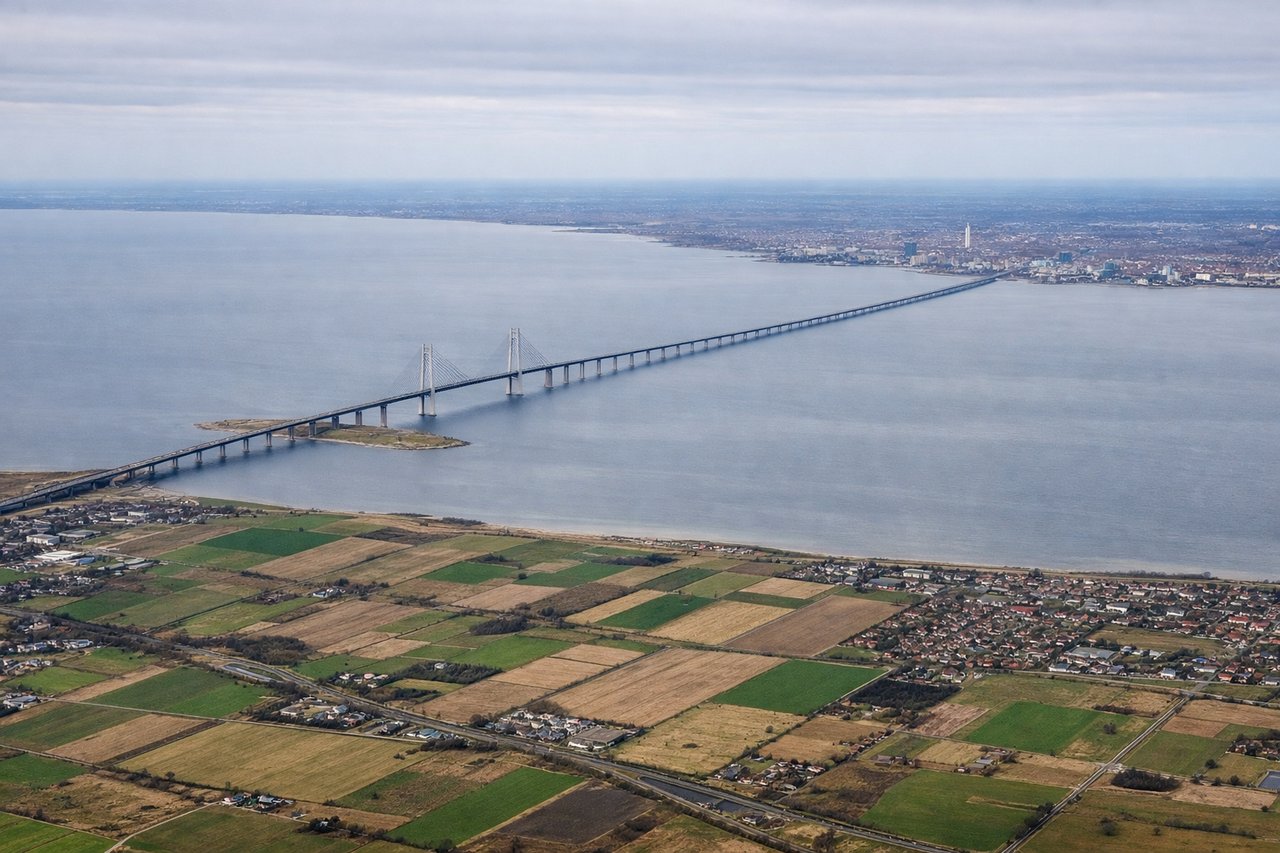
Takeoff from CPH
LEFTCopenhagen's harbor and Øresund Strait are visible during northbound departure, with the Swedish coast across the water. The Oresund Bridge connecting Denmark and Sweden is a distinctive landmark during climb-out.
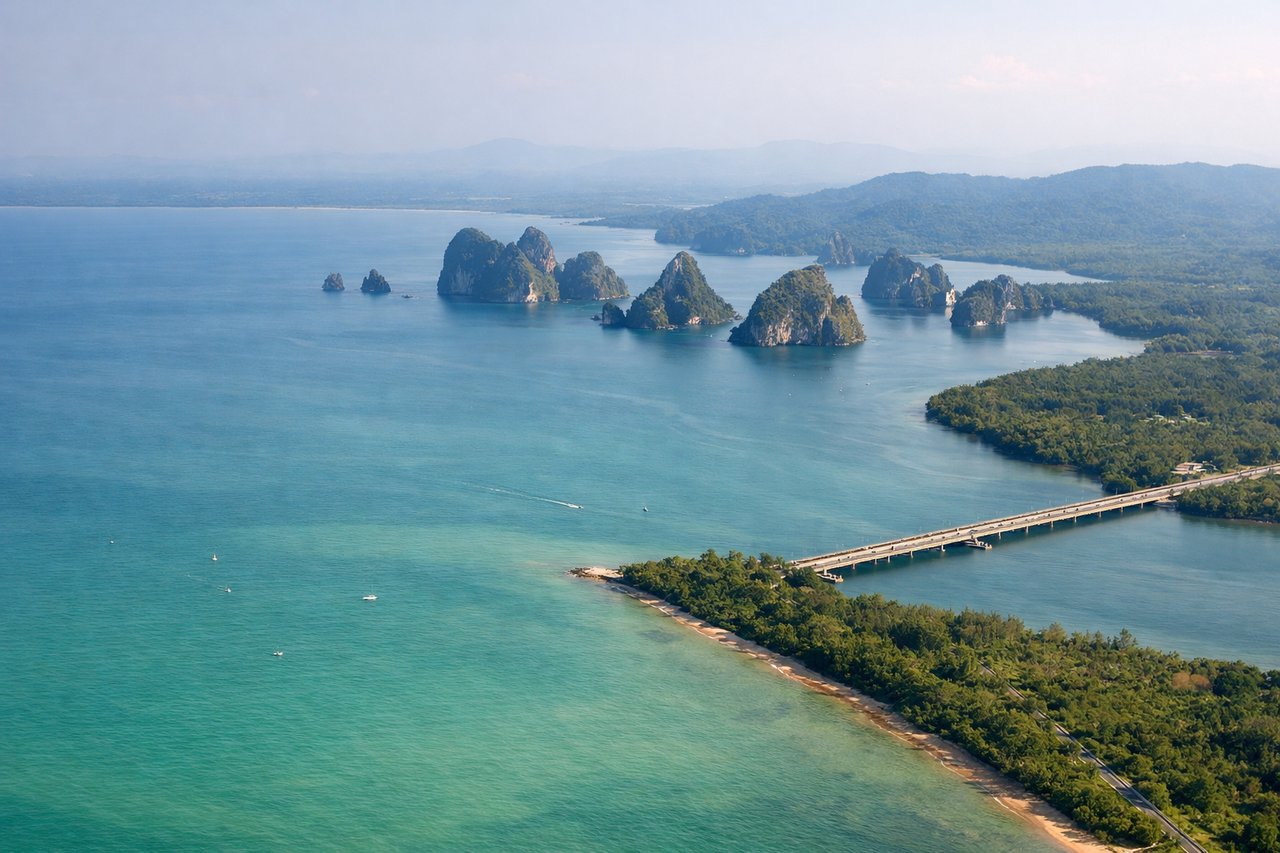
Landing at HKT
RIGHTThe approach to Phuket crosses the Andaman Sea with dramatic views of Thailand's limestone karst islands and the Phang Nga Bay archipelago. The distinctive steep, jungle-covered limestone peaks rising from turquoise water are among Southeast Asia's most visually striking features.
Landmarks on this routeAll landmarks →
Will your flight be in sunlight?
See exactly which side of the plane gets sun and shade at your departure time.
About This Route
Which side of the plane should I sit on flying from Kastrup (CPH) to Phuket International (HKT)?
Sit on the Right side of the plane for the best views on flights from Copenhagen to Phuket. While Copenhagen's departure offers urban and strait scenery, the landing approach to Phuket provides far superior visual drama. The Phang Nga Bay limestone karsts are among the world's most distinctive and visually striking geological formations visible from aircraft altitude. The contrast between turquoise water and vertical jungle-covered peaks creates exceptional scenic variety and landmark density during the final descent, significantly outweighing the modest appeal of the northern departure.
What can I see during takeoff from Kastrup in Copenhagen?
During takeoff from Kastrup (CPH), sit on the Left side for the best views. Copenhagen's harbor and Øresund Strait are visible during northbound departure, with the Swedish coast across the water. The Oresund Bridge connecting Denmark and Sweden is a distinctive landmark during climb-out. Notable sights include: Øresund Strait, Oresund Bridge, Copenhagen harbor and city center, Swedish coastline near Malmö.
What can I see when landing at Phuket International in Phuket?
When landing at Phuket International (HKT), sit on the Right side for the best views. The approach to Phuket crosses the Andaman Sea with dramatic views of Thailand's limestone karst islands and the Phang Nga Bay archipelago. The distinctive steep, jungle-covered limestone peaks rising from turquoise water are among Southeast Asia's most visually striking features. Notable sights include: Phang Nga Bay limestone karsts, Andaman Sea, Phuket Island's beaches and resort areas, Phang Nga Province's dramatic island formations.
How long is the flight from Copenhagen to Phuket?
The flight from Kastrup (CPH) to Phuket International (HKT) takes 11h 15m.
What does the Copenhagen to Phuket flight path pass over?
The flight path crosses central Europe (Alps visible on clear days), the Mediterranean, Middle East (Persian Gulf, Strait of Hormuz), Arabian Sea, and Indian Ocean. Notable waypoints include airspace over Greece, Turkey, Iraq/Syria region, Iran, Pakistan, and India. The Arabian Peninsula's eastern coast and the Strait of Hormuz are typically visible during daylight cruise. The Indian subcontinent's western coast (Gujarat/Maharashtra) may be visible depending on exact routing. Most of the 11+ hour flight crosses open ocean with limited landmark visibility during cruise altitude.