Right side captures both the dramatic Andaman Sea and limestone karst departure from Phuket and the industrial-meets-urban Caspian coastal approach to Baku. Left side offers only open ocean during cruise and a less scenic approach angle. Right scores 3.5 vs left's 2.5 due to superior takeoff scenery and more interesting landing approach.
Flown HKT to GYD? Did we get it right?
Flight Path
Phuket to Baku is 3,706 miles (5,964 km), a flight of about 6 hours 50 minutes.
The flight crosses the Bay of Bengal, the Indian subcontinent (Andhra Pradesh and Telangana regions visible as flat plains and river valleys), the Deccan Plateau, the Arabian Sea, and the Iranian plateau before descending to the Caspian coastal plain. Notable landmarks include the Godavari River delta, the Western Ghats mountain range (visible as a linear ridge on the western edge of the Deccan), and the Zagros Mountains of Iran appearing as a major north-south trending range during the cruise phase over Iran.
Great circle distance and headings ›Phase by phase
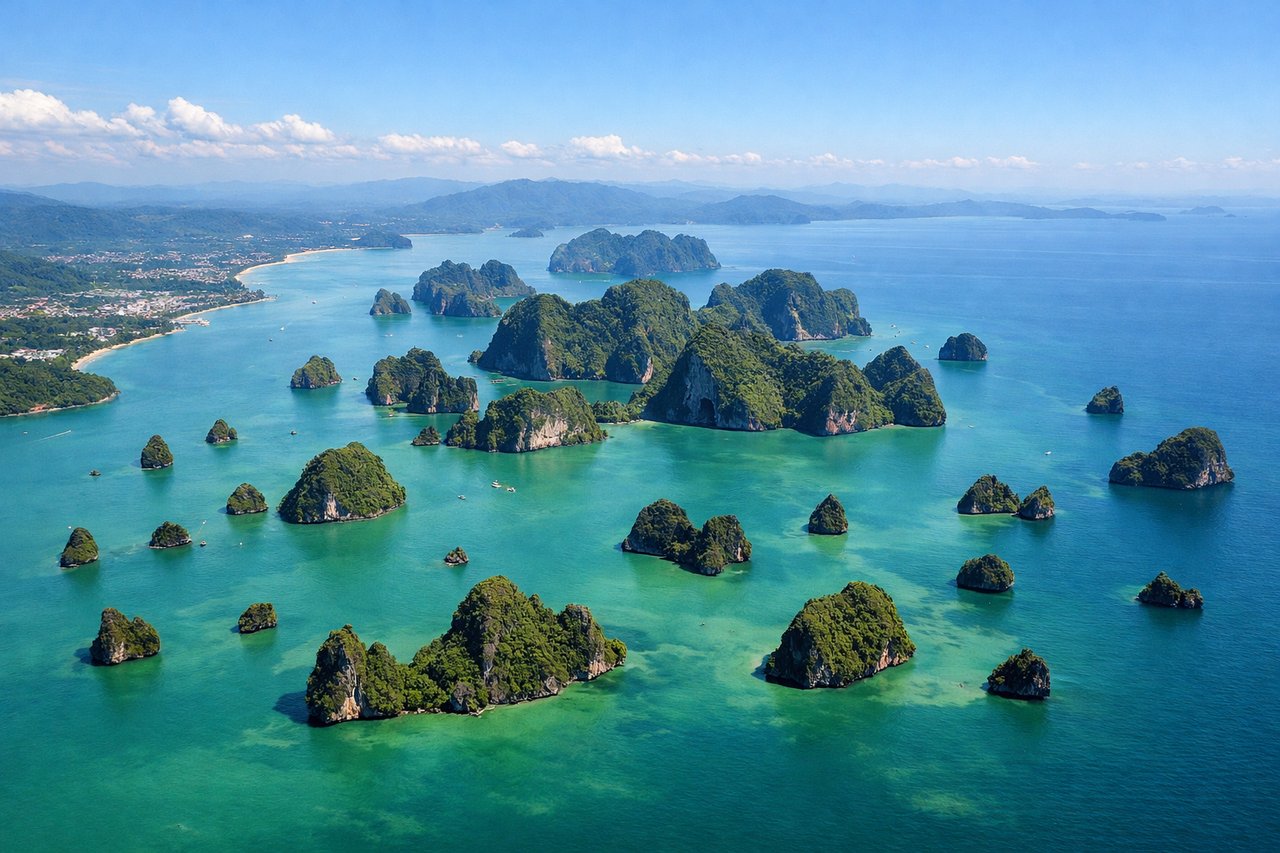
Takeoff from HKT
RIGHTRunway 27 departures head west over Mai Khao Beach and the Andaman Sea, offering immediate coastal scenery. Right-side passengers see the beach, shallow turquoise waters, and limestone karst formations of Phang Nga Bay receding to the southwest during climb-out.
Landing at GYD
RIGHTApproach to Baku typically uses runways 34/35 (northward-facing) due to prevailing Khazri winds. Right-side passengers descending from the northwest see the Caspian Sea shoreline, the Absheron Peninsula's industrial oil fields and salt lakes, and Baku's Old City and modern skyline emerging from the coast.
Will your flight be in sunlight?
Pick a date and time in the Sun Map to watch the sun move across your whole flight.
About This Route
Which side of the plane should I sit on flying from Phuket International (HKT) to Heydar Aliyev International Airport (GYD)?
Sit on the Right side of the plane for the best views on flights from Phuket to Baku. Right side captures both the dramatic Andaman Sea and limestone karst departure from Phuket and the industrial-meets-urban Caspian coastal approach to Baku. Left side offers only open ocean during cruise and a less scenic approach angle. Right scores 3.5 vs left's 2.5 due to superior takeoff scenery and more interesting landing approach.
What can I see during takeoff from Phuket International in Phuket?
During takeoff from Phuket International (HKT), sit on the Right side for the best views. Runway 27 departures head west over Mai Khao Beach and the Andaman Sea, offering immediate coastal scenery. Right-side passengers see the beach, shallow turquoise waters, and limestone karst formations of Phang Nga Bay receding to the southwest during climb-out. Notable sights include: Mai Khao Beach, Phang Nga Bay limestone karsts, Andaman Sea coastline, Phuket town harbor.
What can I see when landing at Heydar Aliyev International Airport in Baku?
When landing at Heydar Aliyev International Airport (GYD), sit on the Right side for the best views. Approach to Baku typically uses runways 34/35 (northward-facing) due to prevailing Khazri winds. Right-side passengers descending from the northwest see the Caspian Sea shoreline, the Absheron Peninsula's industrial oil fields and salt lakes, and Baku's Old City and modern skyline emerging from the coast. Notable sights include: Caspian Sea coastline, Absheron Peninsula salt lakes and oil derricks, Baku Old City (Icherisheher), modern Baku skyline with Flame Towers.
How long is the flight from Phuket to Baku?
The flight from Phuket International (HKT) to Heydar Aliyev International Airport (GYD) takes about 6 hours 50 minutes. The shortest flight path between them is 3,706 miles (5,964 km); winds and air traffic control usually add a few percent.
What does the Phuket to Baku flight path pass over?
The flight crosses the Bay of Bengal, the Indian subcontinent (Andhra Pradesh and Telangana regions visible as flat plains and river valleys), the Deccan Plateau, the Arabian Sea, and the Iranian plateau before descending to the Caspian coastal plain. Notable landmarks include the Godavari River delta, the Western Ghats mountain range (visible as a linear ridge on the western edge of the Deccan), and the Zagros Mountains of Iran appearing as a major north-south trending range during the cruise phase over Iran.