While both sides score equally low due to the 5+ hour ocean-dominated cruise phase, the right side's landing approach into Honolulu provides genuinely dramatic volcanic scenery (Ko'olau range, Kailua Bay, Pali Notch) that elevates the final 30 minutes. Left side offers only flat Houston departure and then unbroken Pacific Ocean. The landing experience on the right side is substantially more scenic than the left side's takeoff.
Flight Path
Open Pacific Ocean dominates the entire cruise phase. No significant landmarks are visible from altitude between the Texas coast and Hawaiian islands—approximately 2,000 miles of open water with no islands, atolls, or notable geographic features visible from typical cruise altitude (35,000 feet). The flight path crosses the central Pacific with no intermediate landfall.
Great circle distance and headings ›Phase by phase
Takeoff from HOU
LEFTLeft side captures Houston's urban sprawl and the confluence of Buffalo Bayou with the industrial ship channel during climb-out, providing brief city context before open ocean. Right side sees only flat coastal plains and refineries.
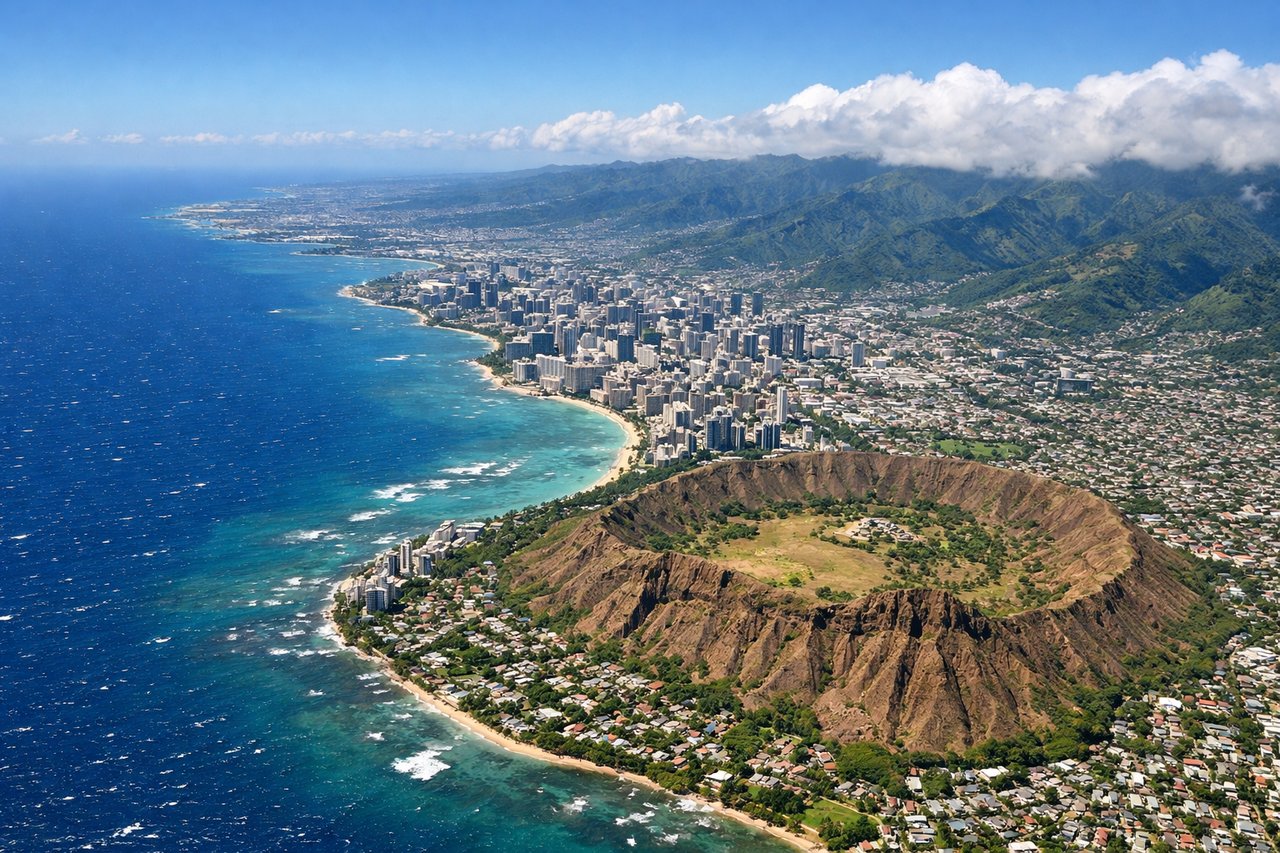
Landing at HNL
RIGHTRight side offers the dramatic volcanic landscape of Oahu's windward coast and the Ko'olau mountain range during approach. Left side sees only open Pacific Ocean for the final 30 minutes before landing.
Landmarks on this routeAll landmarks →
Will your flight be in sunlight?
See exactly which side of the plane gets sun and shade at your departure time.
About This Route
Which side of the plane should I sit on flying from William P Hobby (HOU) to Honolulu International (HNL)?
Sit on the Right side of the plane for the best views on flights from Houston to Honolulu. While both sides score equally low due to the 5+ hour ocean-dominated cruise phase, the right side's landing approach into Honolulu provides genuinely dramatic volcanic scenery (Ko'olau range, Kailua Bay, Pali Notch) that elevates the final 30 minutes. Left side offers only flat Houston departure and then unbroken Pacific Ocean. The landing experience on the right side is substantially more scenic than the left side's takeoff.
What can I see during takeoff from William P Hobby in Houston?
During takeoff from William P Hobby (HOU), sit on the Left side for the best views. Left side captures Houston's urban sprawl and the confluence of Buffalo Bayou with the industrial ship channel during climb-out, providing brief city context before open ocean. Right side sees only flat coastal plains and refineries. Notable sights include: Buffalo Bayou and Houston Ship Channel, downtown Houston skyline (distant), Galveston Bay coastline.
What can I see when landing at Honolulu International in Honolulu?
When landing at Honolulu International (HNL), sit on the Right side for the best views. Right side offers the dramatic volcanic landscape of Oahu's windward coast and the Ko'olau mountain range during approach. Left side sees only open Pacific Ocean for the final 30 minutes before landing. Notable sights include: Ko'olau mountain range (jagged volcanic ridges), Kailua Bay and windward beaches, Pali Notch (prominent saddle in ridge line).
How long is the flight from Houston to Honolulu?
The flight from William P Hobby (HOU) to Honolulu International (HNL) takes 5h 15m.
What does the Houston to Honolulu flight path pass over?
Open Pacific Ocean dominates the entire cruise phase. No significant landmarks are visible from altitude between the Texas coast and Hawaiian islands—approximately 2,000 miles of open water with no islands, atolls, or notable geographic features visible from typical cruise altitude (35,000 feet). The flight path crosses the central Pacific with no intermediate landfall.