Both sides score equally for the full flight, but the right side edges ahead due to the superior landing approach into Manchester, which provides clear views of the Merrimack River valley and the city's urban geography. The takeoff from Dulles slightly favors the left, but the landing experience is more visually rewarding on the right, making it the better overall choice for this short regional flight.
Flown IAD to MHT? Did we get it right?
Flight Path
Washington to Manchester is 418 miles (672 km), a flight of about 1 hour 15 minutes.
Flight path crosses the Appalachian foothills of Pennsylvania and New York, including the Blue Ridge Mountains in northern Virginia and the Catskill Mountains in New York. The Hudson River valley is visible from altitude in the New York section. The route then transitions over Connecticut and Massachusetts, crossing the Connecticut River valley before descending into New Hampshire. No major bodies of water dominate the cruise segment, but the terrain transitions from rolling Appalachian foothills to the lower, more densely forested New England landscape.
Great circle distance and headings ›

Phase by phase
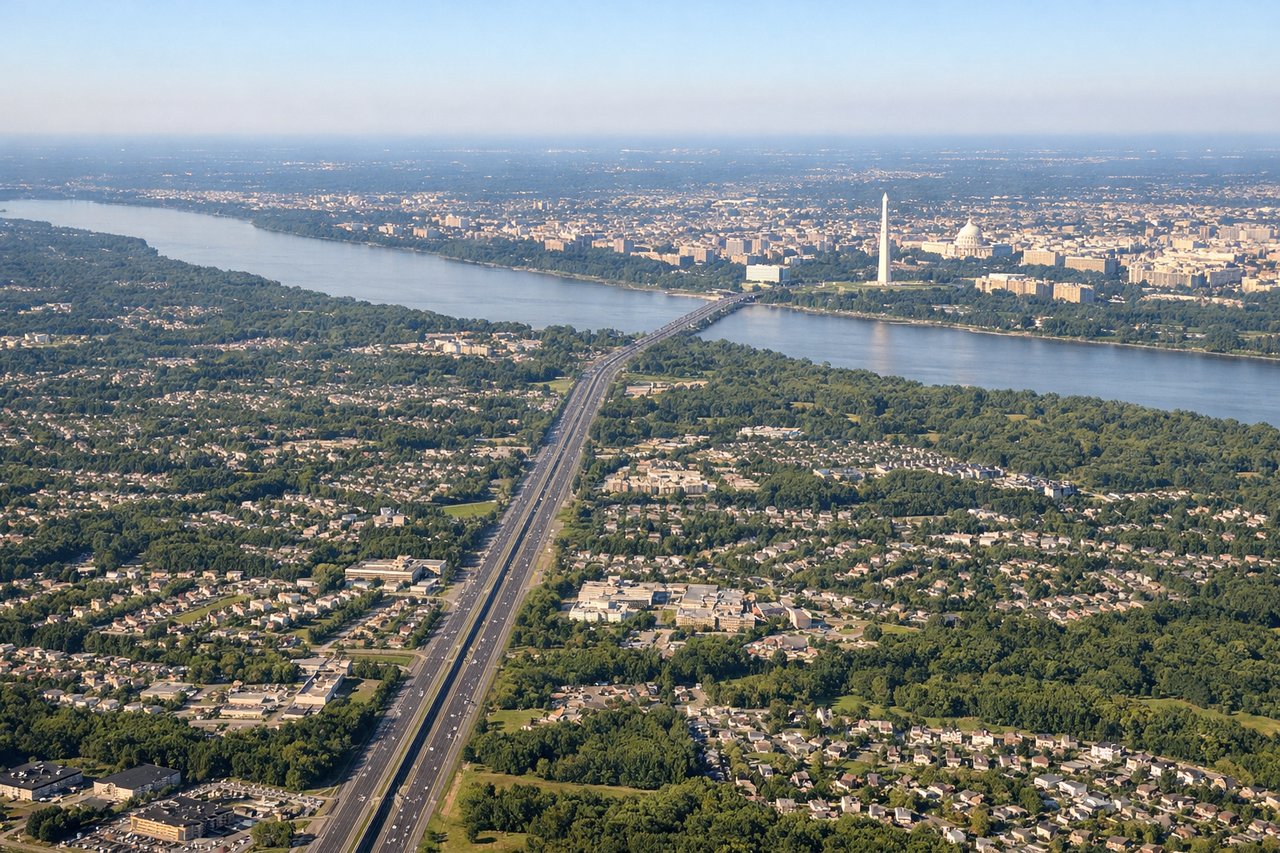
Takeoff from IAD
LEFTLeft side captures the Washington, D.C. metropolitan area during departure, including the Potomac River and urban sprawl. Right side faces open terrain with minimal landmarks during initial climb.
Landing at MHT
RIGHTRight side provides views of the Merrimack River valley and Manchester's urban approach. Left side faces open New England terrain with fewer distinctive landmarks during descent.
Will your flight be in sunlight?
Pick a date and time in the Sun Map to watch the sun move across your whole flight.
About This Route
Which side of the plane should I sit on flying from Washington Dulles International (IAD) to Manchester-Boston Regional Airport (MHT)?
Sit on the Right side of the plane for the best views on flights from Washington to Manchester. Both sides score equally for the full flight, but the right side edges ahead due to the superior landing approach into Manchester, which provides clear views of the Merrimack River valley and the city's urban geography. The takeoff from Dulles slightly favors the left, but the landing experience is more visually rewarding on the right, making it the better overall choice for this short regional flight.
What can I see during takeoff from Washington Dulles International in Washington?
During takeoff from Washington Dulles International (IAD), sit on the Left side for the best views. Left side captures the Washington, D.C. metropolitan area during departure, including the Potomac River and urban sprawl. Right side faces open terrain with minimal landmarks during initial climb. Notable sights include: Potomac River, Washington D.C. urban grid, Dulles International Airport grounds, Northern Virginia suburbs.
What can I see when landing at Manchester-Boston Regional Airport in Manchester?
When landing at Manchester-Boston Regional Airport (MHT), sit on the Right side for the best views. Right side provides views of the Merrimack River valley and Manchester's urban approach. Left side faces open New England terrain with fewer distinctive landmarks during descent. Notable sights include: Merrimack River, Manchester city center, New Hampshire lakes region, forested New England terrain.
How long is the flight from Washington to Manchester?
The flight from Washington Dulles International (IAD) to Manchester-Boston Regional Airport (MHT) takes about 1 hour 15 minutes. The shortest flight path between them is 418 miles (672 km); winds and air traffic control usually add a few percent.
What does the Washington to Manchester flight path pass over?
Flight path crosses the Appalachian foothills of Pennsylvania and New York, including the Blue Ridge Mountains in northern Virginia and the Catskill Mountains in New York. The Hudson River valley is visible from altitude in the New York section. The route then transitions over Connecticut and Massachusetts, crossing the Connecticut River valley before descending into New Hampshire. No major bodies of water dominate the cruise segment, but the terrain transitions from rolling Appalachian foothills to the lower, more densely forested New England landscape.