Iquitos to Cancun is 1,946 miles (3,132 km), a flight of about 5 hours.
While takeoff offers excellent rainforest views, the landing approach into Cancun provides more visually distinctive and varied geography—the Caribbean, cenotes, and limestone terrain are more dramatic than the continuous Amazon canopy. Left seats capture both the departure rainforest (if positioned correctly) and the superior landing views.
Flight Path
The flight crosses the Amazon Basin for the first 2.5 hours, passing over the Ucayali River system and vast unbroken rainforest. Around midpoint, the terrain transitions gradually as the aircraft moves northeast toward the Yucatan Peninsula. The Gulf of Mexico becomes visible approximately 1 hour before landing. Notable geographic features include the Rio Marañón (visible during early climb if heading northeast), the transition from Peruvian to Colombian/Venezuelan airspace, and eventually the Yucatan's distinctive pale limestone landscape emerging from the Caribbean.
Great circle distance and headings ›

Phase by phase
Takeoff from IQT
RIGHTIQT typically departs to the east or northeast. Right-side seats offer views of the Amazon River's meanders and oxbow lakes immediately surrounding the airport, plus the vast rainforest canopy stretching toward the horizon. Left side faces back toward the city and less dramatic terrain.
Landing at CUN
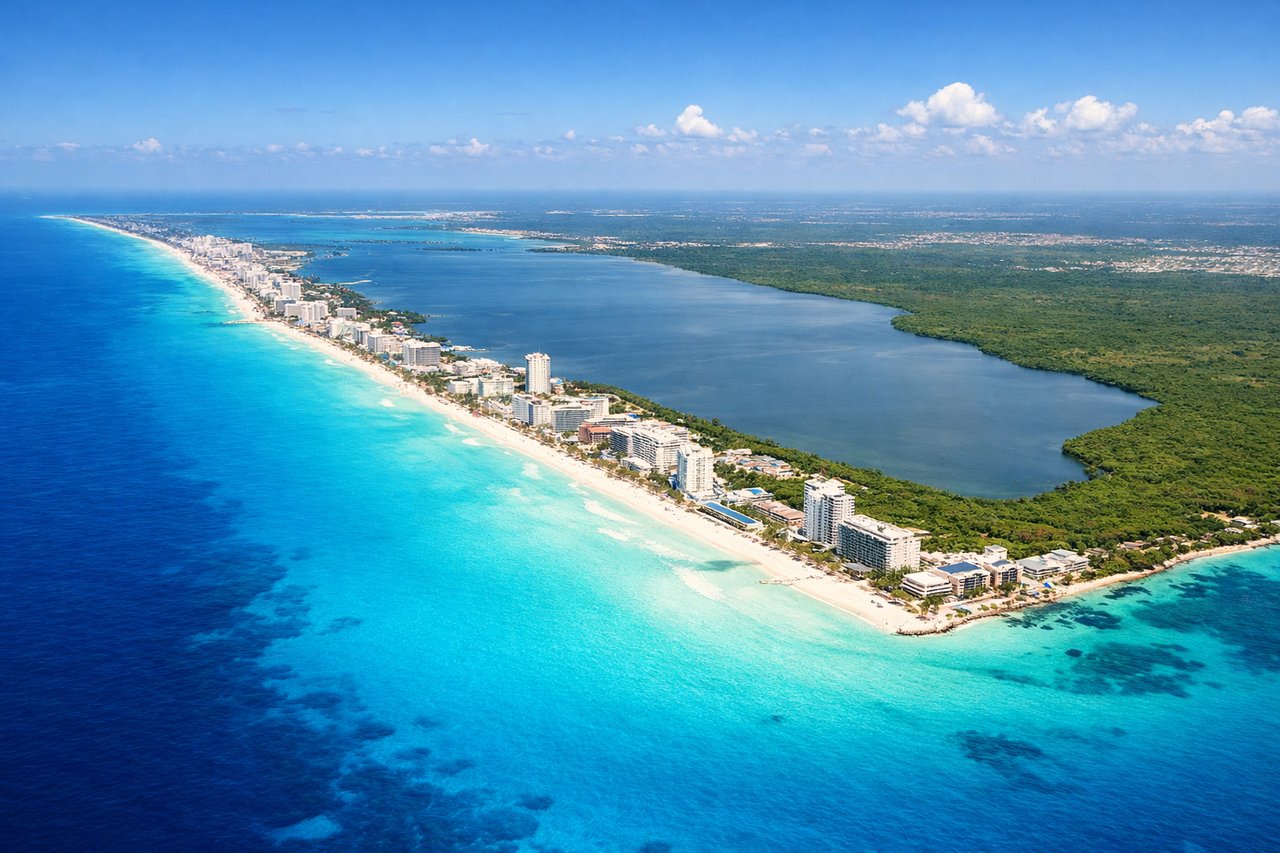
LEFTCUN typically lands on runways 07 or 09 (eastbound). Left-side seats during approach offer views of the Yucatan Peninsula's distinctive white limestone bedrock, cenotes (sinkholes), and the turquoise Caribbean coastline. Right side faces inland over flat scrubland with less visual interest.
Landmarks on this routeAll landmarks →
Will your flight be in sunlight?
Pick a date and time in the Sun Map to watch the sun move across your whole flight.
About This Route
Which side of the plane should I sit on flying from Coronel Fap Francisco Secada Vignetta (IQT) to Cancun International (CUN)?
Sit on the Left side of the plane for the best views on flights from Iquitos to Cancun. While takeoff offers excellent rainforest views, the landing approach into Cancun provides more visually distinctive and varied geography—the Caribbean, cenotes, and limestone terrain are more dramatic than the continuous Amazon canopy. Left seats capture both the departure rainforest (if positioned correctly) and the superior landing views.
What can I see during takeoff from Coronel Fap Francisco Secada Vignetta in Iquitos?
During takeoff from Coronel Fap Francisco Secada Vignetta (IQT), sit on the Right side for the best views. IQT typically departs to the east or northeast. Right-side seats offer views of the Amazon River's meanders and oxbow lakes immediately surrounding the airport, plus the vast rainforest canopy stretching toward the horizon. Left side faces back toward the city and less dramatic terrain. Notable sights include: Amazon River and its oxbow lakes (directly below during climb), Iquitos city sprawl (west), rainforest canopy extending to the eastern horizon, Rio Nanay confluence (visible to the south).
What can I see when landing at Cancun International in Cancun?
When landing at Cancun International (CUN), sit on the Left side for the best views. CUN typically lands on runways 07 or 09 (eastbound). Left-side seats during approach offer views of the Yucatan Peninsula's distinctive white limestone bedrock, cenotes (sinkholes), and the turquoise Caribbean coastline. Right side faces inland over flat scrubland with less visual interest. Notable sights include: Caribbean Sea and turquoise shallow waters (east of airport), Yucatan Peninsula limestone terrain with cenote patterns, Cancun Lagoon (Laguna Nichupté) to the west, mangrove wetlands and coastal development.
How long is the flight from Iquitos to Cancun?
The flight from Coronel Fap Francisco Secada Vignetta (IQT) to Cancun International (CUN) takes about 5 hours. The shortest flight path between them is 1,946 miles (3,132 km); winds and air traffic control usually add a few percent.
What does the Iquitos to Cancun flight path pass over?
The flight crosses the Amazon Basin for the first 2.5 hours, passing over the Ucayali River system and vast unbroken rainforest. Around midpoint, the terrain transitions gradually as the aircraft moves northeast toward the Yucatan Peninsula. The Gulf of Mexico becomes visible approximately 1 hour before landing. Notable geographic features include the Rio Marañón (visible during early climb if heading northeast), the transition from Peruvian to Colombian/Venezuelan airspace, and eventually the Yucatan's distinctive pale limestone landscape emerging from the Caribbean.