Right-side seats win overall because the takeoff from Iquitos offers more dramatic and sustained scenic value—the Amazon River system is visually striking and visible for 30+ minutes of climb. While the San Francisco landing on the left is iconic, the Amazon departure provides longer viewing time of genuinely spectacular terrain.
Flight Path
The flight path crosses the Andes Mountains (visible around 2-3 hours into flight, depending on routing), with peaks potentially reaching 18,000-20,000 feet visible from cruise altitude. The aircraft typically passes over or near the Peru-Ecuador border region and the high Andean plateau. After crossing the Andes, the flight enters the western United States over New Mexico or Arizona, with desert terrain, the Rio Grande valley, and eventually the Sierra Nevada mountains visible as the aircraft approaches California. The Great Basin and Central Valley of California become visible in the final 1-2 hours of flight.
Great circle distance and headings ›


Phase by phase
Takeoff from IQT
RIGHTRight-side seats offer views of the Amazon River's meanders and oxbow lakes as the aircraft climbs northwestward from Iquitos. The river system is dramatically visible from low altitude during initial climb, with its distinctive brown water contrasting sharply against dense rainforest canopy.
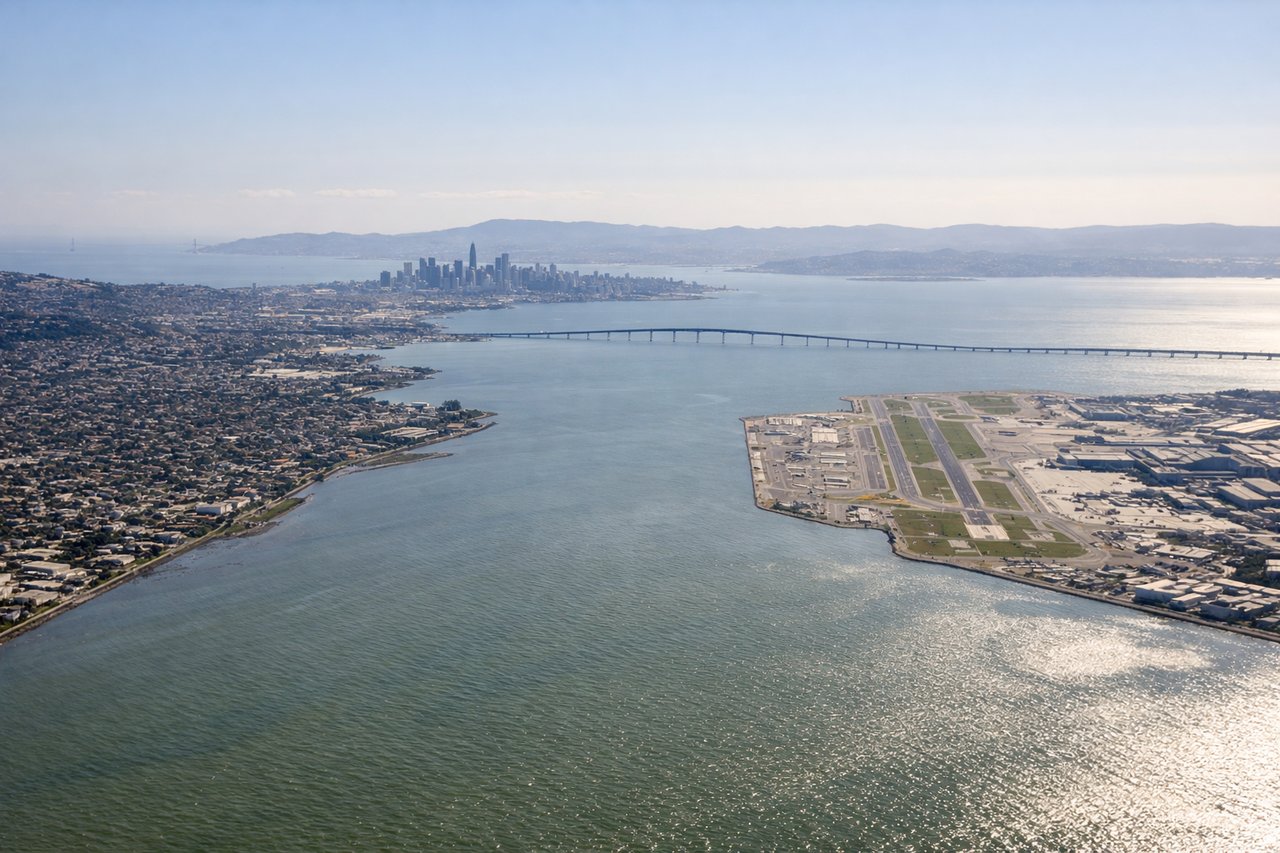
Landing at SFO
LEFTLeft-side seats provide excellent views during descent into San Francisco. As the aircraft approaches from the northeast, the left side reveals the San Francisco Bay, the Golden Gate Bridge, and the San Francisco Peninsula's distinctive geography. The bay's blue water and the bridge's iconic structure are unmistakable landmarks during final approach.
Landmarks on this routeAll landmarks →
Will your flight be in sunlight?
See exactly which side of the plane gets sun and shade at your departure time.
About This Route
Which side of the plane should I sit on flying from Coronel Fap Francisco Secada Vignetta (IQT) to San Francisco International (SFO)?
Sit on the Right side of the plane for the best views on flights from Iquitos to San Francisco. Right-side seats win overall because the takeoff from Iquitos offers more dramatic and sustained scenic value—the Amazon River system is visually striking and visible for 30+ minutes of climb. While the San Francisco landing on the left is iconic, the Amazon departure provides longer viewing time of genuinely spectacular terrain.
What can I see during takeoff from Coronel Fap Francisco Secada Vignetta in Iquitos?
During takeoff from Coronel Fap Francisco Secada Vignetta (IQT), sit on the Right side for the best views. Right-side seats offer views of the Amazon River's meanders and oxbow lakes as the aircraft climbs northwestward from Iquitos. The river system is dramatically visible from low altitude during initial climb, with its distinctive brown water contrasting sharply against dense rainforest canopy. Notable sights include: Amazon River main channel and oxbow lakes, dense Amazon rainforest canopy, Nanay River confluence (visible as darker tributary joining from the east), scattered river settlements and clearings.
What can I see when landing at San Francisco International in San Francisco?
When landing at San Francisco International (SFO), sit on the Left side for the best views. Left-side seats provide excellent views during descent into San Francisco. As the aircraft approaches from the northeast, the left side reveals the San Francisco Bay, the Golden Gate Bridge, and the San Francisco Peninsula's distinctive geography. The bay's blue water and the bridge's iconic structure are unmistakable landmarks during final approach. Notable sights include: San Francisco Bay (entire bay visible), Golden Gate Bridge, San Francisco Peninsula with downtown skyline, Marin Headlands (north of bridge).
How long is the flight from Iquitos to San Francisco?
The flight from Coronel Fap Francisco Secada Vignetta (IQT) to San Francisco International (SFO) takes Approximately 8.5 to 9.5 hours.
What does the Iquitos to San Francisco flight path pass over?
The flight path crosses the Andes Mountains (visible around 2-3 hours into flight, depending on routing), with peaks potentially reaching 18,000-20,000 feet visible from cruise altitude. The aircraft typically passes over or near the Peru-Ecuador border region and the high Andean plateau. After crossing the Andes, the flight enters the western United States over New Mexico or Arizona, with desert terrain, the Rio Grande valley, and eventually the Sierra Nevada mountains visible as the aircraft approaches California. The Great Basin and Central Valley of California become visible in the final 1-2 hours of flight.