Istanbul to Porto is 1,928 miles (3,103 km), a flight of about 4 hours 50 minutes.
The right side wins across the full flight: Istanbul's cityscape and Bosphorus at departure, a cruise track that stays closer to the mountainous Balkan and Apennine terrain to the north, and a Douro valley approach into Porto that ends with the old city in view. The left side is dominated by open sea for most of the route with fewer distinct landmarks.
Flight Path
Northern Greek coastline near Thessaloniki, the Adriatic Sea, the Apennine Mountains of central Italy, and the Tyrrhenian Sea near Sardinia
Great circle distance and headings ›_in_Istanbul.jpg?width=600)


Phase by phase
Takeoff from IST
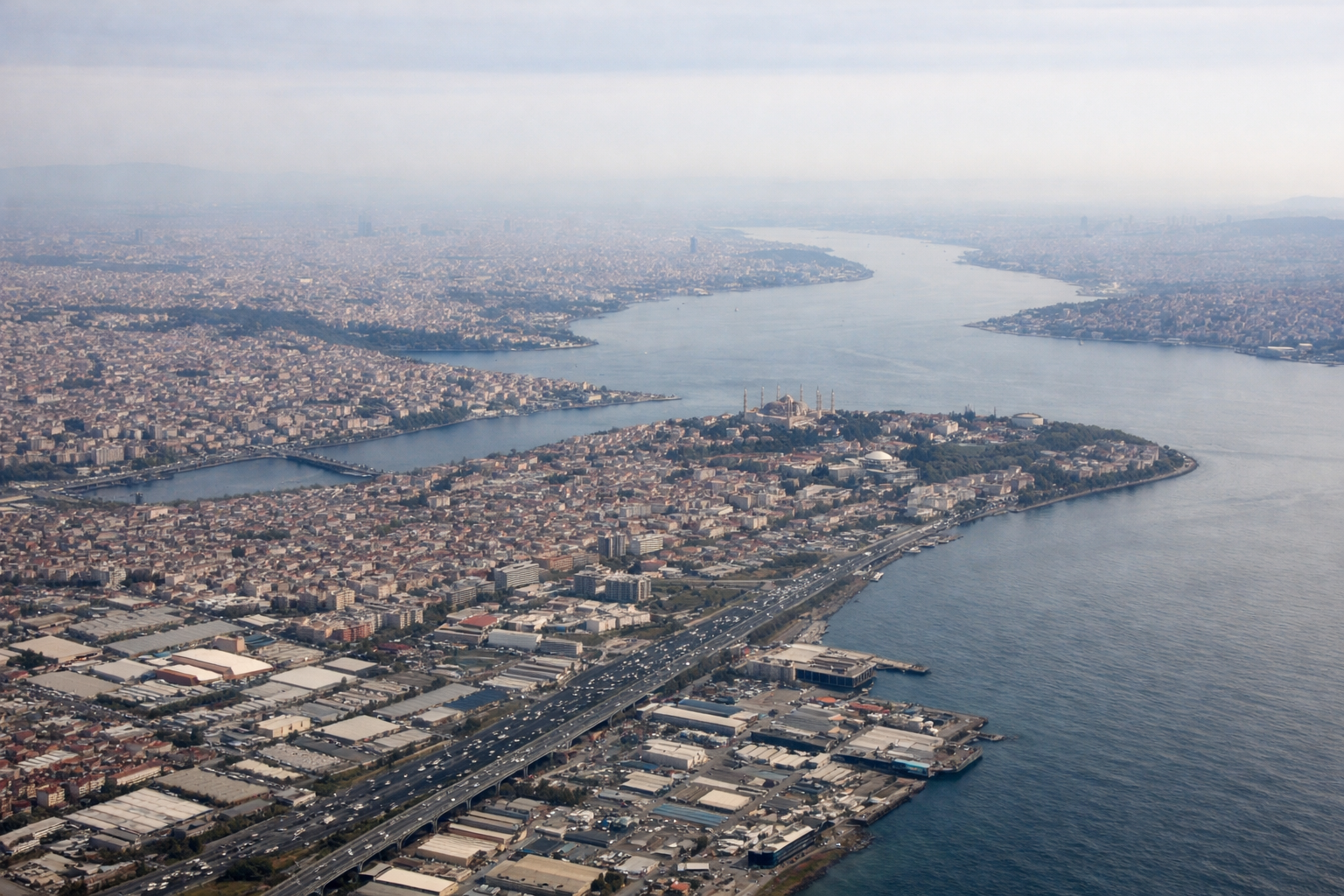
RIGHTDeparting IST to the south before turning west gives a brief but clear view of the Bosphorus mouth, the Sea of Marmara's northern shore, and Istanbul's dense skyline off to the north side of the aircraft. The left side mainly shows open Marmara waters with little else to anchor the eye.
Landing at OPO
RIGHTOn the typical northerly approach into OPO (runway 17), the aircraft descends along the Douro valley with Porto's historic center, the riverside Ribeira district, and the port wine cellars of Vila Nova de Gaia visible off the right side just before touchdown. The left side mostly shows open Atlantic water with little detail until very close to the runway.
Landmarks on this routeAll landmarks →
Will your flight be in sunlight?
Pick a date and time in the Sun Map to watch the sun move across your whole flight.
About This Route
Which side of the plane should I sit on flying from İstanbul Airport (IST) to Porto (OPO)?
Sit on the Right side of the plane for the best views on flights from Istanbul to Porto. The right side wins across the full flight: Istanbul's cityscape and Bosphorus at departure, a cruise track that stays closer to the mountainous Balkan and Apennine terrain to the north, and a Douro valley approach into Porto that ends with the old city in view. The left side is dominated by open sea for most of the route with fewer distinct landmarks.
What can I see during takeoff from İstanbul Airport in Istanbul?
During takeoff from İstanbul Airport (IST), sit on the Right side for the best views. Departing IST to the south before turning west gives a brief but clear view of the Bosphorus mouth, the Sea of Marmara's northern shore, and Istanbul's dense skyline off to the north side of the aircraft. The left side mainly shows open Marmara waters with little else to anchor the eye. Notable sights include: Bosphorus Strait, Sea of Marmara, Istanbul skyline, Princes' Islands.
What can I see when landing at Porto in Porto?
When landing at Porto (OPO), sit on the Right side for the best views. On the typical northerly approach into OPO (runway 17), the aircraft descends along the Douro valley with Porto's historic center, the riverside Ribeira district, and the port wine cellars of Vila Nova de Gaia visible off the right side just before touchdown. The left side mostly shows open Atlantic water with little detail until very close to the runway. Notable sights include: Douro River, Porto old town, Vila Nova de Gaia, Douro River mouth at Foz.
How long is the flight from Istanbul to Porto?
The flight from İstanbul Airport (IST) to Porto (OPO) takes about 4 hours 50 minutes. The shortest flight path between them is 1,928 miles (3,103 km); winds and air traffic control usually add a few percent.
What does the Istanbul to Porto flight path pass over?
Northern Greek coastline near Thessaloniki, the Adriatic Sea, the Apennine Mountains of central Italy, and the Tyrrhenian Sea near Sardinia