Istanbul to Tunis is 1,036 miles (1,668 km), a flight of about 2 hours 55 minutes.
While takeoff favors the left with its Istanbul cityscape, the right side wins overall because the cruise phase reveals the Greek mainland, Peloponnese coastline, and Sicilian/Maltese waters, followed by a landmark-rich approach over the Gulf of Tunis and Cap Bon.
Flight Path
Southern Aegean Sea, the Peloponnese coastline, Ionian Sea, and the waters south of Sicily and Malta before reaching the Tunisian coast
Great circle distance and headings ›_in_Istanbul.jpg?width=600)


Phase by phase
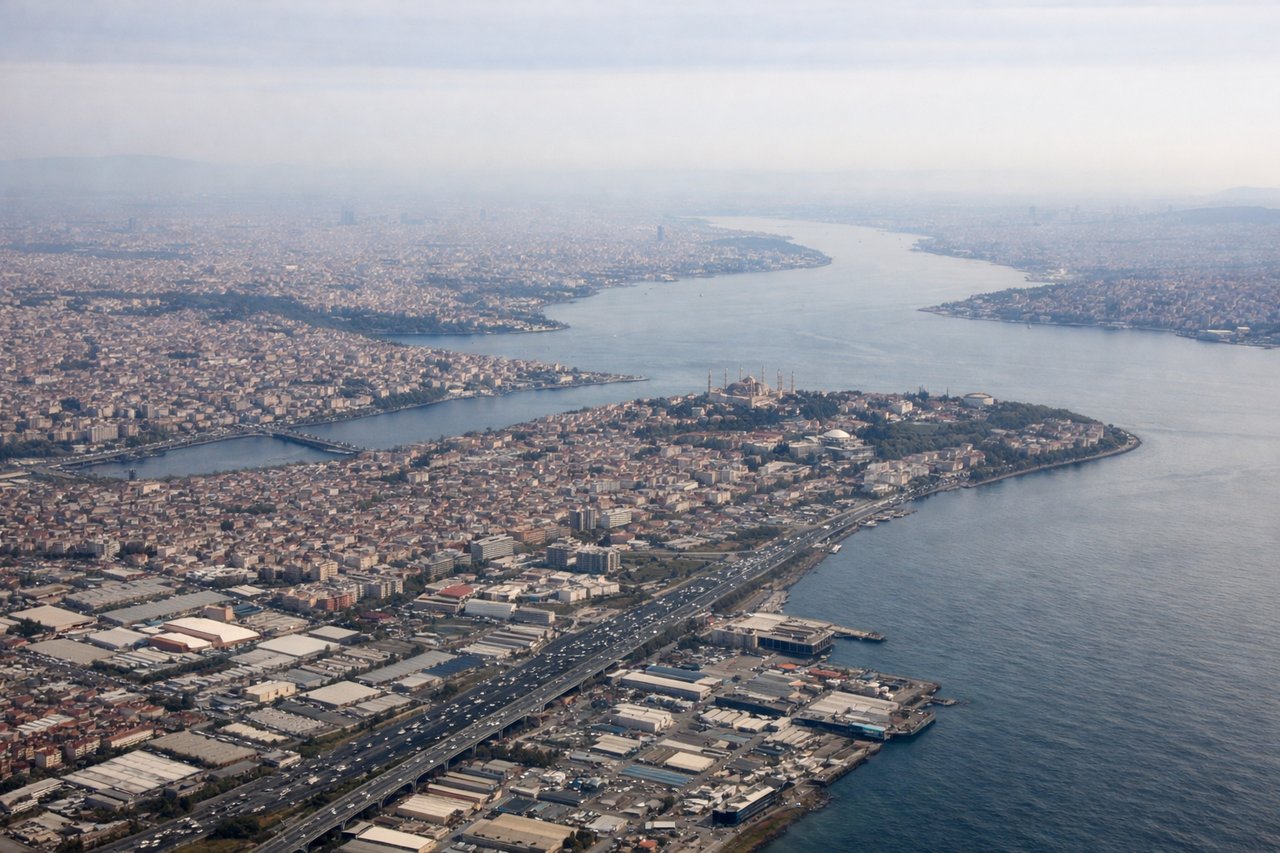
Takeoff from IST
LEFTDeparting IST, the initial climb and turn typically tracks south over Istanbul's European side, giving a brief but striking view of the Bosphorus mouth, the Sea of Marmara, and the Princes' Islands before the aircraft settles onto its westbound track.
Landing at TUN
RIGHTOn approach into Tunis-Carthage from the east, the right side offers views over the Gulf of Tunis, the Cap Bon peninsula, and the salt lake beside the city before the final turn onto the runway, while the left side mostly faces open Mediterranean.
Landmarks on this routeAll landmarks →
Will your flight be in sunlight?
Pick a date and time in the Sun Map to watch the sun move across your whole flight.
About This Route
Which side of the plane should I sit on flying from İstanbul Airport (IST) to Carthage (TUN)?
Sit on the Right side of the plane for the best views on flights from Istanbul to Tunis. While takeoff favors the left with its Istanbul cityscape, the right side wins overall because the cruise phase reveals the Greek mainland, Peloponnese coastline, and Sicilian/Maltese waters, followed by a landmark-rich approach over the Gulf of Tunis and Cap Bon.
What can I see during takeoff from İstanbul Airport in Istanbul?
During takeoff from İstanbul Airport (IST), sit on the Left side for the best views. Departing IST, the initial climb and turn typically tracks south over Istanbul's European side, giving a brief but striking view of the Bosphorus mouth, the Sea of Marmara, and the Princes' Islands before the aircraft settles onto its westbound track. Notable sights include: Bosphorus strait, Sea of Marmara, Princes' Islands, Istanbul's historic peninsula skyline.
What can I see when landing at Carthage in Tunis?
When landing at Carthage (TUN), sit on the Right side for the best views. On approach into Tunis-Carthage from the east, the right side offers views over the Gulf of Tunis, the Cap Bon peninsula, and the salt lake beside the city before the final turn onto the runway, while the left side mostly faces open Mediterranean. Notable sights include: Gulf of Tunis, Cap Bon peninsula, Lake of Tunis, Tunis city and the Carthage ruins area.
How long is the flight from Istanbul to Tunis?
The flight from İstanbul Airport (IST) to Carthage (TUN) takes about 2 hours 55 minutes. The shortest flight path between them is 1,036 miles (1,668 km); winds and air traffic control usually add a few percent.
What does the Istanbul to Tunis flight path pass over?
Southern Aegean Sea, the Peloponnese coastline, Ionian Sea, and the waters south of Sicily and Malta before reaching the Tunisian coast