Right side scores higher due to the exceptional landing sequence over Tokyo Bay and the metropolitan area. While left side offers modest Mississippi River scenery during takeoff, the cruise phase over the Pacific Ocean dominates both sides equally (5+ hours of open water, max 2.0 per constraint). Right side's advantage comes from the dramatic Tokyo Bay approach and Haneda's complex runway environment, which provides urban and industrial scenery unavailable on the left. Left side's takeoff advantage is outweighed by the landing disparity.
Flown JAN to HND? Did we get it right?
Flight Path
Jackson to Tokyo is 6,744 miles (10,854 km), a flight of about 13 hours 45 minutes.
Aleutian Islands (distant, far north of typical routing), North Pacific open ocean (5+ hours), Japanese archipelago approaching Honshu, Mount Fuji visible on clear days during descent into Tokyo airspace
Great circle distance and headings ›Phase by phase
Takeoff from JAN
LEFTLeft side captures the Mississippi River valley and the Pearl River system during initial climb-out from Jackson. The river's meandering channels and oxbow lakes are clearly visible at low altitude before the aircraft turns northeast toward the Pacific crossing.
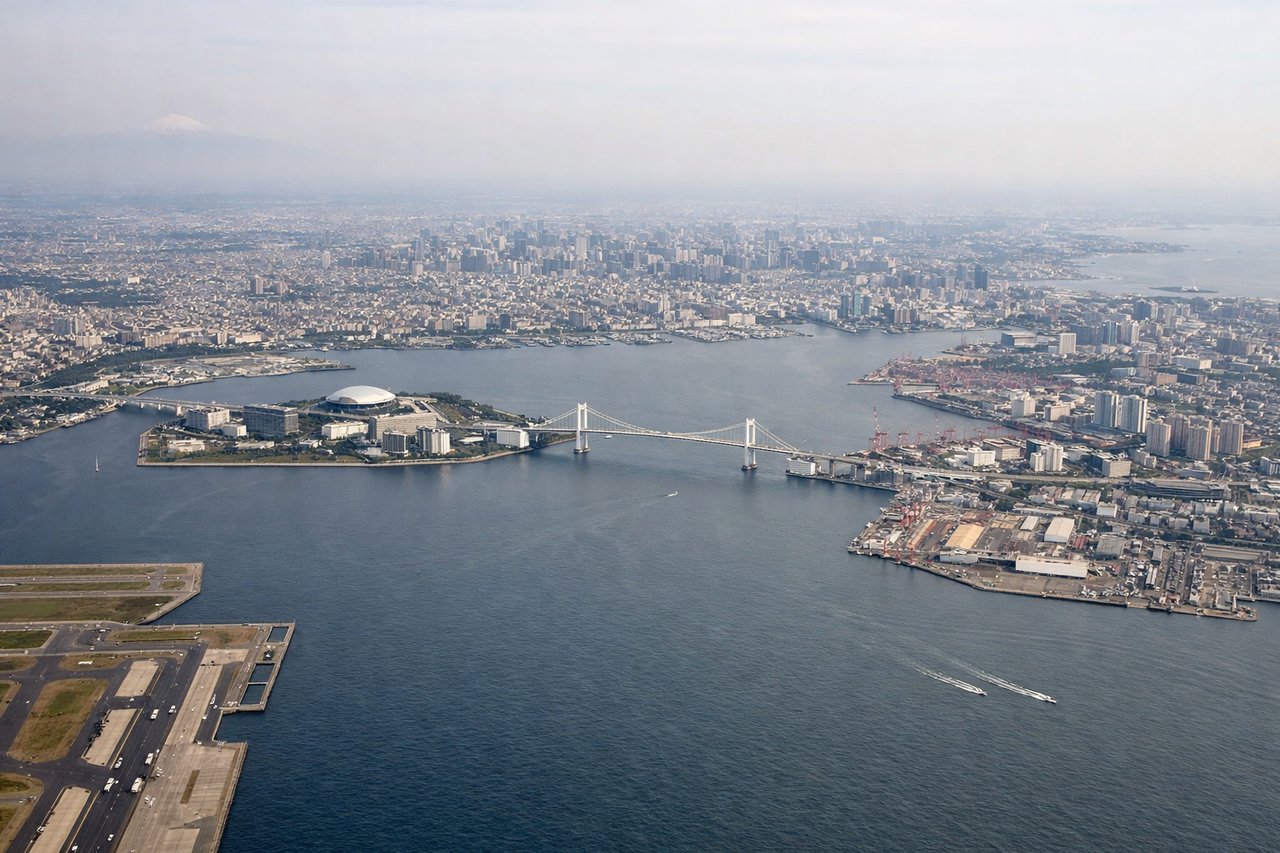
Landing at HND
RIGHTRight side offers superior views during the Tokyo approach. Aircraft descending over Tokyo Bay present views of Haneda's runway configuration, the bay's industrial waterfront, and the Tokyo metropolitan area's dense urban landscape. The approach typically brings the bay's eastern shoreline and Chiba Prefecture into view.
Will your flight be in sunlight?
Pick a date and time in the Sun Map to watch the sun move across your whole flight.
About This Route
Which side of the plane should I sit on flying from Jackson International (JAN) to Tokyo International (HND)?
Sit on the Right side of the plane for the best views on flights from Jackson to Tokyo. Right side scores higher due to the exceptional landing sequence over Tokyo Bay and the metropolitan area. While left side offers modest Mississippi River scenery during takeoff, the cruise phase over the Pacific Ocean dominates both sides equally (5+ hours of open water, max 2.0 per constraint). Right side's advantage comes from the dramatic Tokyo Bay approach and Haneda's complex runway environment, which provides urban and industrial scenery unavailable on the left. Left side's takeoff advantage is outweighed by the landing disparity.
What can I see during takeoff from Jackson International in Jackson?
During takeoff from Jackson International (JAN), sit on the Left side for the best views. Left side captures the Mississippi River valley and the Pearl River system during initial climb-out from Jackson. The river's meandering channels and oxbow lakes are clearly visible at low altitude before the aircraft turns northeast toward the Pacific crossing. Notable sights include: Mississippi River main channel, Pearl River oxbow lakes, Jackson urban grid, Mississippi Delta floodplain.
What can I see when landing at Tokyo International in Tokyo?
When landing at Tokyo International (HND), sit on the Right side for the best views. Right side offers superior views during the Tokyo approach. Aircraft descending over Tokyo Bay present views of Haneda's runway configuration, the bay's industrial waterfront, and the Tokyo metropolitan area's dense urban landscape. The approach typically brings the bay's eastern shoreline and Chiba Prefecture into view. Notable sights include: Tokyo Bay industrial waterfront, Haneda Airport runway complex, Chiba Prefecture coastline, Tokyo metropolitan sprawl.
How long is the flight from Jackson to Tokyo?
The flight from Jackson International (JAN) to Tokyo International (HND) takes about 13 hours 45 minutes. The shortest flight path between them is 6,744 miles (10,854 km); winds and air traffic control usually add a few percent.
What does the Jackson to Tokyo flight path pass over?
Aleutian Islands (distant, far north of typical routing), North Pacific open ocean (5+ hours), Japanese archipelago approaching Honshu, Mount Fuji visible on clear days during descent into Tokyo airspace