New York to Cuzco is 3,745 miles (6,027 km), a flight of about 8 hours.
Left side wins at takeoff for the New York skyline, but right side delivers the more spectacular and sustained views: the Caribbean coastline, the Amazon basin's river systems over Brazil and Peru, and the Andean approach into Cusco with the Vilcanota range. The Cusco arrival on the right is the visual highlight of the entire flight.
Flight Path
The flight tracks south-southwest over the Caribbean Sea passing near Cuba and the Yucatan Peninsula, then crosses the Amazon Basin over Colombia and Peru — a vast, flat green canopy broken by the braided silver channels of Amazon tributaries including the Ucayali and Marañón rivers. The final hour involves a dramatic climb into the Andes as the flat jungle abruptly gives way to the corrugated ridgelines of the Eastern Cordillera before descending into the Cusco altiplano at 3,400m.
Great circle distance and headings ›.jpg?width=600)
.jpg?width=600)

Phase by phase
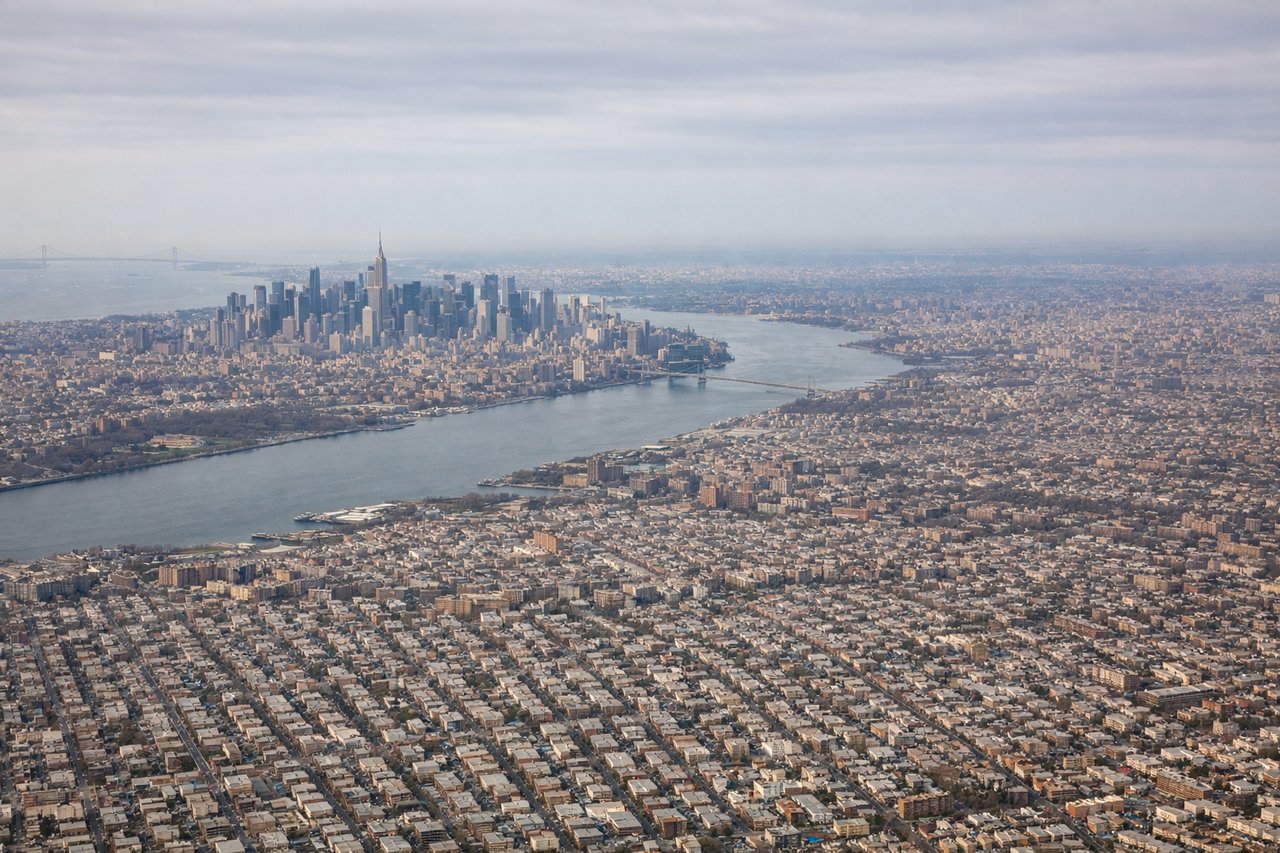
Takeoff from JFK
LEFTJFK typically departs east on runway 31L/31R or south on 22L/22R. On a southbound departure toward South America, a left-side seat gives you the Manhattan skyline to the northwest, then the Verrazano-Narrows Bridge and Lower New York Bay as you bank south. Right side faces the Atlantic Ocean and Long Island suburbs with little of interest.
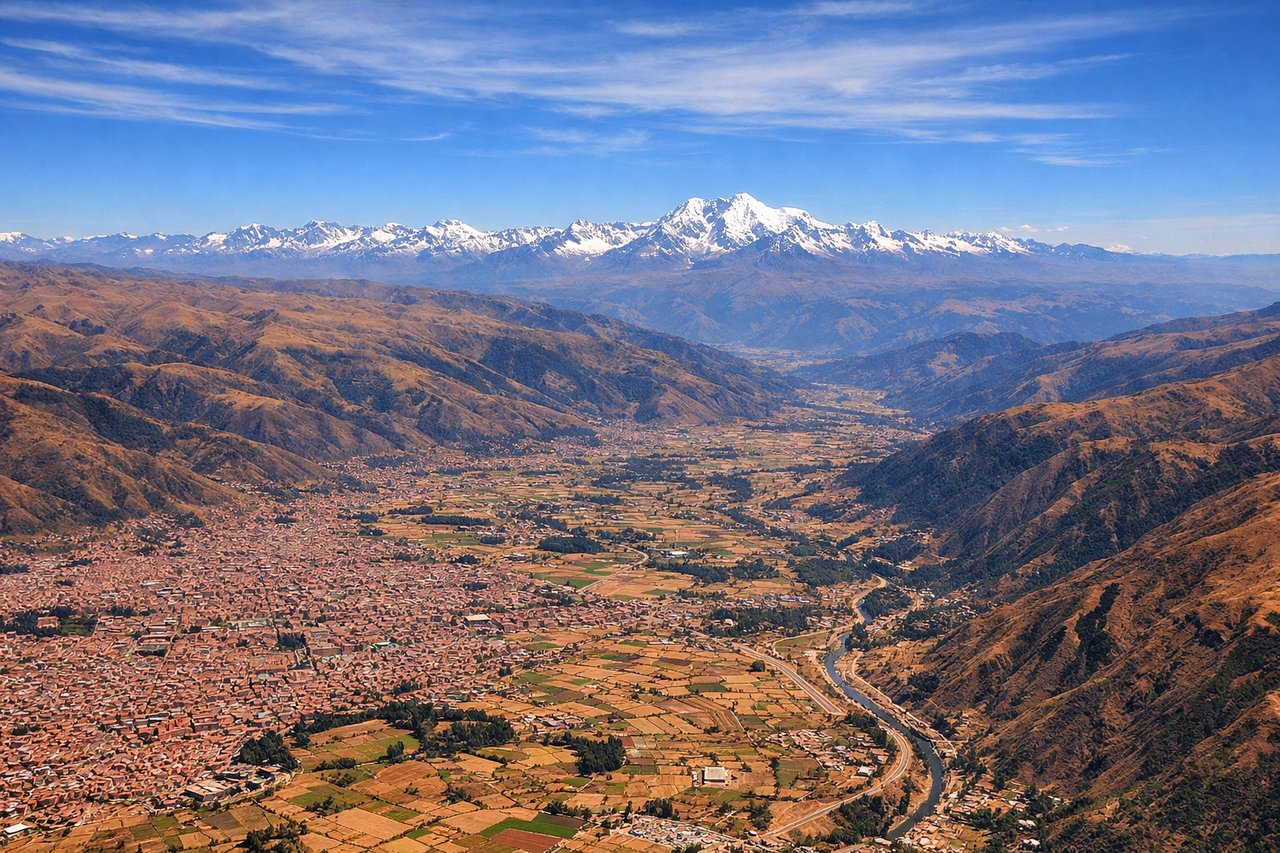
Landing at CUZ
RIGHTVelazco Astete Airport sits in the Huatanay Valley and typically uses runway 10 (eastward landing) or runway 28 (westward). On approach from the north, a right-side seat faces south toward the Cordillera Vilcanota and gives you the Sacred Valley and the Urubamba River drainage. Left side faces north toward lower terrain. Either way the Andes are dramatic, but right side catches the higher peaks including Ausangate (6,384m) on the southeastern horizon.
Landmarks on this routeAll landmarks →
Will your flight be in sunlight?
Pick a date and time in the Sun Map to watch the sun move across your whole flight.
About This Route
Which side of the plane should I sit on flying from John F Kennedy International (JFK) to Velazco Astete (CUZ)?
Sit on the Right side of the plane for the best views on flights from New York to Cuzco. Left side wins at takeoff for the New York skyline, but right side delivers the more spectacular and sustained views: the Caribbean coastline, the Amazon basin's river systems over Brazil and Peru, and the Andean approach into Cusco with the Vilcanota range. The Cusco arrival on the right is the visual highlight of the entire flight.
What can I see during takeoff from John F Kennedy International in New York?
During takeoff from John F Kennedy International (JFK), sit on the Left side for the best views. JFK typically departs east on runway 31L/31R or south on 22L/22R. On a southbound departure toward South America, a left-side seat gives you the Manhattan skyline to the northwest, then the Verrazano-Narrows Bridge and Lower New York Bay as you bank south. Right side faces the Atlantic Ocean and Long Island suburbs with little of interest. Notable sights include: Manhattan skyline (Empire State, One World Trade), Verrazano-Narrows Bridge, Lower New York Bay, Staten Island.
What can I see when landing at Velazco Astete in Cuzco?
When landing at Velazco Astete (CUZ), sit on the Right side for the best views. Velazco Astete Airport sits in the Huatanay Valley and typically uses runway 10 (eastward landing) or runway 28 (westward). On approach from the north, a right-side seat faces south toward the Cordillera Vilcanota and gives you the Sacred Valley and the Urubamba River drainage. Left side faces north toward lower terrain. Either way the Andes are dramatic, but right side catches the higher peaks including Ausangate (6,384m) on the southeastern horizon. Notable sights include: Cordillera Vilcanota with Ausangate peak, Huatanay Valley, Cusco city basin, Urubamba River drainage.
How long is the flight from New York to Cuzco?
The flight from John F Kennedy International (JFK) to Velazco Astete (CUZ) takes about 8 hours. The shortest flight path between them is 3,745 miles (6,027 km); winds and air traffic control usually add a few percent.
What does the New York to Cuzco flight path pass over?
The flight tracks south-southwest over the Caribbean Sea passing near Cuba and the Yucatan Peninsula, then crosses the Amazon Basin over Colombia and Peru — a vast, flat green canopy broken by the braided silver channels of Amazon tributaries including the Ucayali and Marañón rivers. The final hour involves a dramatic climb into the Andes as the flat jungle abruptly gives way to the corrugated ridgelines of the Eastern Cordillera before descending into the Cusco altiplano at 3,400m.