Cuzco to New York is 3,745 miles (6,027 km), a flight of about 7 hours 35 minutes.
While left offers excellent Andes views at takeoff, right provides superior scenery for the majority of the flight and the visually rewarding final approach over New York's coastal geography and Manhattan. The landing views alone justify the right-side choice for this long transatlantic route.
Flight Path
The flight path crosses the Amazon Basin (limited ground visibility due to cloud cover typical for the region), then transitions over the Caribbean and Atlantic. Notable waypoints include the northern coast of South America, the Caribbean islands (Hispaniola, Puerto Rico visible on clear days), and the eastern seaboard of the United States. The Mid-Atlantic Ridge lies beneath the ocean for most of the Atlantic crossing but is not visible from altitude. As the aircraft approaches North America, the Appalachian Mountains become visible in the distance before descent into the New York area.
Great circle distance and headings ›.jpg?width=600)

.jpg?width=600)
Phase by phase
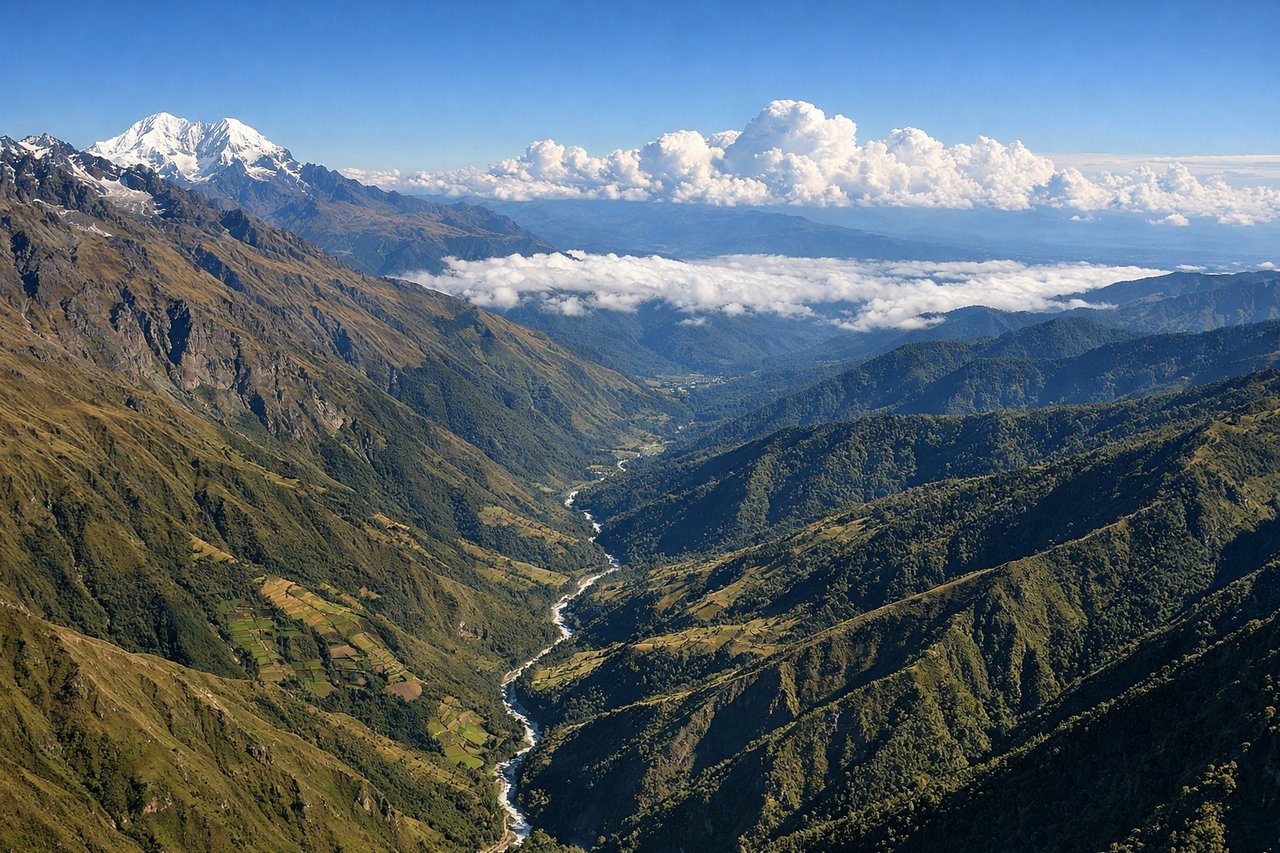
Takeoff from CUZ
LEFTLeft side captures the dramatic Andes peaks surrounding Cusco immediately after departure. The aircraft climbs northwestward, and left-side seats offer direct views of the high-altitude terrain that dominates the initial 15-20 minutes of flight.

Landing at JFK
RIGHTRight-side seats offer the best views during the final approach into JFK. The aircraft descends over Long Island Sound and Jamaica Bay, and right-side passengers see the Manhattan skyline, the East River, and the Atlantic coastline clearly before touchdown.
Landmarks on this routeAll landmarks →
Will your flight be in sunlight?
Pick a date and time in the Sun Map to watch the sun move across your whole flight.
About This Route
Which side of the plane should I sit on flying from Velazco Astete (CUZ) to John F Kennedy International (JFK)?
Sit on the Right side of the plane for the best views on flights from Cuzco to New York. While left offers excellent Andes views at takeoff, right provides superior scenery for the majority of the flight and the visually rewarding final approach over New York's coastal geography and Manhattan. The landing views alone justify the right-side choice for this long transatlantic route.
What can I see during takeoff from Velazco Astete in Cuzco?
During takeoff from Velazco Astete (CUZ), sit on the Left side for the best views. Left side captures the dramatic Andes peaks surrounding Cusco immediately after departure. The aircraft climbs northwestward, and left-side seats offer direct views of the high-altitude terrain that dominates the initial 15-20 minutes of flight. Notable sights include: Cordillera Vilcanota (southeast of Cusco), Sacred Valley terrain, Urubamba River valley, Cusco city grid below.
What can I see when landing at John F Kennedy International in New York?
When landing at John F Kennedy International (JFK), sit on the Right side for the best views. Right-side seats offer the best views during the final approach into JFK. The aircraft descends over Long Island Sound and Jamaica Bay, and right-side passengers see the Manhattan skyline, the East River, and the Atlantic coastline clearly before touchdown. Notable sights include: Manhattan skyline, East River, Jamaica Bay, Long Island Sound.
How long is the flight from Cuzco to New York?
The flight from Velazco Astete (CUZ) to John F Kennedy International (JFK) takes about 7 hours 35 minutes. The shortest flight path between them is 3,745 miles (6,027 km); winds and air traffic control usually add a few percent.
What does the Cuzco to New York flight path pass over?
The flight path crosses the Amazon Basin (limited ground visibility due to cloud cover typical for the region), then transitions over the Caribbean and Atlantic. Notable waypoints include the northern coast of South America, the Caribbean islands (Hispaniola, Puerto Rico visible on clear days), and the eastern seaboard of the United States. The Mid-Atlantic Ridge lies beneath the ocean for most of the Atlantic crossing but is not visible from altitude. As the aircraft approaches North America, the Appalachian Mountains become visible in the distance before descent into the New York area.