Gastineau Channel, Chilkat Mountains, Auke Bay
Gastineau Channel, Chilkat Mountains to the north and west, Auke Bay to the northeast
🛫 Taking Off from Juneau (JNU)
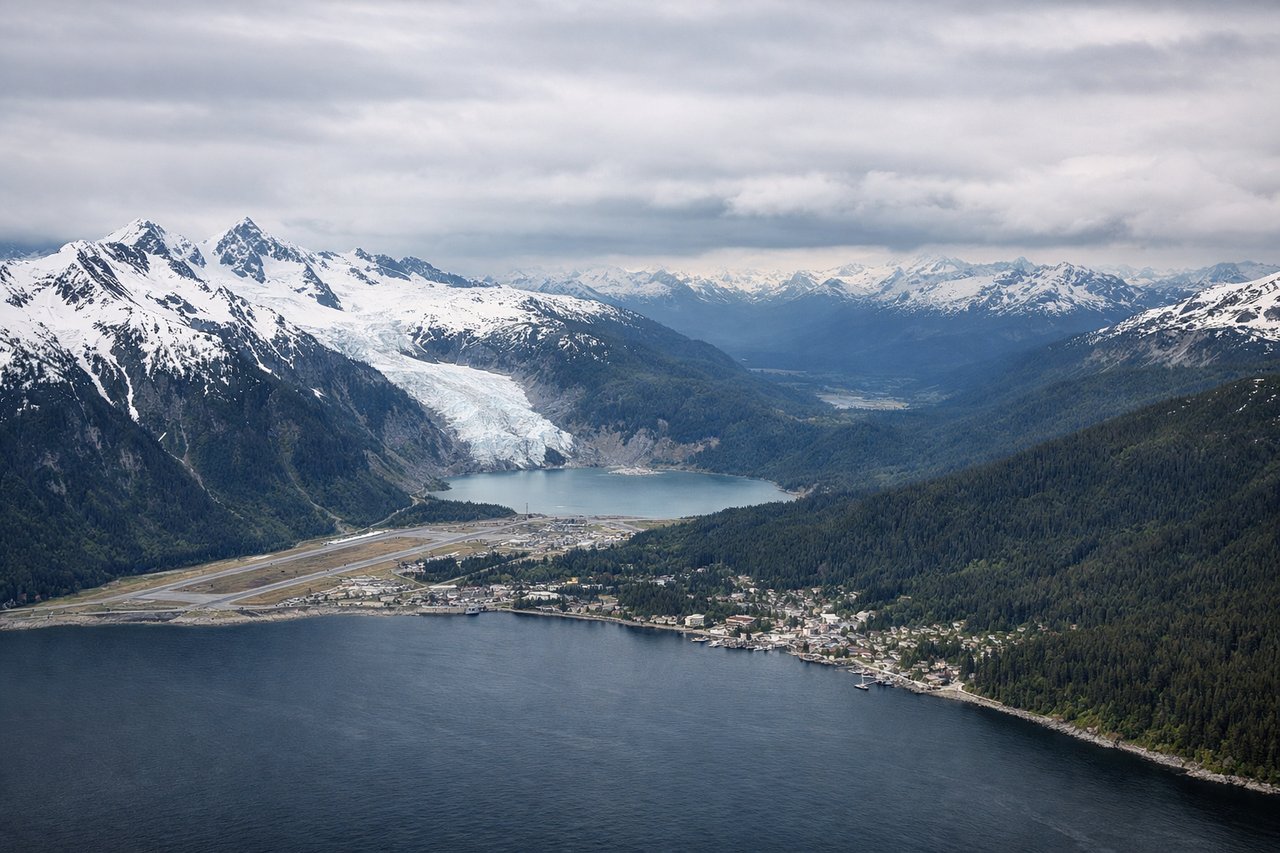 Left Side
🛬 Landing at Juneau (JNU)
Juneau International is a small, single-terminal airport wedged between mountains and the Gastineau Channel, with a floatplane basin (runway 08W/26W) serving seaplane traffic for remote fishing lodges and wilderness access.
Landmarks on routes from JuneauAll landmarks →
Connecting at JNU?
Find out if your layover is long enough at Juneau International.
Check layover times →Popular Routes from Juneau International (JNU)
About This Airport
Which side of the plane has the best views at Juneau International (JNU)?
At Juneau International in Juneau: for takeoff, sit on the Left side; for landing, sit on the Left side. Notable views include: Gastineau Channel (water body immediately below/ahead), Chilkat Mountains (west/left horizon), Auke Bay (north), forested ridgelines of the Tongass National Forest.
What can I see during takeoff from Juneau International in Juneau?
When taking off from Juneau International (JNU), sit on the Left side for the best views. Runway 26 departures head westbound over Gastineau Channel, and the left side offers views of the Chilkat Mountains and the dramatic terrain of the Inside Passage. You'll see the channel itself and the surrounding forested valleys that define Juneau's geography during initial climb-out. Notable sights include: Gastineau Channel (water body immediately below/ahead), Chilkat Mountains (west/left horizon), Auke Bay (north), forested ridgelines of the Tongass National Forest.
What can I see when landing at Juneau International in Juneau?
When landing at Juneau International (JNU), sit on the Left side for the best views. Runway 08 (the most common landing runway) has aircraft approaching from the southeast, placing Gastineau Channel and the dramatic coastal terrain on the left side. You'll see the water approach, surrounding mountains, and the airport's valley setting most clearly from the left window. Notable sights include: Gastineau Channel (water body immediately below approach path), Chilkat Mountains to the north and west, Auke Bay to the northeast, forested valley floor surrounding the airport.
What factors affect the best window seat at Juneau International?
The best window seat at Juneau International (JNU) depends on several factors: the typical runway used for your departure or arrival, the geographic features around Juneau (mountains, coastlines, city skylines), weather conditions, and time of day. Morning and evening flights often offer the best lighting for scenic views.