While the takeoff offers dramatic volcanic scenery on the right, the landing approach provides more consistent and visually distinctive views. The Dutch landscape's geometric precision and the Ijsselmeer-delta system are more striking from altitude than the gradual climb over Rwanda's hills. Left-side seats capture the most memorable portion of this long-haul route.
Flight Path
The flight path crosses central Africa northward, passing over the Congo Basin (dense tropical forest, largely featureless from altitude), then transitions over the Sahara Desert (vast tan and ochre expanses with occasional wadi systems visible), continues over North Africa and the Mediterranean Sea, and finally approaches Europe over the Bay of Biscay and English Channel before reaching the Netherlands. The Sahara crossing offers the most visually distinctive midpoint scenery—endless desert with subtle dune patterns and occasional rocky outcrops—visible from either side depending on exact flight routing.
Great circle distance and headings ›


.jpg?width=600)


Phase by phase
Takeoff from KGL
RIGHTRight-side seats offer views of the Virunga Mountains and the terrain north of Kigali during the initial climb. The aircraft departs northwestward, and the right wing provides the best angle toward the volcanic peaks and the Rwanda-Uganda border region.
Landing at AMS
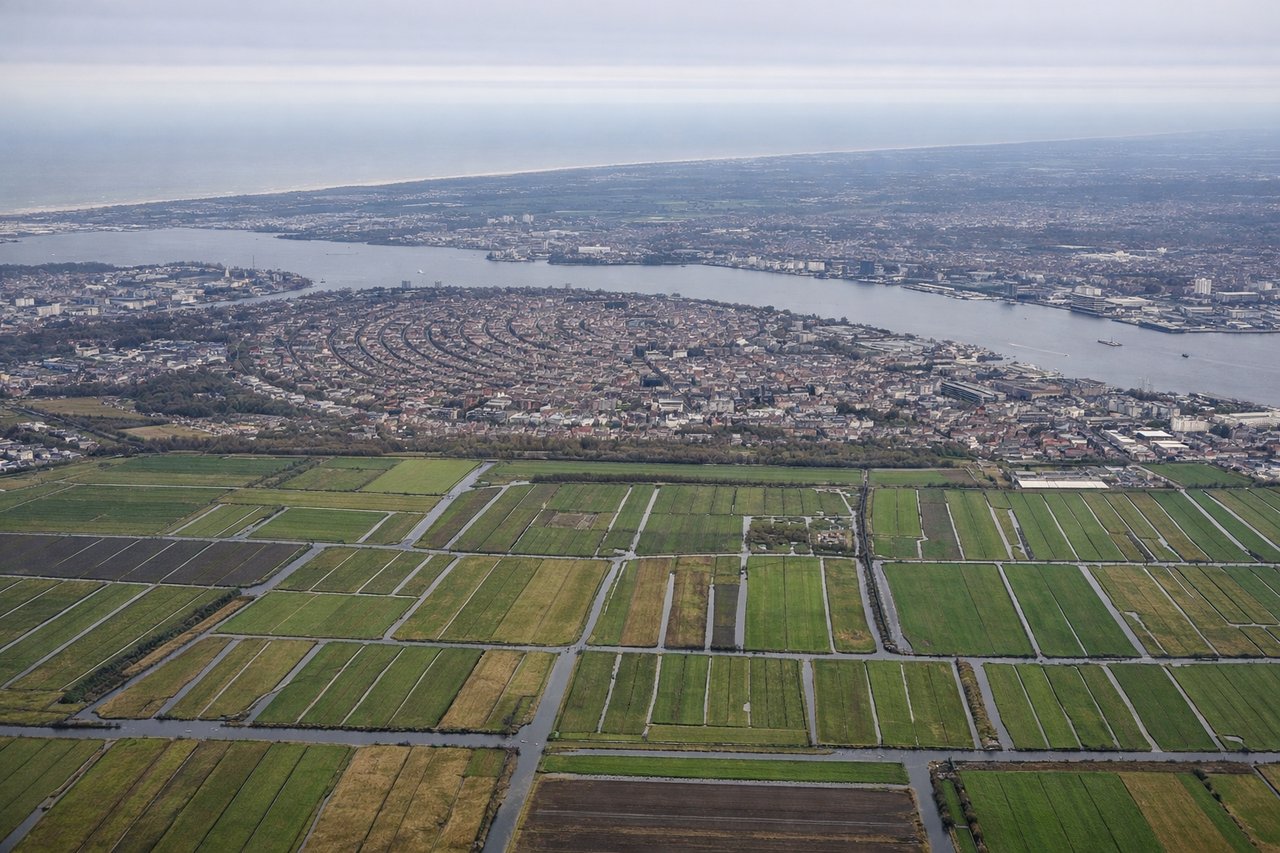
LEFTLeft-side seats provide excellent views during the approach to Amsterdam. The flight descends over the North Sea and the Dutch coast, and left-side windows capture the distinctive flat polder landscape, the Ijsselmeer lake, and the Rhine-Meuse delta as the aircraft lines up for Schiphol.
Landmarks on this routeAll landmarks →
Will your flight be in sunlight?
See exactly which side of the plane gets sun and shade at your departure time.
About This Route
Which side of the plane should I sit on flying from Kigali International (KGL) to Schiphol (AMS)?
Sit on the Left side of the plane for the best views on flights from Kigali to Amsterdam. While the takeoff offers dramatic volcanic scenery on the right, the landing approach provides more consistent and visually distinctive views. The Dutch landscape's geometric precision and the Ijsselmeer-delta system are more striking from altitude than the gradual climb over Rwanda's hills. Left-side seats capture the most memorable portion of this long-haul route.
What can I see during takeoff from Kigali International in Kigali?
During takeoff from Kigali International (KGL), sit on the Right side for the best views. Right-side seats offer views of the Virunga Mountains and the terrain north of Kigali during the initial climb. The aircraft departs northwestward, and the right wing provides the best angle toward the volcanic peaks and the Rwanda-Uganda border region. Notable sights include: Virunga Mountains (volcanic peaks on the horizon), Lake Kivu (western edge visible), Kigali city sprawl (receding below), Rwanda's rolling hills and tea plantations.
What can I see when landing at Schiphol in Amsterdam?
When landing at Schiphol (AMS), sit on the Left side for the best views. Left-side seats provide excellent views during the approach to Amsterdam. The flight descends over the North Sea and the Dutch coast, and left-side windows capture the distinctive flat polder landscape, the Ijsselmeer lake, and the Rhine-Meuse delta as the aircraft lines up for Schiphol. Notable sights include: Ijsselmeer (large inland lake), North Sea coastline, Dutch polders and canal networks, Rhine-Meuse river delta.
How long is the flight from Kigali to Amsterdam?
The flight from Kigali International (KGL) to Schiphol (AMS) takes Approximately 10.5 to 11 hours.
What does the Kigali to Amsterdam flight path pass over?
The flight path crosses central Africa northward, passing over the Congo Basin (dense tropical forest, largely featureless from altitude), then transitions over the Sahara Desert (vast tan and ochre expanses with occasional wadi systems visible), continues over North Africa and the Mediterranean Sea, and finally approaches Europe over the Bay of Biscay and English Channel before reaching the Netherlands. The Sahara crossing offers the most visually distinctive midpoint scenery—endless desert with subtle dune patterns and occasional rocky outcrops—visible from either side depending on exact flight routing.