While takeoff from Kingston offers Caribbean scenery, the landing approach into Gatwick provides more sustained visual interest with the English countryside, river valleys, and downland formations. The left side captures both the approach corridor and the most distinctive terrain features.
Flight Path
The flight path crosses the Atlantic Ocean for approximately 7 hours with no major landmarks visible—primarily open ocean. Notable waypoints include: the Azores region (if visible during daylight, appearing as small volcanic islands far below), the Bay of Biscay off the French coast, and the English Channel before final approach. Most of the transatlantic portion offers only water and occasional cloud formations.
Great circle distance and headings ›Phase by phase
Takeoff from KIN
RIGHTRight-side seats offer views of Kingston's harbor, the Blue Mountains to the north, and the Palisadoes Peninsula as the aircraft climbs out over the Caribbean. Left side faces inland terrain with less distinctive features during initial climb.
Landing at LGW
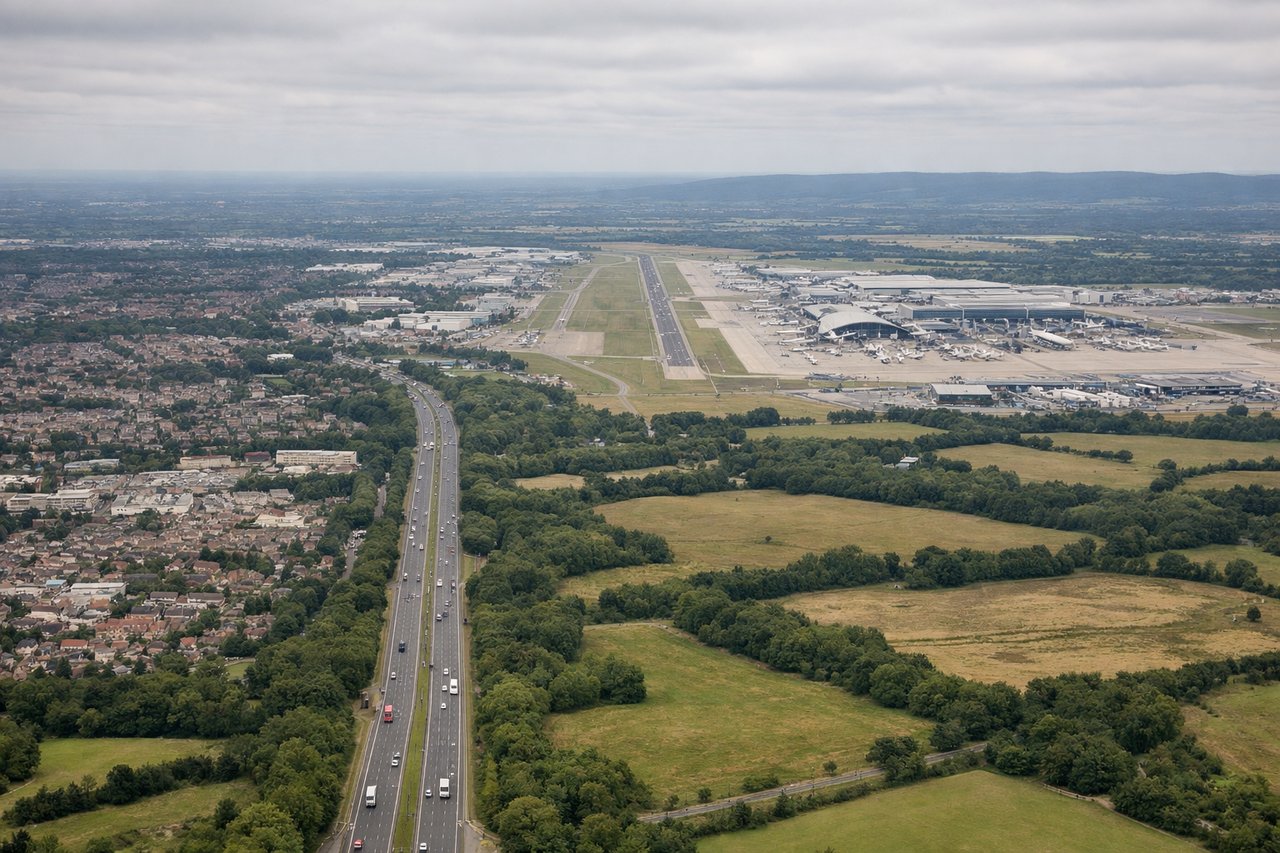
LEFTLeft-side seats provide excellent views during the descent approach to Gatwick. You'll see the North Downs, the River Thames valley, and the patchwork of Surrey and Sussex countryside. Right side faces away from the primary approach corridor.
Landmarks on this routeAll landmarks →
Will your flight be in sunlight?
See exactly which side of the plane gets sun and shade at your departure time.
About This Route
Which side of the plane should I sit on flying from Norman Manley International (KIN) to Gatwick (LGW)?
Sit on the Left side of the plane for the best views on flights from Kingston to London. While takeoff from Kingston offers Caribbean scenery, the landing approach into Gatwick provides more sustained visual interest with the English countryside, river valleys, and downland formations. The left side captures both the approach corridor and the most distinctive terrain features.
What can I see during takeoff from Norman Manley International in Kingston?
During takeoff from Norman Manley International (KIN), sit on the Right side for the best views. Right-side seats offer views of Kingston's harbor, the Blue Mountains to the north, and the Palisadoes Peninsula as the aircraft climbs out over the Caribbean. Left side faces inland terrain with less distinctive features during initial climb. Notable sights include: Kingston Harbor, Blue Mountains (reaching 7,402 ft), Palisadoes Peninsula, Caribbean Sea.
What can I see when landing at Gatwick in London?
When landing at Gatwick (LGW), sit on the Left side for the best views. Left-side seats provide excellent views during the descent approach to Gatwick. You'll see the North Downs, the River Thames valley, and the patchwork of Surrey and Sussex countryside. Right side faces away from the primary approach corridor. Notable sights include: North Downs, River Thames valley, Surrey/Sussex farmland, Gatwick runway complex.
How long is the flight from Kingston to London?
The flight from Norman Manley International (KIN) to Gatwick (LGW) takes Approximately 9 hours 15 minutes.
What does the Kingston to London flight path pass over?
The flight path crosses the Atlantic Ocean for approximately 7 hours with no major landmarks visible—primarily open ocean. Notable waypoints include: the Azores region (if visible during daylight, appearing as small volcanic islands far below), the Bay of Biscay off the French coast, and the English Channel before final approach. Most of the transatlantic portion offers only water and occasional cloud formations.