Osaka to Hangzhou is 911 miles (1,466 km), a flight of about 2 hours 15 minutes.
While takeoff favors the right, the landing experience over West Lake and Hangzhou's distinctive urban-water interface is more visually rewarding and geographically interesting than the departure. Left-side passengers get the superior overall experience.
Flight Path
The flight path crosses the East China Sea at roughly 32°N latitude. Notable features include the Seto Inland Sea islands (visible during initial climb), the Japanese coastline receding northwestward, open ocean with occasional shipping traffic, and the approach to the Yangtze River Delta region where the Chinese coast becomes visible with its characteristic brown-water estuaries and coastal development. The Hangzhou Bay area becomes visible approximately 30 minutes before landing, with its distinctive muddy-colored waters and industrial coastline.
Great circle distance and headings ›
.jpg?width=600)
Phase by phase
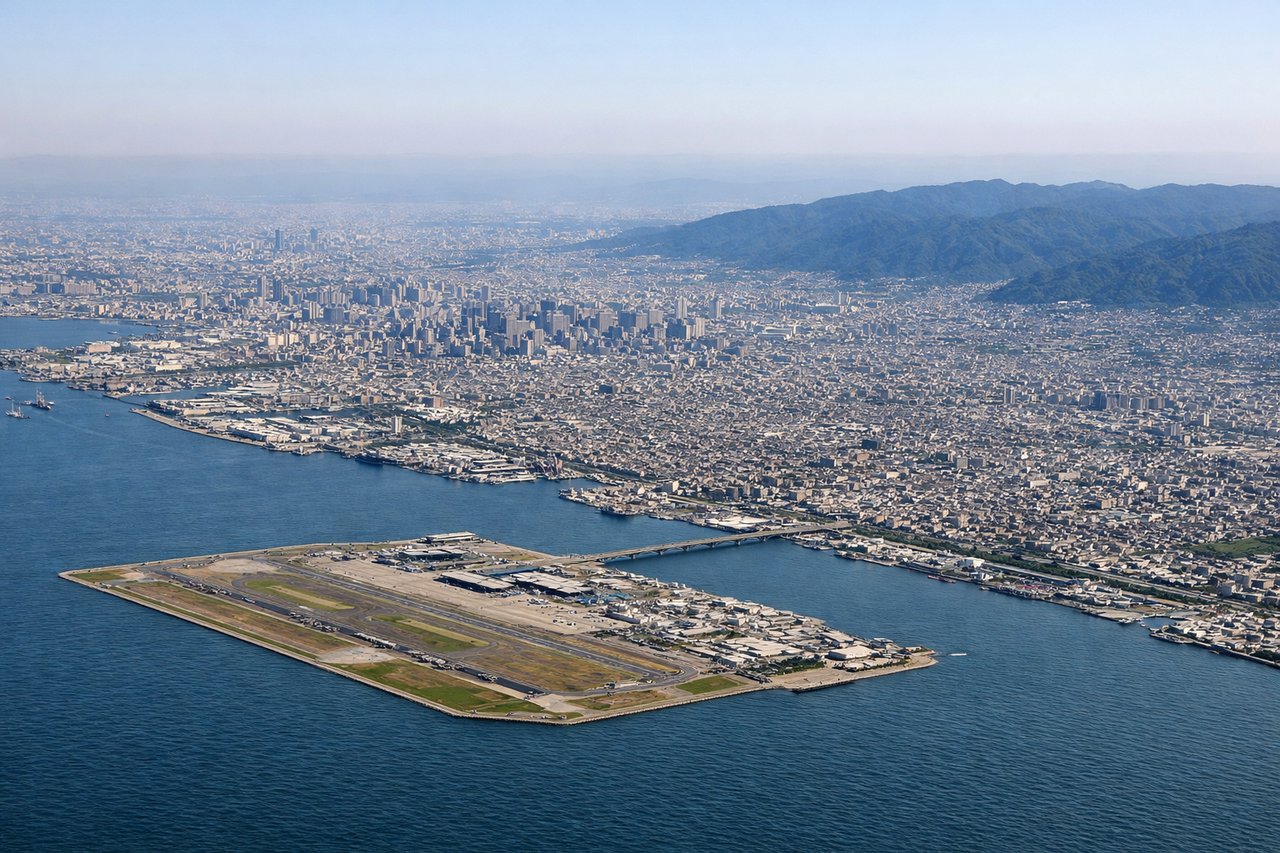
Takeoff from KIX
RIGHTRight-side seats capture the initial climb over Osaka Bay and the Kii Peninsula's mountainous spine. KIX typically departs runway 06L/24R; southbound departures (runway 06) turn right over water, giving right-seat passengers an unobstructed view of the bay's eastern shoreline and the Kii Mountains rising inland.
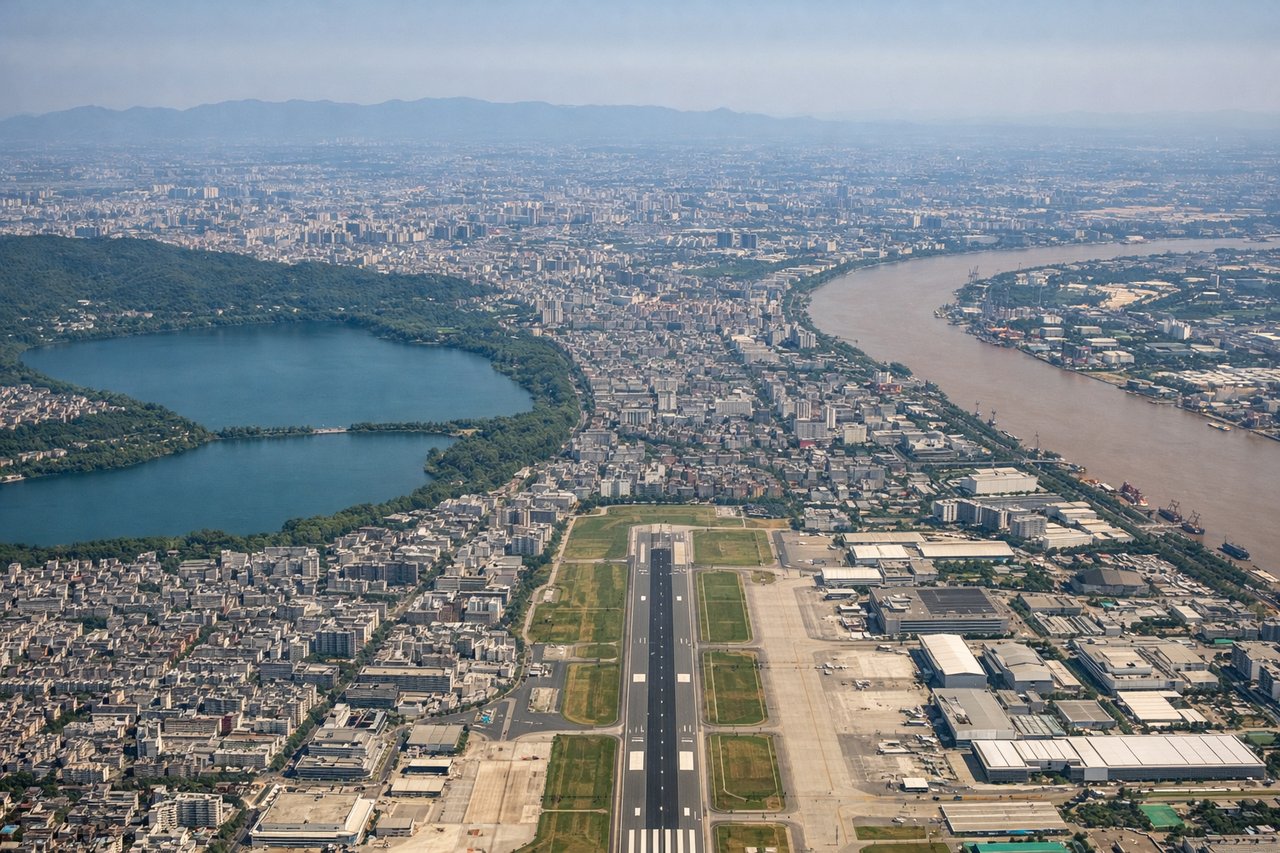
Landing at HGH
LEFTLeft-seat passengers get the best approach views over Hangzhou's urban landscape and West Lake. HGH typically uses runway 20 for arrivals; the standard approach from the northeast descends over the city proper, giving left-side views of West Lake's distinctive shape and Hangzhou's dense development before touchdown.
Landmarks on this routeAll landmarks →
Will your flight be in sunlight?
Pick a date and time in the Sun Map to watch the sun move across your whole flight.
About This Route
Which side of the plane should I sit on flying from Kansai International (KIX) to Xiaoshan (HGH)?
Sit on the Left side of the plane for the best views on flights from Osaka to Hangzhou. While takeoff favors the right, the landing experience over West Lake and Hangzhou's distinctive urban-water interface is more visually rewarding and geographically interesting than the departure. Left-side passengers get the superior overall experience.
What can I see during takeoff from Kansai International in Osaka?
During takeoff from Kansai International (KIX), sit on the Right side for the best views. Right-side seats capture the initial climb over Osaka Bay and the Kii Peninsula's mountainous spine. KIX typically departs runway 06L/24R; southbound departures (runway 06) turn right over water, giving right-seat passengers an unobstructed view of the bay's eastern shoreline and the Kii Mountains rising inland. Notable sights include: Osaka Bay (immediate foreground), Kii Peninsula mountains (southeast), Wakayama Prefecture coastline, Kobe-Akashi area (northwest across the bay).
What can I see when landing at Xiaoshan in Hangzhou?
When landing at Xiaoshan (HGH), sit on the Left side for the best views. Left-seat passengers get the best approach views over Hangzhou's urban landscape and West Lake. HGH typically uses runway 20 for arrivals; the standard approach from the northeast descends over the city proper, giving left-side views of West Lake's distinctive shape and Hangzhou's dense development before touchdown. Notable sights include: West Lake (Xihu) with its causeways, Hangzhou urban core, Qiantang River estuary, Tianmu Mountains (distant northwest).
How long is the flight from Osaka to Hangzhou?
The flight from Kansai International (KIX) to Xiaoshan (HGH) takes about 2 hours 15 minutes. The shortest flight path between them is 911 miles (1,466 km); winds and air traffic control usually add a few percent.
What does the Osaka to Hangzhou flight path pass over?
The flight path crosses the East China Sea at roughly 32°N latitude. Notable features include the Seto Inland Sea islands (visible during initial climb), the Japanese coastline receding northwestward, open ocean with occasional shipping traffic, and the approach to the Yangtze River Delta region where the Chinese coast becomes visible with its characteristic brown-water estuaries and coastal development. The Hangzhou Bay area becomes visible approximately 30 minutes before landing, with its distinctive muddy-colored waters and industrial coastline.