Right-side seats deliver superior scenery on both takeoff and landing. Departure offers Osaka Bay and the Kii Peninsula; arrival showcases the Canadian Rockies, which are the flight's most visually striking feature.
Flown KIX to YYC? Did we get it right?
Flight Path
Osaka to Calgary is 5,191 miles (8,354 km), a flight of about 11 hours 30 minutes.
The flight path crosses the North Pacific, passing north of the Hawaiian Islands (typically not visible), then approaches North America over the Aleutian Islands region. Over western Canada, the flight crosses the Yukon and British Columbia wilderness before descending into the Rocky Mountain foothills near Calgary. The midpoint offers minimal window scenery—primarily open ocean and remote boreal forest.
Great circle distance and headings ›


Phase by phase
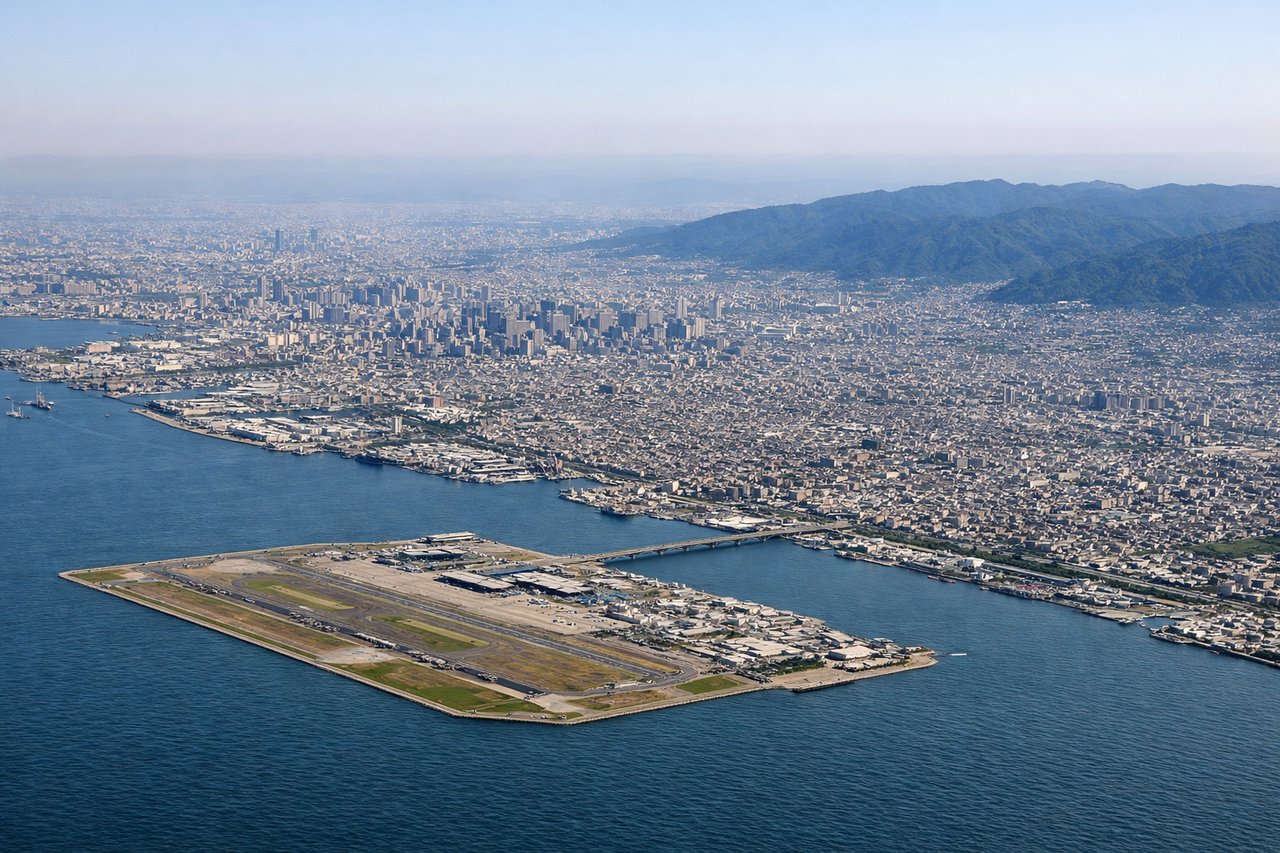
Takeoff from KIX
RIGHTRight-side seats offer views of Osaka Bay and the Kii Peninsula as the aircraft climbs out westward over the Seto Inland Sea. Left seats face inland toward the Kobe-Osaka urban sprawl with less distinctive scenery.
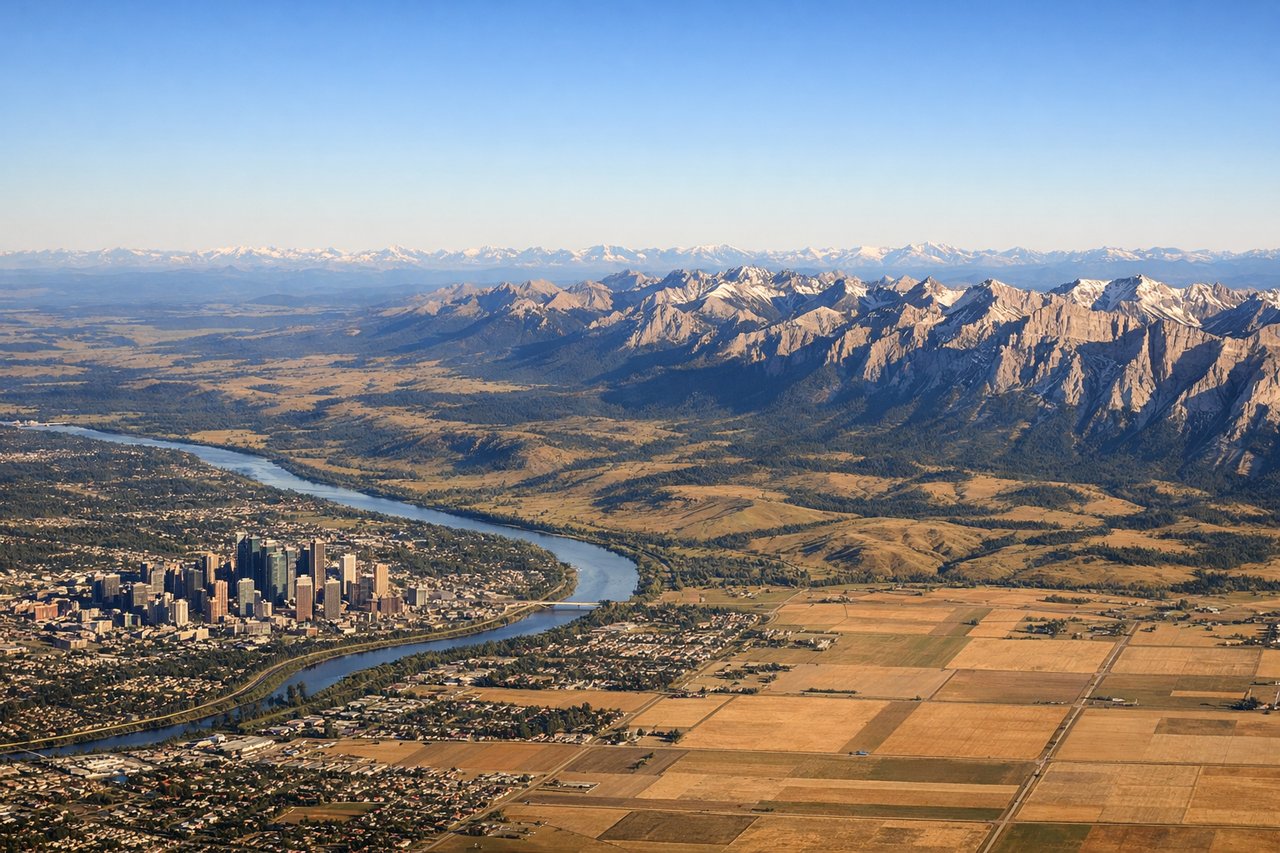
Landing at YYC
RIGHTRight-side seats provide views of the Canadian Rockies and the foothills as the aircraft descends from the northwest into Calgary. The Rocky Mountain front is the most dramatic visual feature on approach. Left seats face the flat prairie with fewer distinctive landmarks.
Will your flight be in sunlight?
Pick a date and time in the Sun Map to watch the sun move across your whole flight.
About This Route
Which side of the plane should I sit on flying from Kansai International (KIX) to Calgary International (YYC)?
Sit on the Right side of the plane for the best views on flights from Osaka to Calgary. Right-side seats deliver superior scenery on both takeoff and landing. Departure offers Osaka Bay and the Kii Peninsula; arrival showcases the Canadian Rockies, which are the flight's most visually striking feature.
What can I see during takeoff from Kansai International in Osaka?
During takeoff from Kansai International (KIX), sit on the Right side for the best views. Right-side seats offer views of Osaka Bay and the Kii Peninsula as the aircraft climbs out westward over the Seto Inland Sea. Left seats face inland toward the Kobe-Osaka urban sprawl with less distinctive scenery. Notable sights include: Osaka Bay, Kii Peninsula, Seto Inland Sea, Awaji Island.
What can I see when landing at Calgary International in Calgary?
When landing at Calgary International (YYC), sit on the Right side for the best views. Right-side seats provide views of the Canadian Rockies and the foothills as the aircraft descends from the northwest into Calgary. The Rocky Mountain front is the most dramatic visual feature on approach. Left seats face the flat prairie with fewer distinctive landmarks. Notable sights include: Canadian Rocky Mountains, Bow River valley, Calgary skyline, Foothills.
How long is the flight from Osaka to Calgary?
The flight from Kansai International (KIX) to Calgary International (YYC) takes about 11 hours 30 minutes. The shortest flight path between them is 5,191 miles (8,354 km); winds and air traffic control usually add a few percent.
What does the Osaka to Calgary flight path pass over?
The flight path crosses the North Pacific, passing north of the Hawaiian Islands (typically not visible), then approaches North America over the Aleutian Islands region. Over western Canada, the flight crosses the Yukon and British Columbia wilderness before descending into the Rocky Mountain foothills near Calgary. The midpoint offers minimal window scenery—primarily open ocean and remote boreal forest.