Right side captures the dramatic Rocky Mountain departure and provides better views during the initial climb. While the landing favors left, the takeoff scenery from YYC is more visually distinctive and memorable than the industrial approach to KIX.
Flight Path
The flight crosses the North Pacific at high altitude. Notable features along the route include: the Canadian Rockies and Interior Plateau during climb-out, the Aleutian Islands (visible from cruising altitude on clear days, roughly 6 hours into flight), the northern Pacific Ocean with occasional weather systems, and the approach to Japan over the Seto Inland Sea with its numerous small islands visible during descent into Kansai.
Great circle distance and headings ›

.jpg?width=600)

Phase by phase
Takeoff from YYC
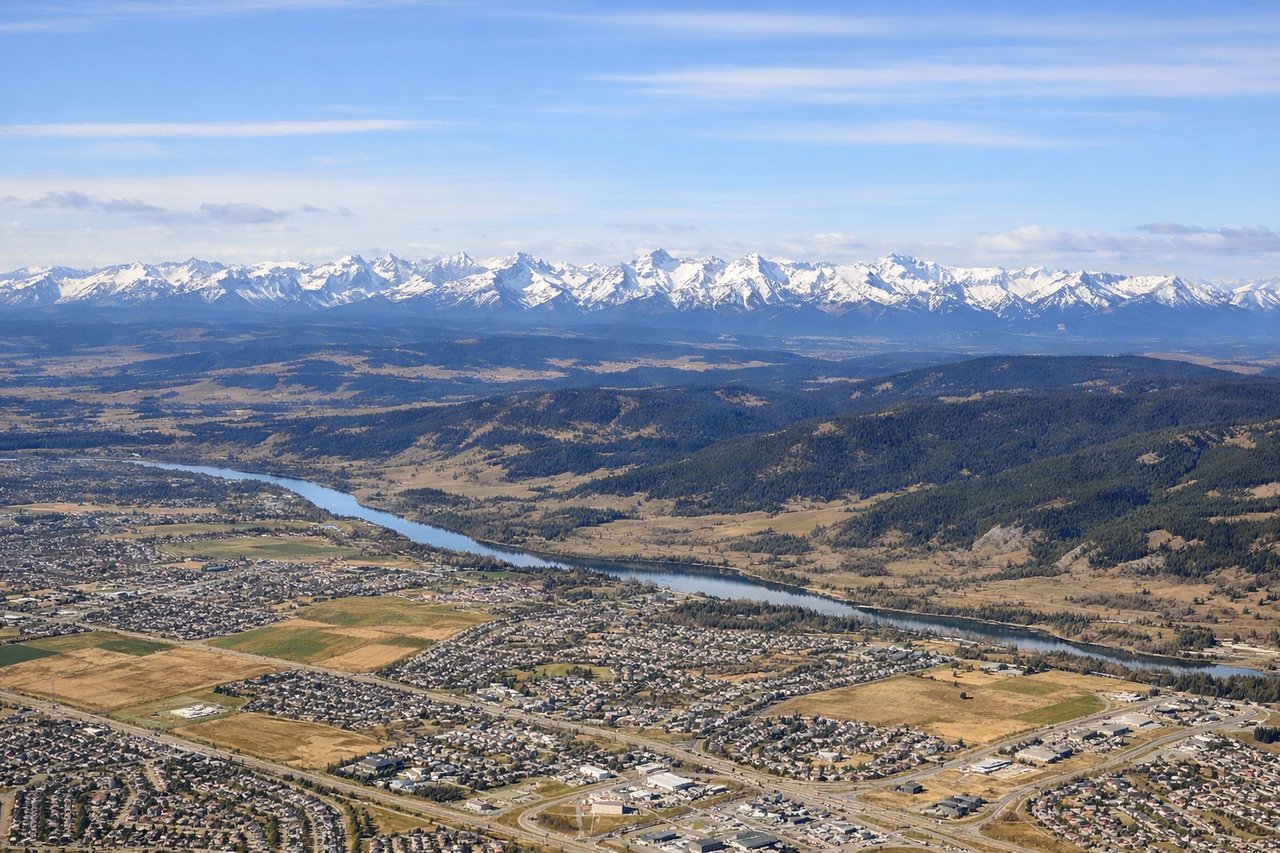
RIGHTYYC typically departs eastbound (runways 16L/R). Right-side seats face south toward the Rocky Mountain Front, which rises dramatically from the prairie. You'll see the Bow River valley and the foothills escarpment clearly during climb-out.
Landing at KIX
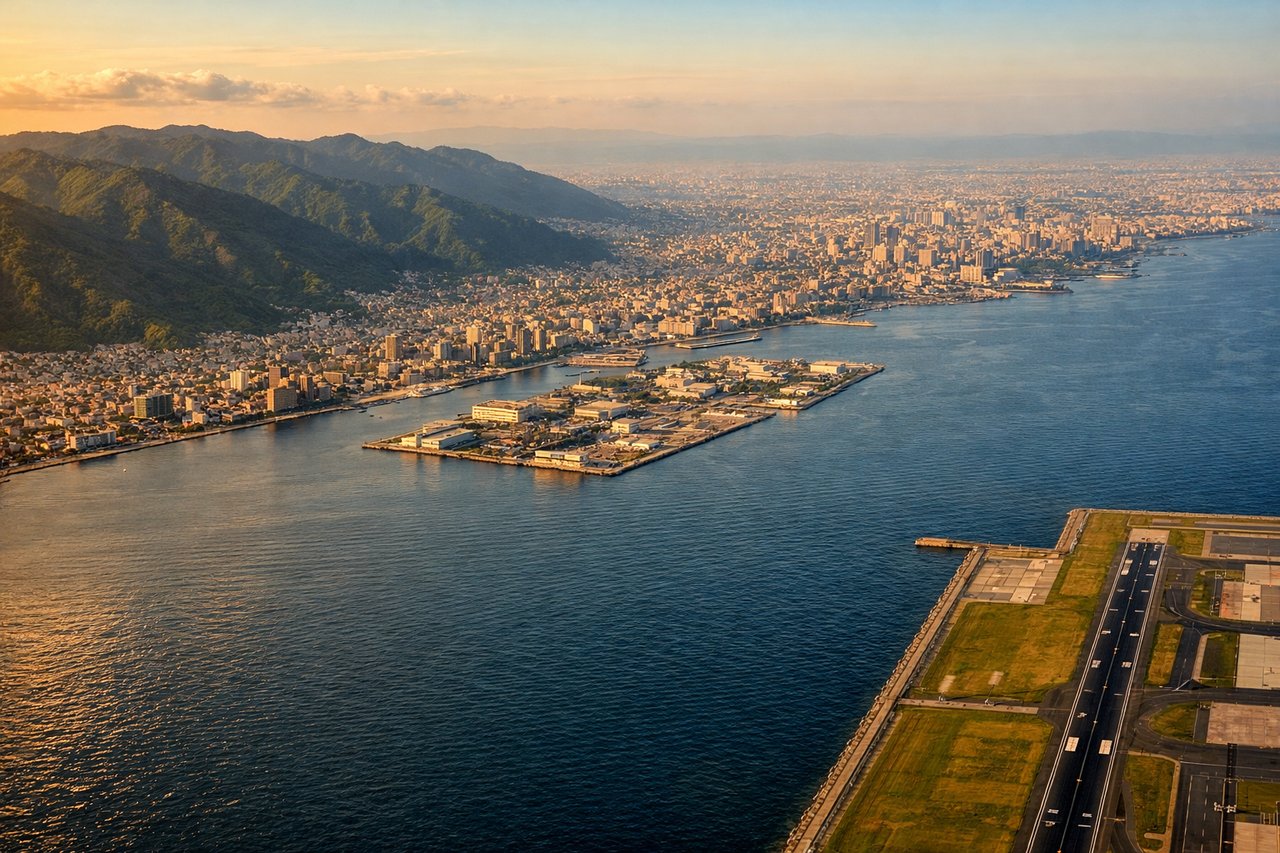
LEFTKIX is located on an artificial island in Osaka Bay. Approach typically comes from the southwest over the Seto Inland Sea. Left-side seats face the bay, Osaka urban area, and the approach path over water with views of the industrial waterfront and city skyline.
Landmarks on this routeAll landmarks →
Will your flight be in sunlight?
See exactly which side of the plane gets sun and shade at your departure time.
About This Route
Which side of the plane should I sit on flying from Calgary International (YYC) to Kansai International (KIX)?
Sit on the Right side of the plane for the best views on flights from Calgary to Osaka. Right side captures the dramatic Rocky Mountain departure and provides better views during the initial climb. While the landing favors left, the takeoff scenery from YYC is more visually distinctive and memorable than the industrial approach to KIX.
What can I see during takeoff from Calgary International in Calgary?
During takeoff from Calgary International (YYC), sit on the Right side for the best views. YYC typically departs eastbound (runways 16L/R). Right-side seats face south toward the Rocky Mountain Front, which rises dramatically from the prairie. You'll see the Bow River valley and the foothills escarpment clearly during climb-out. Notable sights include: Rocky Mountain Front (Cascade, Banff ranges on horizon), Bow River valley, Calgary urban sprawl to the north, prairie extending east.
What can I see when landing at Kansai International in Osaka?
When landing at Kansai International (KIX), sit on the Left side for the best views. KIX is located on an artificial island in Osaka Bay. Approach typically comes from the southwest over the Seto Inland Sea. Left-side seats face the bay, Osaka urban area, and the approach path over water with views of the industrial waterfront and city skyline. Notable sights include: Osaka Bay (Kobe-Kobe waterfront visible across the water), Seto Inland Sea, Osaka urban sprawl and port facilities, Kobe city on the far shore.
How long is the flight from Calgary to Osaka?
The flight from Calgary International (YYC) to Kansai International (KIX) takes Approximately 11.5 to 12.5 hours.
What does the Calgary to Osaka flight path pass over?
The flight crosses the North Pacific at high altitude. Notable features along the route include: the Canadian Rockies and Interior Plateau during climb-out, the Aleutian Islands (visible from cruising altitude on clear days, roughly 6 hours into flight), the northern Pacific Ocean with occasional weather systems, and the approach to Japan over the Seto Inland Sea with its numerous small islands visible during descent into Kansai.