Kumamoto to Tokyo is 544 miles (875 km), a flight of about 1 hour 15 minutes.
Right side captures the most dramatic scenery: Aso caldera during takeoff is visually striking and geologically significant. While left side offers Tokyo Bay views on landing, the volcanic landscape of Aso is more distinctive and memorable for scenic value.
Flight Path
The flight path crosses central Kyushu heading northeast. Notable features include: the transition from Aso volcanic plateau to the Yodo River valley, the Kii Peninsula appearing to the right (east) as you approach Honshu, and the Ise Bay region visible before descent into Tokyo Bay. The route generally follows a northeast corridor over the Inland Sea's northern waters and approaches Tokyo from the southeast.
Great circle distance and headings ›


Phase by phase
Takeoff from KMJ
RIGHTRight-side seats capture the Aso caldera and volcanic plateau as you climb northeast from Kumamoto. The massive caldera rim and central peaks are distinctive and visible within the first 10-15 minutes of flight.
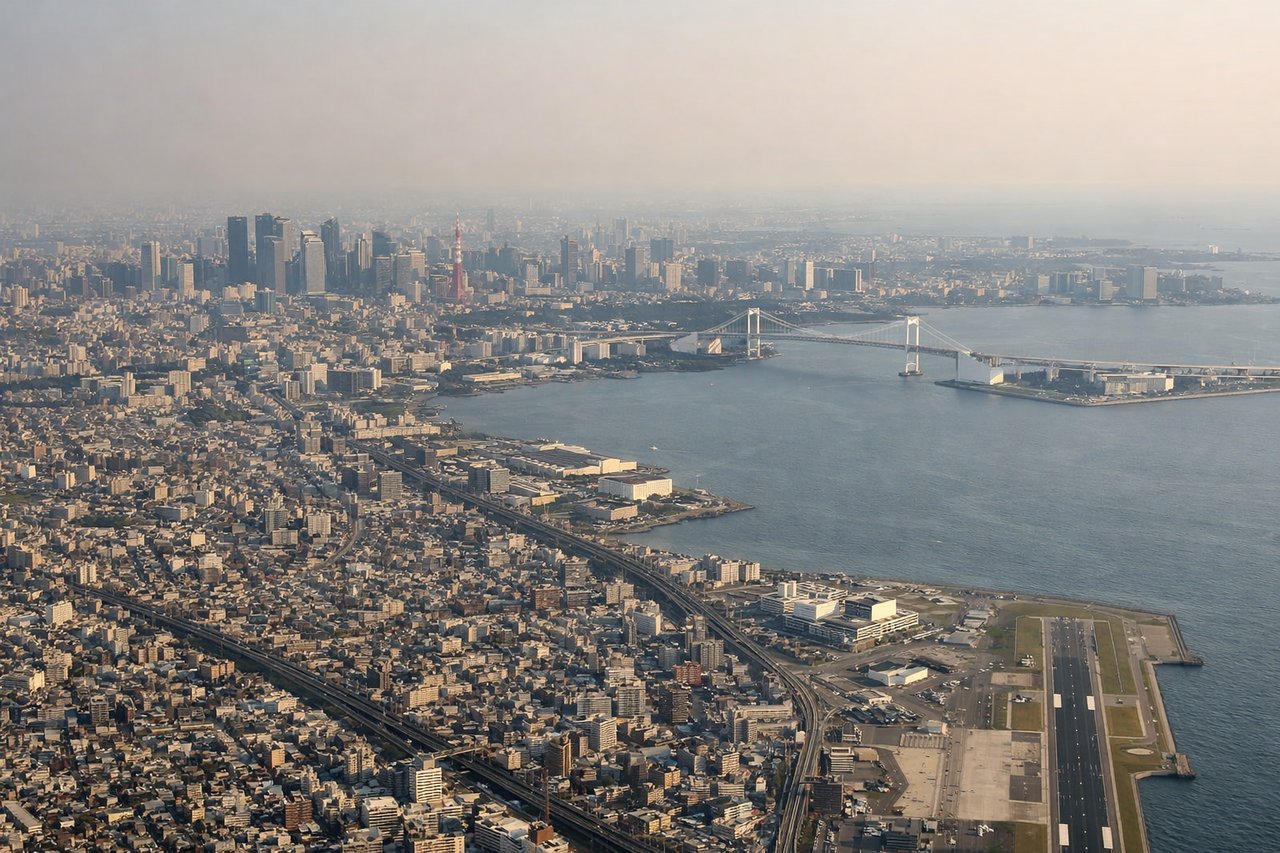
Landing at HND
LEFTLeft-side seats offer views of Tokyo Bay, the Boso Peninsula, and the urban sprawl of greater Tokyo during descent. You'll see the distinctive bay geometry and the convergence of major rivers feeding into it.
Landmarks on this routeAll landmarks →
Will your flight be in sunlight?
Pick a date and time in the Sun Map to watch the sun move across your whole flight.
About This Route
Which side of the plane should I sit on flying from Kumamoto (KMJ) to Tokyo International (HND)?
Sit on the Right side of the plane for the best views on flights from Kumamoto to Tokyo. Right side captures the most dramatic scenery: Aso caldera during takeoff is visually striking and geologically significant. While left side offers Tokyo Bay views on landing, the volcanic landscape of Aso is more distinctive and memorable for scenic value.
What can I see during takeoff from Kumamoto in Kumamoto?
During takeoff from Kumamoto (KMJ), sit on the Right side for the best views. Right-side seats capture the Aso caldera and volcanic plateau as you climb northeast from Kumamoto. The massive caldera rim and central peaks are distinctive and visible within the first 10-15 minutes of flight. Notable sights include: Aso caldera (massive volcanic depression), Aso-san volcanic peaks, Kumamoto city sprawl below, Kyushu interior plateau.
What can I see when landing at Tokyo International in Tokyo?
When landing at Tokyo International (HND), sit on the Left side for the best views. Left-side seats offer views of Tokyo Bay, the Boso Peninsula, and the urban sprawl of greater Tokyo during descent. You'll see the distinctive bay geometry and the convergence of major rivers feeding into it. Notable sights include: Tokyo Bay (distinctive crescent shape), Boso Peninsula, Edo River and Arakawa River confluence, Tokyo metropolitan area urban grid.
How long is the flight from Kumamoto to Tokyo?
The flight from Kumamoto (KMJ) to Tokyo International (HND) takes about 1 hour 15 minutes. The shortest flight path between them is 544 miles (875 km); winds and air traffic control usually add a few percent.
What does the Kumamoto to Tokyo flight path pass over?
The flight path crosses central Kyushu heading northeast. Notable features include: the transition from Aso volcanic plateau to the Yodo River valley, the Kii Peninsula appearing to the right (east) as you approach Honshu, and the Ise Bay region visible before descent into Tokyo Bay. The route generally follows a northeast corridor over the Inland Sea's northern waters and approaches Tokyo from the southeast.