Tokyo to Kumamoto is 544 miles (875 km), a flight of about 1 hour 30 minutes.
The Mount Aso caldera on approach is one of the most geologically spectacular views in Japanese domestic aviation and tips the balance to the left side overall. Right side wins at takeoff for Tokyo views, but the Aso descent is the highlight of this route.
Flight Path
The flight tracks southwest over the Seto Inland Sea (Setonaikai), with its hundreds of small islands visible below. Hiroshima and the Hiroshima delta are visible to the left side around the midpoint. The Chugoku Mountains of western Honshu appear before crossing the narrow Kanmon Strait into Kyushu, after which the terrain rises into Kyushu's central volcanic highlands leading toward Aso.
Great circle distance and headings ›


Phase by phase
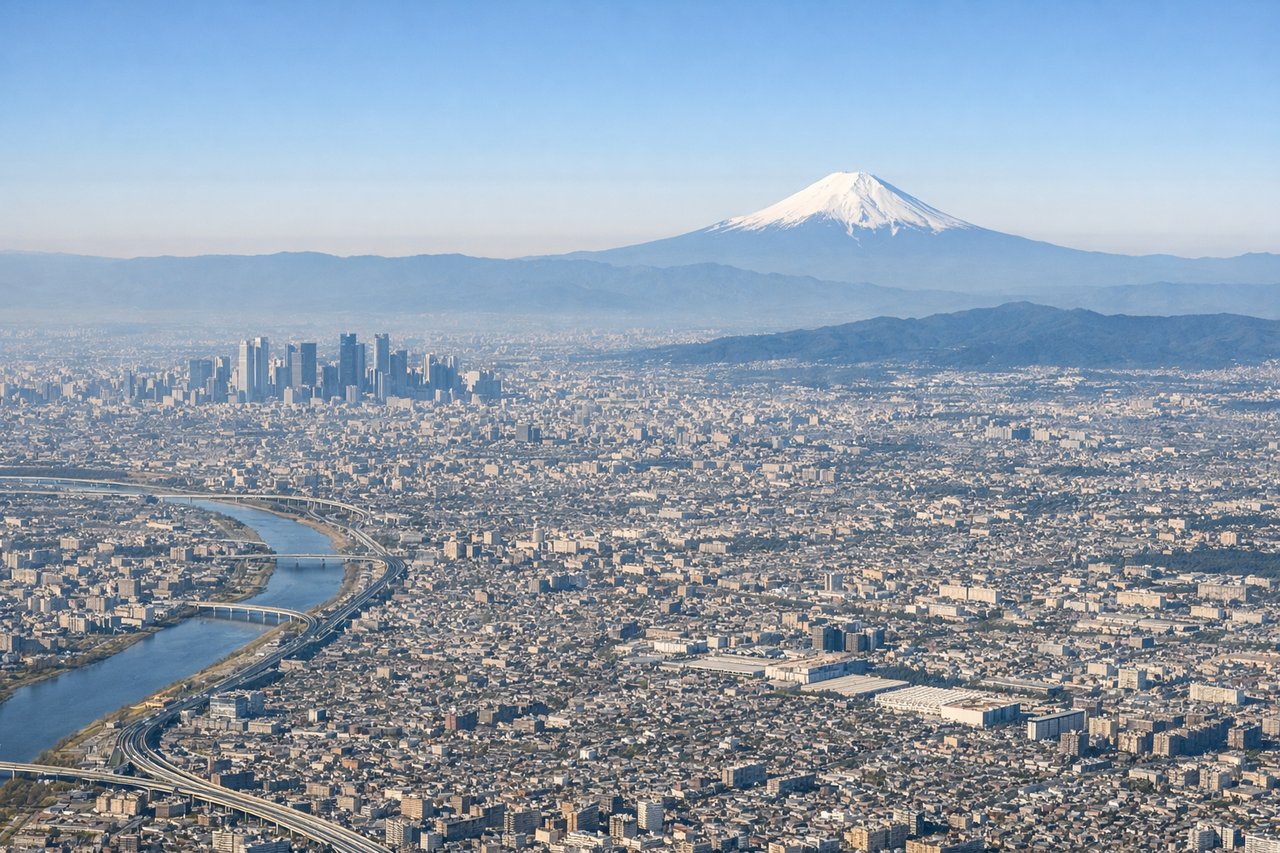
Takeoff from HND
RIGHTHND typically departs westbound or southbound over Tokyo Bay. Right side gives you a clear view of central Tokyo, including the dense urban grid of Shinagawa and Shibuya districts, plus the bay itself. Left side faces the bay but misses the city skyline.
Landing at KMJ
LEFTKMJ approaches typically come in from the east or northeast, meaning the aircraft tracks over Ariake Sea and Kyushu's central highlands. Left side gives the best view of Mount Aso's caldera and the Aso valley as you descend, one of the most dramatic volcanic landscapes in Japan.
Landmarks on this routeAll landmarks →
Will your flight be in sunlight?
Pick a date and time in the Sun Map to watch the sun move across your whole flight.
About This Route
Which side of the plane should I sit on flying from Tokyo International (HND) to Kumamoto (KMJ)?
Sit on the Left side of the plane for the best views on flights from Tokyo to Kumamoto. The Mount Aso caldera on approach is one of the most geologically spectacular views in Japanese domestic aviation and tips the balance to the left side overall. Right side wins at takeoff for Tokyo views, but the Aso descent is the highlight of this route.
What can I see during takeoff from Tokyo International in Tokyo?
During takeoff from Tokyo International (HND), sit on the Right side for the best views. HND typically departs westbound or southbound over Tokyo Bay. Right side gives you a clear view of central Tokyo, including the dense urban grid of Shinagawa and Shibuya districts, plus the bay itself. Left side faces the bay but misses the city skyline. Notable sights include: Tokyo Bay, central Tokyo urban grid (Shinagawa/Shibuya), Rainbow Bridge and waterfront reclamation islands, Yokohama port area to the south.
What can I see when landing at Kumamoto in Kumamoto?
When landing at Kumamoto (KMJ), sit on the Left side for the best views. KMJ approaches typically come in from the east or northeast, meaning the aircraft tracks over Ariake Sea and Kyushu's central highlands. Left side gives the best view of Mount Aso's caldera and the Aso valley as you descend, one of the most dramatic volcanic landscapes in Japan. Notable sights include: Mount Aso caldera and central cone, Aso valley and surrounding caldera rim, Kumamoto city and Kumamoto Castle area, Ariake Sea to the west.
How long is the flight from Tokyo to Kumamoto?
The flight from Tokyo International (HND) to Kumamoto (KMJ) takes about 1 hour 30 minutes. The shortest flight path between them is 544 miles (875 km); winds and air traffic control usually add a few percent.
What does the Tokyo to Kumamoto flight path pass over?
The flight tracks southwest over the Seto Inland Sea (Setonaikai), with its hundreds of small islands visible below. Hiroshima and the Hiroshima delta are visible to the left side around the midpoint. The Chugoku Mountains of western Honshu appear before crossing the narrow Kanmon Strait into Kyushu, after which the terrain rises into Kyushu's central volcanic highlands leading toward Aso.