The left side captures both scenic bookends of the flight - a fleeting but striking Himalayan skyline during the Kathmandu departure turn, and the island-studded approach into Hong Kong past Lantau - while the right side offers comparatively flat, less distinctive terrain at both ends.
Flown KTM to HKG? Did we get it right?
Flight Path
Kathmandu to Hong Kong is 1,822 miles (2,932 km), a flight of about 4 hours 50 minutes.
The route crosses the eastern Himalayan foothills into Bangladesh, then the Irrawaddy lowlands and Shan Hills of Myanmar, before traversing the Yunnan-Guizhou Plateau of southern China and descending toward the Pearl River Delta near Guangdong.
Great circle distance and headings ›


Phase by phase
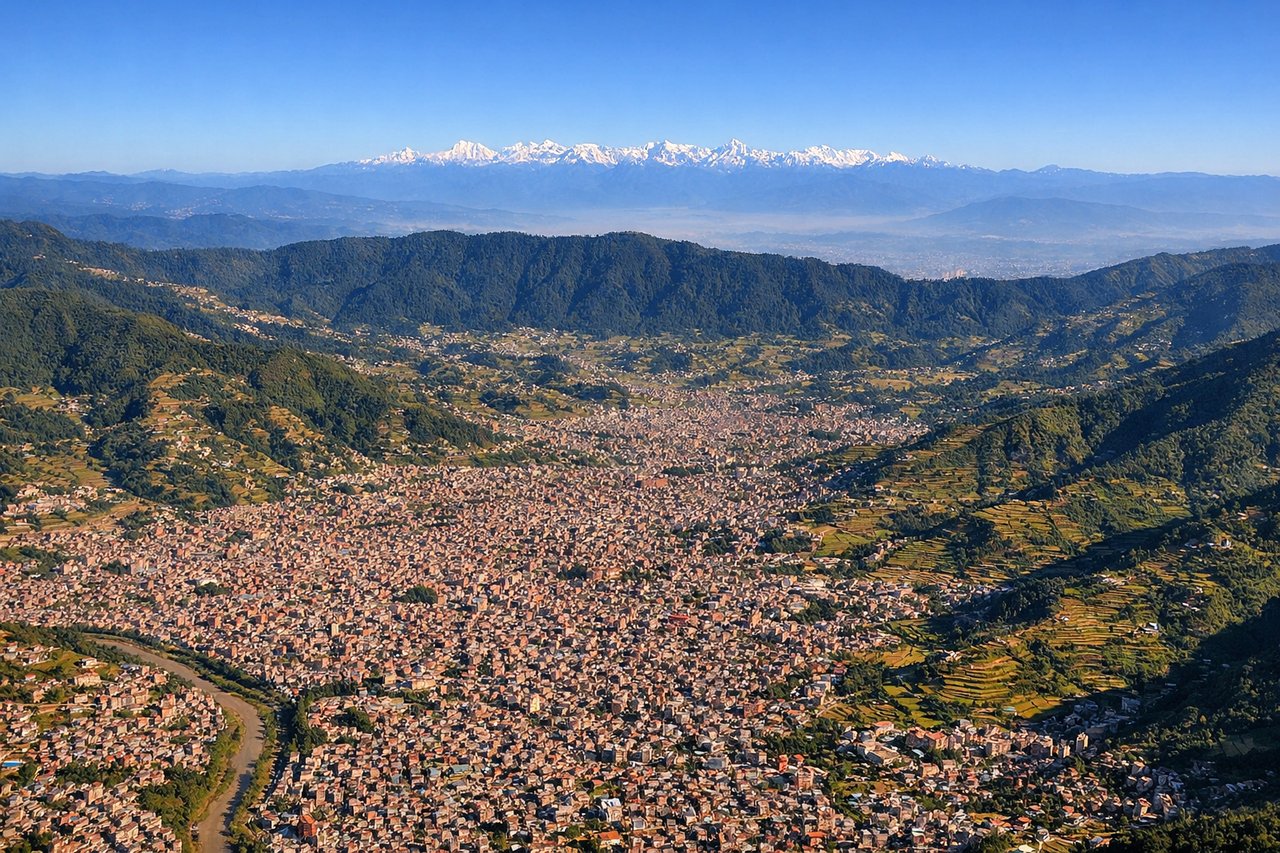
Takeoff from KTM
LEFTDeparting KTM on runway 20, the aircraft climbs south out of the Kathmandu Valley then banks left toward the east, briefly swinging the northern horizon - where the snow-capped Himalayan wall including peaks near Langtang and Ganesh Himal sits - into view on the left side. The right side during this turn faces the terraced hills south of the valley, which are far less dramatic.
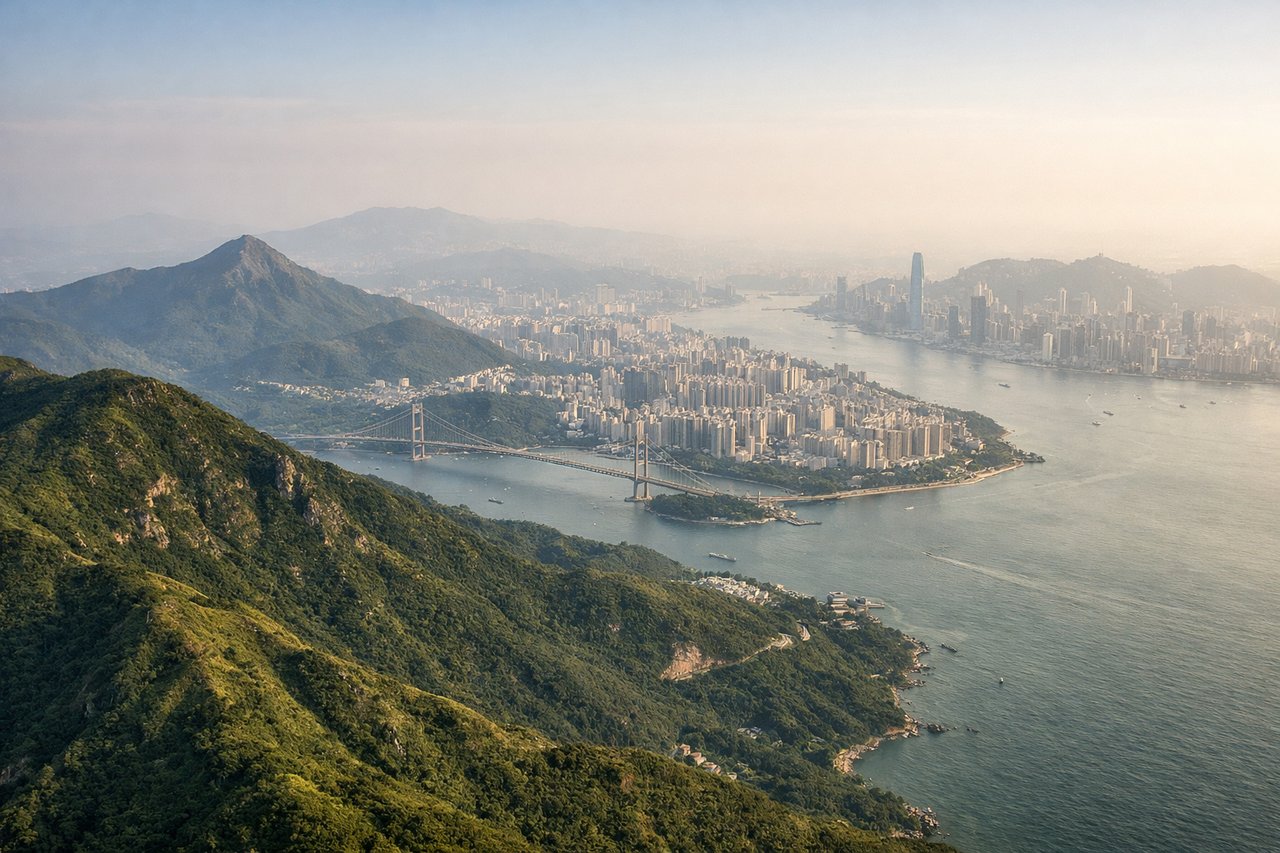
Landing at HKG
LEFTOn a typical arrival into HKG during northeast-monsoon runway 07 operations, the aircraft approaches from the southwest over the Pearl River Delta and the outlying islands, keeping Lantau Island's peaks and the South China Sea's scattered green islands on the left side as it lines up for landing. The right side mostly shows open water or hazy mainland coastline with less definition.
Will your flight be in sunlight?
Pick a date and time in the Sun Map to watch the sun move across your whole flight.
About This Route
Which side of the plane should I sit on flying from Tribhuvan International (KTM) to Hong Kong International (HKG)?
Sit on the Left side of the plane for the best views on flights from Kathmandu to Hong Kong. The left side captures both scenic bookends of the flight - a fleeting but striking Himalayan skyline during the Kathmandu departure turn, and the island-studded approach into Hong Kong past Lantau - while the right side offers comparatively flat, less distinctive terrain at both ends.
What can I see during takeoff from Tribhuvan International in Kathmandu?
During takeoff from Tribhuvan International (KTM), sit on the Left side for the best views. Departing KTM on runway 20, the aircraft climbs south out of the Kathmandu Valley then banks left toward the east, briefly swinging the northern horizon - where the snow-capped Himalayan wall including peaks near Langtang and Ganesh Himal sits - into view on the left side. The right side during this turn faces the terraced hills south of the valley, which are far less dramatic. Notable sights include: Kathmandu Valley terraces, Langtang Himal range, Ganesh Himal peaks, Shivapuri hills.
What can I see when landing at Hong Kong International in Hong Kong?
When landing at Hong Kong International (HKG), sit on the Left side for the best views. On a typical arrival into HKG during northeast-monsoon runway 07 operations, the aircraft approaches from the southwest over the Pearl River Delta and the outlying islands, keeping Lantau Island's peaks and the South China Sea's scattered green islands on the left side as it lines up for landing. The right side mostly shows open water or hazy mainland coastline with less definition. Notable sights include: Lantau Island peaks, Hong Kong International Airport's reclaimed island platform, South China Sea islets, Pearl River Delta coastline.
How long is the flight from Kathmandu to Hong Kong?
The flight from Tribhuvan International (KTM) to Hong Kong International (HKG) takes about 4 hours 50 minutes. The shortest flight path between them is 1,822 miles (2,932 km); winds and air traffic control usually add a few percent.
What does the Kathmandu to Hong Kong flight path pass over?
The route crosses the eastern Himalayan foothills into Bangladesh, then the Irrawaddy lowlands and Shan Hills of Myanmar, before traversing the Yunnan-Guizhou Plateau of southern China and descending toward the Pearl River Delta near Guangdong.