The takeoff experience from Kathmandu—with unobstructed Himalayan views during the initial climb—outweighs the landing views into New York. The Himalayan peaks are a once-in-a-lifetime sight for most passengers, whereas the New York approach, while interesting, is more commonly experienced and partially obscured by urban haze.
Flight Path
Flight path typically crosses central Asia (Hindu Kush range visible on some routes), the Caspian Sea region, Eastern Europe (Carpathian Mountains if routed south), and the Atlantic Ocean. Depending on routing, passengers may see the Alps, the North Atlantic, and Greenland's ice sheet on northerly polar routes. The Urals and Western Siberian plains are visible on some trajectories. Actual routing varies by season and air traffic control; no single midpoint feature is guaranteed.
Great circle distance and headings ›.jpg?width=600)


.jpeg?width=600)
.jpg?width=600)
Phase by phase
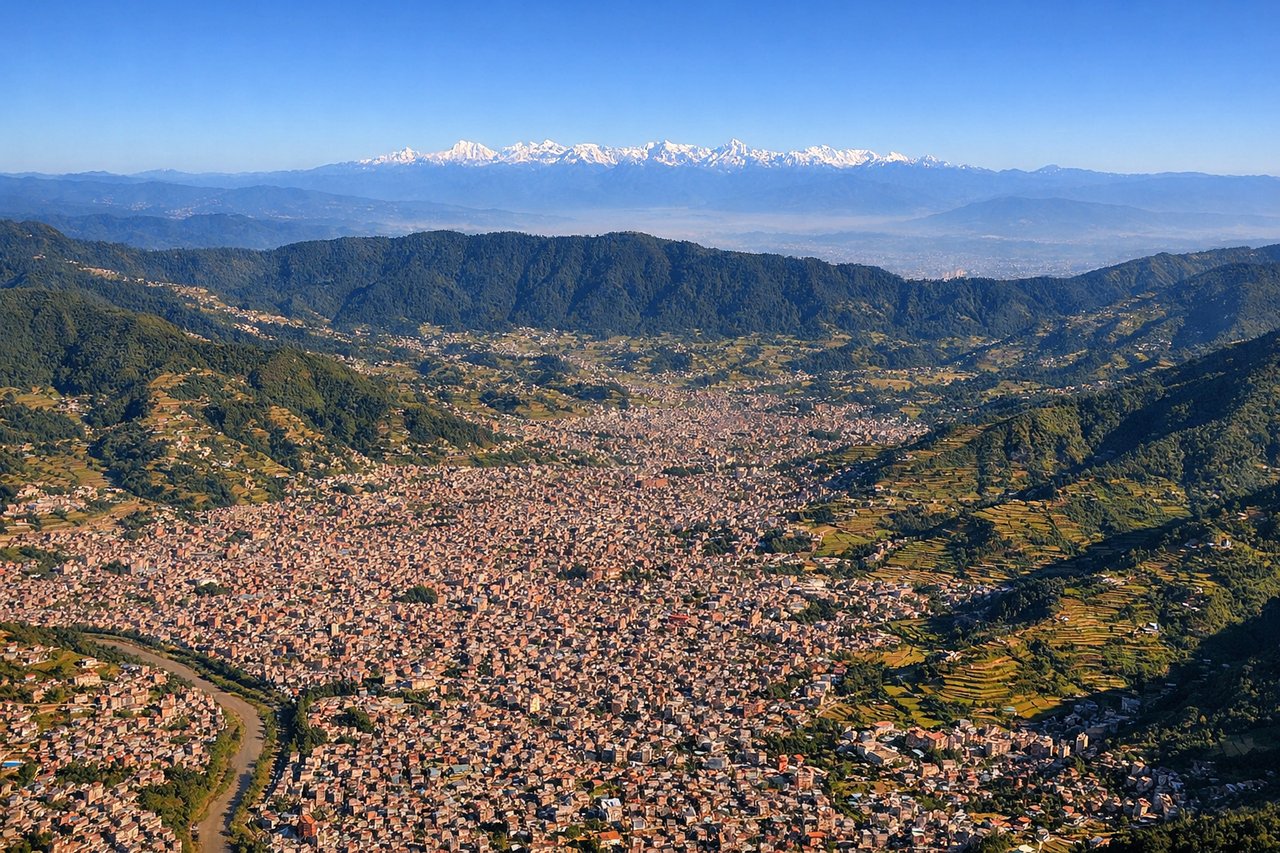
Takeoff from KTM
LEFTLeft side offers immediate views of the Himalayan range during climb-out from Kathmandu. The aircraft departs northward, and the left wing points directly toward the snow-capped peaks that dominate the northern horizon.
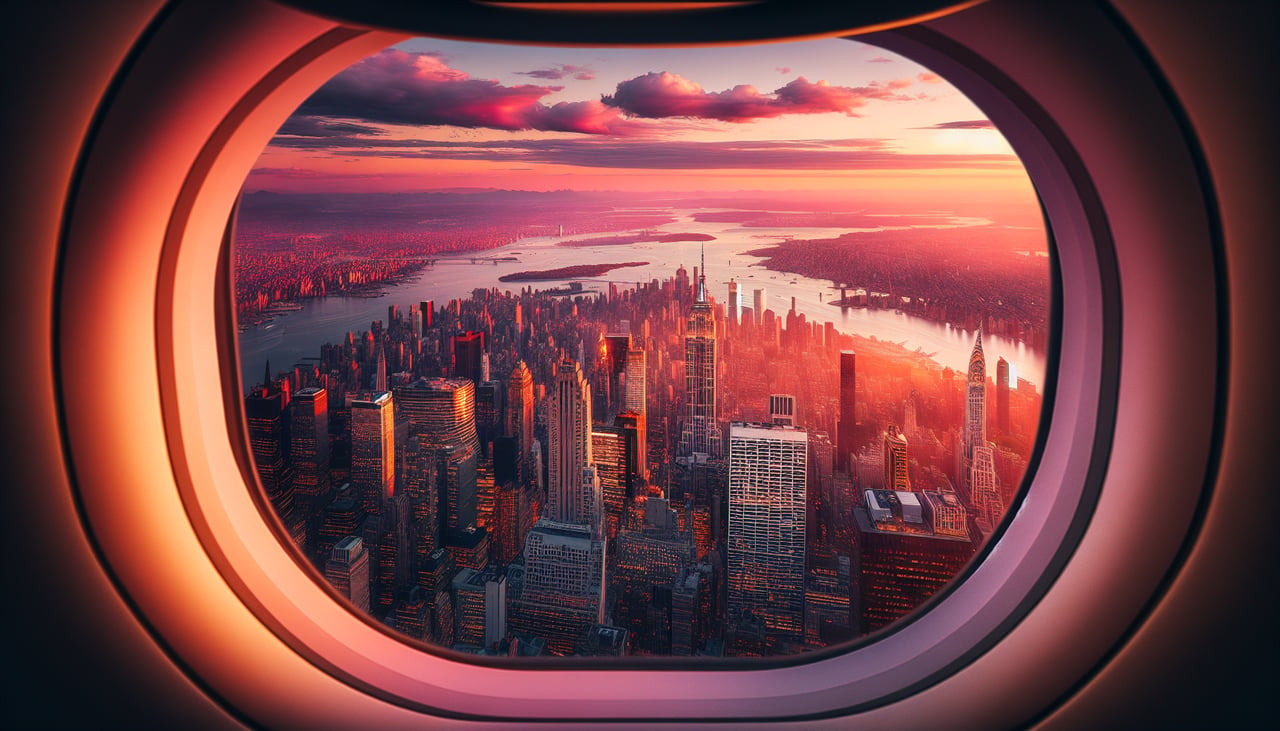
Landing at LGA
RIGHTRight side provides views of the Hudson River, Manhattan skyline, and the approach corridor into La Guardia. Aircraft descend from the northwest, and the right wing faces south and east toward the city and water features that define the New York approach.
Landmarks on this routeAll landmarks →
Will your flight be in sunlight?
See exactly which side of the plane gets sun and shade at your departure time.
About This Route
Which side of the plane should I sit on flying from Tribhuvan International (KTM) to La Guardia (LGA)?
Sit on the Left side of the plane for the best views on flights from Kathmandu to New York. The takeoff experience from Kathmandu—with unobstructed Himalayan views during the initial climb—outweighs the landing views into New York. The Himalayan peaks are a once-in-a-lifetime sight for most passengers, whereas the New York approach, while interesting, is more commonly experienced and partially obscured by urban haze.
What can I see during takeoff from Tribhuvan International in Kathmandu?
During takeoff from Tribhuvan International (KTM), sit on the Left side for the best views. Left side offers immediate views of the Himalayan range during climb-out from Kathmandu. The aircraft departs northward, and the left wing points directly toward the snow-capped peaks that dominate the northern horizon. Notable sights include: Himalayan range (Langtang and Gaurishankar peaks visible on clear days), Kathmandu Valley floor with Bagmati River, Shivapuri ridge to the north.
What can I see when landing at La Guardia in New York?
When landing at La Guardia (LGA), sit on the Right side for the best views. Right side provides views of the Hudson River, Manhattan skyline, and the approach corridor into La Guardia. Aircraft descend from the northwest, and the right wing faces south and east toward the city and water features that define the New York approach. Notable sights include: Hudson River, East River, Manhattan skyline, Queens neighborhoods and waterfront.
How long is the flight from Kathmandu to New York?
The flight from Tribhuvan International (KTM) to La Guardia (LGA) takes Approximately 18-20 hours (including one or two stops; direct routing is not typical for this city pair).
What does the Kathmandu to New York flight path pass over?
Flight path typically crosses central Asia (Hindu Kush range visible on some routes), the Caspian Sea region, Eastern Europe (Carpathian Mountains if routed south), and the Atlantic Ocean. Depending on routing, passengers may see the Alps, the North Atlantic, and Greenland's ice sheet on northerly polar routes. The Urals and Western Siberian plains are visible on some trajectories. Actual routing varies by season and air traffic control; no single midpoint feature is guaranteed.