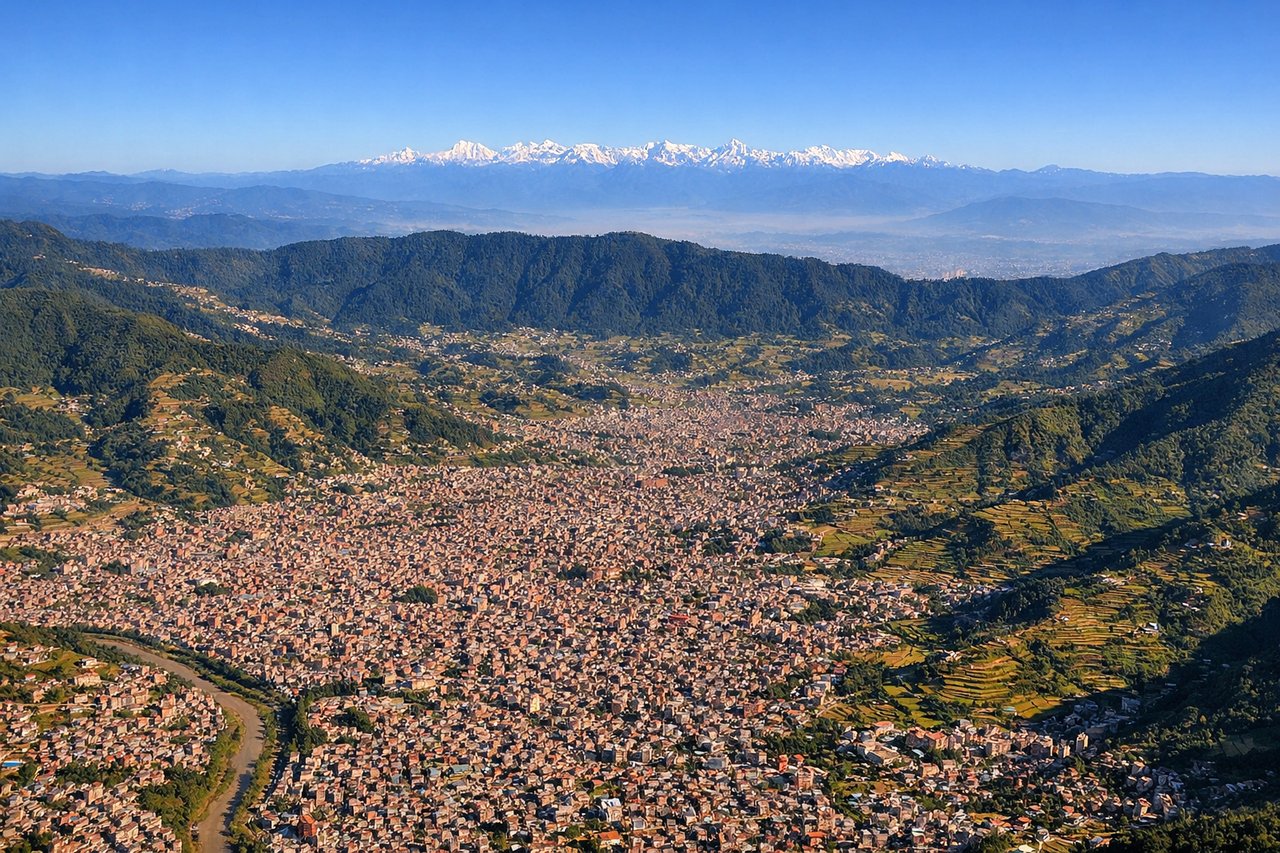
The takeoff from Kathmandu offers unobstructed views of the Himalayan range—a once-in-a-lifetime perspective of major snow-capped peaks. While the landing approach provides coastal and mountain views, the dramatic scale and accessibility of the Himalayas on departure makes the left side the superior choice for this route.
Flown KTM to SHJ? Did we get it right?
Flight Path
Kathmandu to Sharjah is 1,848 miles (2,974 km), a flight of about 3 hours 20 minutes.
The flight path crosses the Thar Desert and Rajasthan region (visible as tan, arid plains with sparse vegetation), the Aravalli Range (low mountain ridge running north-south), and transitions into the Arabian Peninsula's desert landscape. The Indus River valley lies to the west of the direct route. As the aircraft approaches the UAE, the landscape becomes increasingly barren with scattered wadis and salt flats visible before reaching the Persian Gulf coast.
Great circle distance and headings ›


Phase by phase
Takeoff from KTM
LEFTLeft side seats face northwest on departure, offering direct views of the Himalayan range as the aircraft climbs. The snow-capped peaks of the Langtang and Jugal ranges dominate the western horizon immediately after takeoff.
Landing at SHJ
RIGHTRight side seats face northeast during approach to Sharjah, providing views of the Persian Gulf coastline and the Hajar Mountains. The dramatic contrast between the coastal plain and the rugged mountain range creates compelling scenery during descent.
Will your flight be in sunlight?
Pick a date and time in the Sun Map to watch the sun move across your whole flight.
About This Route
Which side of the plane should I sit on flying from Tribhuvan International (KTM) to Sharjah International (SHJ)?
Sit on the Left side of the plane for the best views on flights from Kathmandu to Sharjah. The takeoff from Kathmandu offers unobstructed views of the Himalayan range—a once-in-a-lifetime perspective of major snow-capped peaks. While the landing approach provides coastal and mountain views, the dramatic scale and accessibility of the Himalayas on departure makes the left side the superior choice for this route.
What can I see during takeoff from Tribhuvan International in Kathmandu?
During takeoff from Tribhuvan International (KTM), sit on the Left side for the best views. Left side seats face northwest on departure, offering direct views of the Himalayan range as the aircraft climbs. The snow-capped peaks of the Langtang and Jugal ranges dominate the western horizon immediately after takeoff. Notable sights include: Langtang Himal (north), Jugal Himal (northwest), Kathmandu Valley floor (directly below during initial climb), Shivapuri Ridge (immediate foreground to the west).
What can I see when landing at Sharjah International in Sharjah?
When landing at Sharjah International (SHJ), sit on the Right side for the best views. Right side seats face northeast during approach to Sharjah, providing views of the Persian Gulf coastline and the Hajar Mountains. The dramatic contrast between the coastal plain and the rugged mountain range creates compelling scenery during descent. Notable sights include: Hajar Mountains (northeast, visible as a dark ridge), Persian Gulf coastline (eastern horizon), Dubai and Sharjah urban sprawl (foreground and left side), Musandam Peninsula (far northeast on horizon).
How long is the flight from Kathmandu to Sharjah?
The flight from Tribhuvan International (KTM) to Sharjah International (SHJ) takes about 3 hours 20 minutes. The shortest flight path between them is 1,848 miles (2,974 km); winds and air traffic control usually add a few percent.
What does the Kathmandu to Sharjah flight path pass over?
The flight path crosses the Thar Desert and Rajasthan region (visible as tan, arid plains with sparse vegetation), the Aravalli Range (low mountain ridge running north-south), and transitions into the Arabian Peninsula's desert landscape. The Indus River valley lies to the west of the direct route. As the aircraft approaches the UAE, the landscape becomes increasingly barren with scattered wadis and salt flats visible before reaching the Persian Gulf coast.