Kuala Lumpur to Muscat is 3,237 miles (5,209 km), a flight of about 6 hours 40 minutes.
Right-side seats capture the most dramatic scenery: the Klang Valley and Strait of Malacca during departure, then the Persian Gulf coastline and Oman's coastal mountains during the approach. Left seats see mainly open water and desert during the long middle portion of the flight.
Flight Path
The flight path crosses the Strait of Malacca, then the Andaman Sea, and enters the Arabian Sea. Notable features include the Andaman Islands (visible as small dark specks if flying at lower altitudes on certain routing), the coast of Thailand and Myanmar to the north, and the open Arabian Sea for the majority of the flight. As the aircraft approaches Oman, the Musandam Peninsula becomes visible on the horizon, followed by the entrance to the Persian Gulf and the Hajar Mountains of northern Oman.
Great circle distance and headings ›Phase by phase
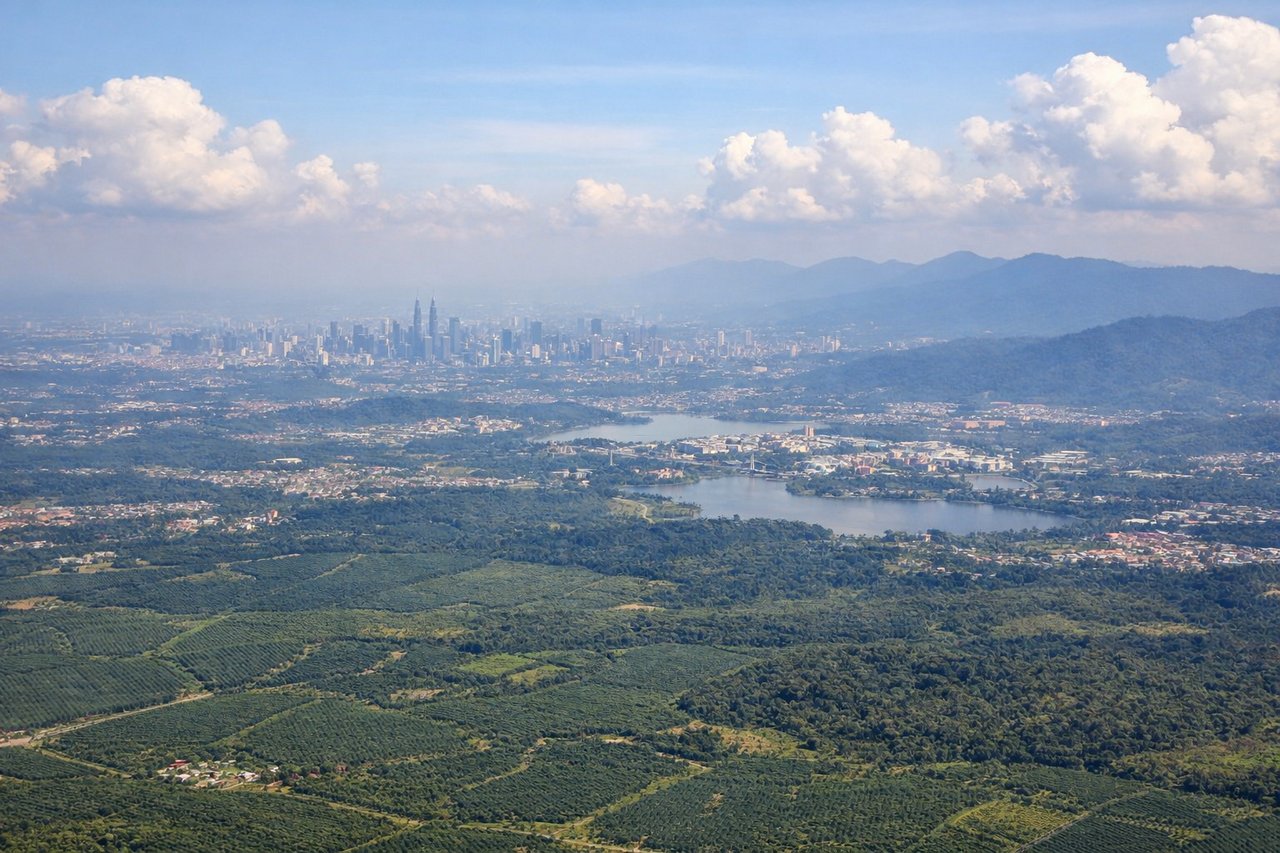
Takeoff from KUL
RIGHTRight-side seats offer views of the Klang Valley and Kuala Lumpur's urban sprawl during the initial climb. The aircraft departs runways oriented roughly east-west, and right-side seats face north toward the city and surrounding lowlands before turning northwest toward the Strait of Malacca.
Landing at MCT
LEFTLeft-side seats provide excellent views during descent into Muscat. The aircraft approaches from the northwest over the Arabian Sea and descends toward runways aligned roughly east-west. Left-side seats face south toward the Hajar Mountains and the coastal plain where Muscat sits, offering dramatic views of the desert terrain and mountain ridges.
Landmarks on this routeAll landmarks →
Will your flight be in sunlight?
Pick a date and time in the Sun Map to watch the sun move across your whole flight.
About This Route
Which side of the plane should I sit on flying from Kuala Lumpur International (KUL) to Seeb International (MCT)?
Sit on the Right side of the plane for the best views on flights from Kuala Lumpur to Muscat. Right-side seats capture the most dramatic scenery: the Klang Valley and Strait of Malacca during departure, then the Persian Gulf coastline and Oman's coastal mountains during the approach. Left seats see mainly open water and desert during the long middle portion of the flight.
What can I see during takeoff from Kuala Lumpur International in Kuala Lumpur?
During takeoff from Kuala Lumpur International (KUL), sit on the Right side for the best views. Right-side seats offer views of the Klang Valley and Kuala Lumpur's urban sprawl during the initial climb. The aircraft departs runways oriented roughly east-west, and right-side seats face north toward the city and surrounding lowlands before turning northwest toward the Strait of Malacca. Notable sights include: Kuala Lumpur city center and Petronas Twin Towers, Klang Valley urban development, Selangor coastline and Strait of Malacca to the northwest.
What can I see when landing at Seeb International in Muscat?
When landing at Seeb International (MCT), sit on the Left side for the best views. Left-side seats provide excellent views during descent into Muscat. The aircraft approaches from the northwest over the Arabian Sea and descends toward runways aligned roughly east-west. Left-side seats face south toward the Hajar Mountains and the coastal plain where Muscat sits, offering dramatic views of the desert terrain and mountain ridges. Notable sights include: Hajar Mountains (northern range with steep rocky peaks), Muscat coastal plain and harbor, Arabian Sea, desert plateau and wadis inland.
How long is the flight from Kuala Lumpur to Muscat?
The flight from Kuala Lumpur International (KUL) to Seeb International (MCT) takes about 6 hours 40 minutes. The shortest flight path between them is 3,237 miles (5,209 km); winds and air traffic control usually add a few percent.
What does the Kuala Lumpur to Muscat flight path pass over?
The flight path crosses the Strait of Malacca, then the Andaman Sea, and enters the Arabian Sea. Notable features include the Andaman Islands (visible as small dark specks if flying at lower altitudes on certain routing), the coast of Thailand and Myanmar to the north, and the open Arabian Sea for the majority of the flight. As the aircraft approaches Oman, the Musandam Peninsula becomes visible on the horizon, followed by the entrance to the Persian Gulf and the Hajar Mountains of northern Oman.