Muscat to Kuala Lumpur is 3,237 miles (5,209 km), a flight of about 6 hours 10 minutes.
The right side wins overall mainly due to the striking Al Hajar Mountains during departure, a rare mountainous coastal takeoff that outweighs the mostly flat, ocean-dominated cruise and the milder scenic gain from the KL skyline on landing.
Flight Path
Arabian Sea, southern tip of India near Kanyakumari, Bay of Bengal, and the Andaman Sea approaching the Malay Peninsula
Great circle distance and headings ›Phase by phase
Takeoff from MCT
RIGHTDeparting Muscat, the right side gives a dramatic view of the jagged Al Hajar Mountains rising sharply just south of the airport, while the coastal plain and Gulf of Oman recede on the left. The rugged brown peaks and dry wadis create strong visual contrast against the turquoise sea.
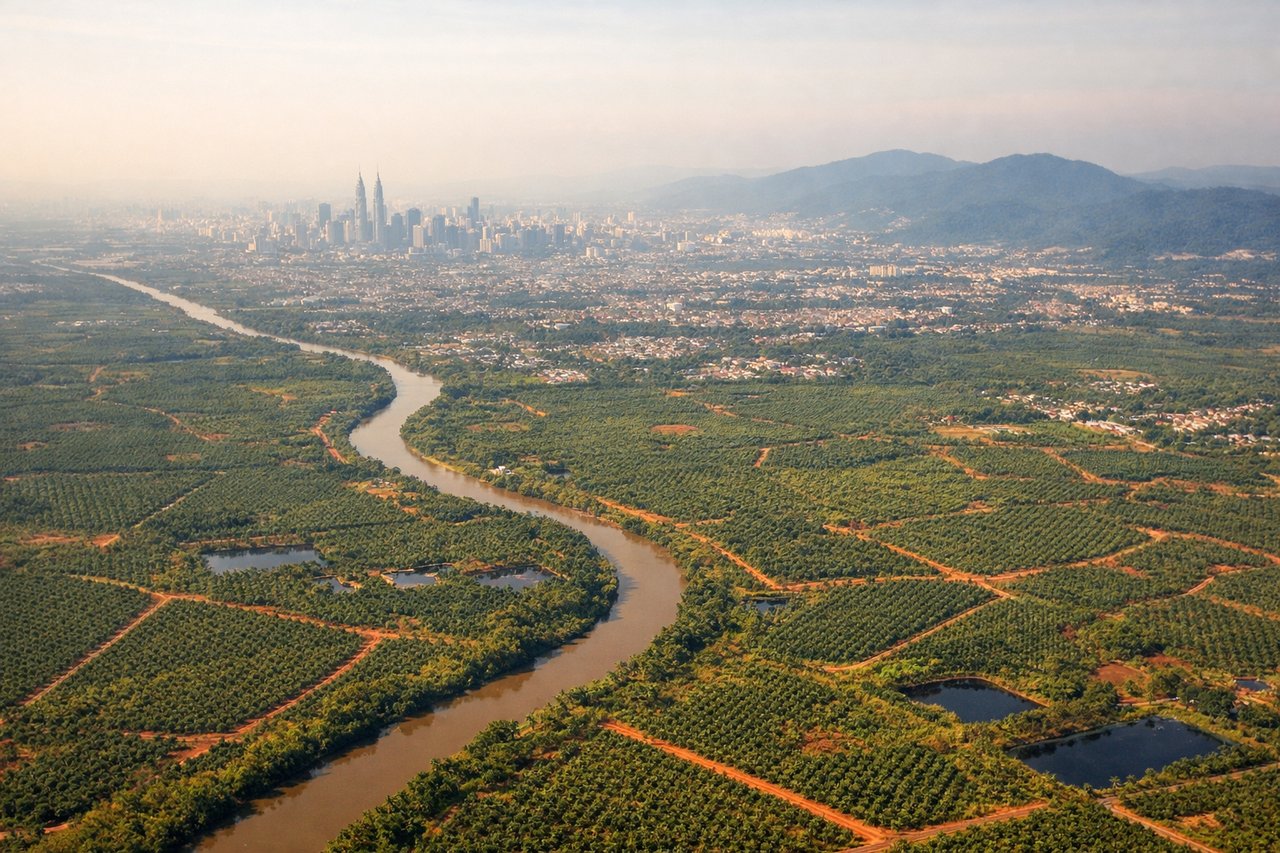
Landing at KUL
LEFTOn approach into Kuala Lumpur, the left side typically offers a view of the city's skyline including the Petronas Towers, plus the green Klang Valley and palm oil plantations that ring the airport. This urban and tropical contrast gives more visual interest than the featureless jungle often seen on the right side.
Landmarks on this routeAll landmarks →
Will your flight be in sunlight?
Pick a date and time in the Sun Map to watch the sun move across your whole flight.
About This Route
Which side of the plane should I sit on flying from Seeb International (MCT) to Kuala Lumpur International (KUL)?
Sit on the Right side of the plane for the best views on flights from Muscat to Kuala Lumpur. The right side wins overall mainly due to the striking Al Hajar Mountains during departure, a rare mountainous coastal takeoff that outweighs the mostly flat, ocean-dominated cruise and the milder scenic gain from the KL skyline on landing.
What can I see during takeoff from Seeb International in Muscat?
During takeoff from Seeb International (MCT), sit on the Right side for the best views. Departing Muscat, the right side gives a dramatic view of the jagged Al Hajar Mountains rising sharply just south of the airport, while the coastal plain and Gulf of Oman recede on the left. The rugged brown peaks and dry wadis create strong visual contrast against the turquoise sea. Notable sights include: Al Hajar Mountains, Muscat coastline, Gulf of Oman, Qurm/Al Bustan coastal ridges.
What can I see when landing at Kuala Lumpur International in Kuala Lumpur?
When landing at Kuala Lumpur International (KUL), sit on the Left side for the best views. On approach into Kuala Lumpur, the left side typically offers a view of the city's skyline including the Petronas Towers, plus the green Klang Valley and palm oil plantations that ring the airport. This urban and tropical contrast gives more visual interest than the featureless jungle often seen on the right side. Notable sights include: Kuala Lumpur skyline, Petronas Towers, Klang River basin, palm oil plantations.
How long is the flight from Muscat to Kuala Lumpur?
The flight from Seeb International (MCT) to Kuala Lumpur International (KUL) takes about 6 hours 10 minutes. The shortest flight path between them is 3,237 miles (5,209 km); winds and air traffic control usually add a few percent.
What does the Muscat to Kuala Lumpur flight path pass over?
Arabian Sea, southern tip of India near Kanyakumari, Bay of Bengal, and the Andaman Sea approaching the Malay Peninsula