Kuala Lumpur to Tashkent is 3,336 miles (5,369 km), a flight of about 6 hours 50 minutes.
Right side scores higher due to superior takeoff scenery from Kuala Lumpur's urban and coastal features, which outweighs left side's advantage during landing. The KUL departure offers more visual interest (city skyline, Strait of Malacca) than the TAS landing's advantage over the monotonous desert approach. The flight's northern routing means right-side passengers see more varied terrain during the long cruise phase across Southeast Asia and into Central Asia.
Flight Path
Andaman Sea and Thai coastline (southern Thailand), Myanmar highlands and Irrawaddy River valley, Shan Plateau, northern Thailand and Laos border regions, Mekong River valley, Yunnan Province mountains (China), Tibetan Plateau eastern edge, Hindu Kush and Pamir mountain ranges, Amu Darya River valley (Afghanistan-Uzbekistan border)
Great circle distance and headings ›

.jpg?width=600)


.jpg?width=600)


Phase by phase
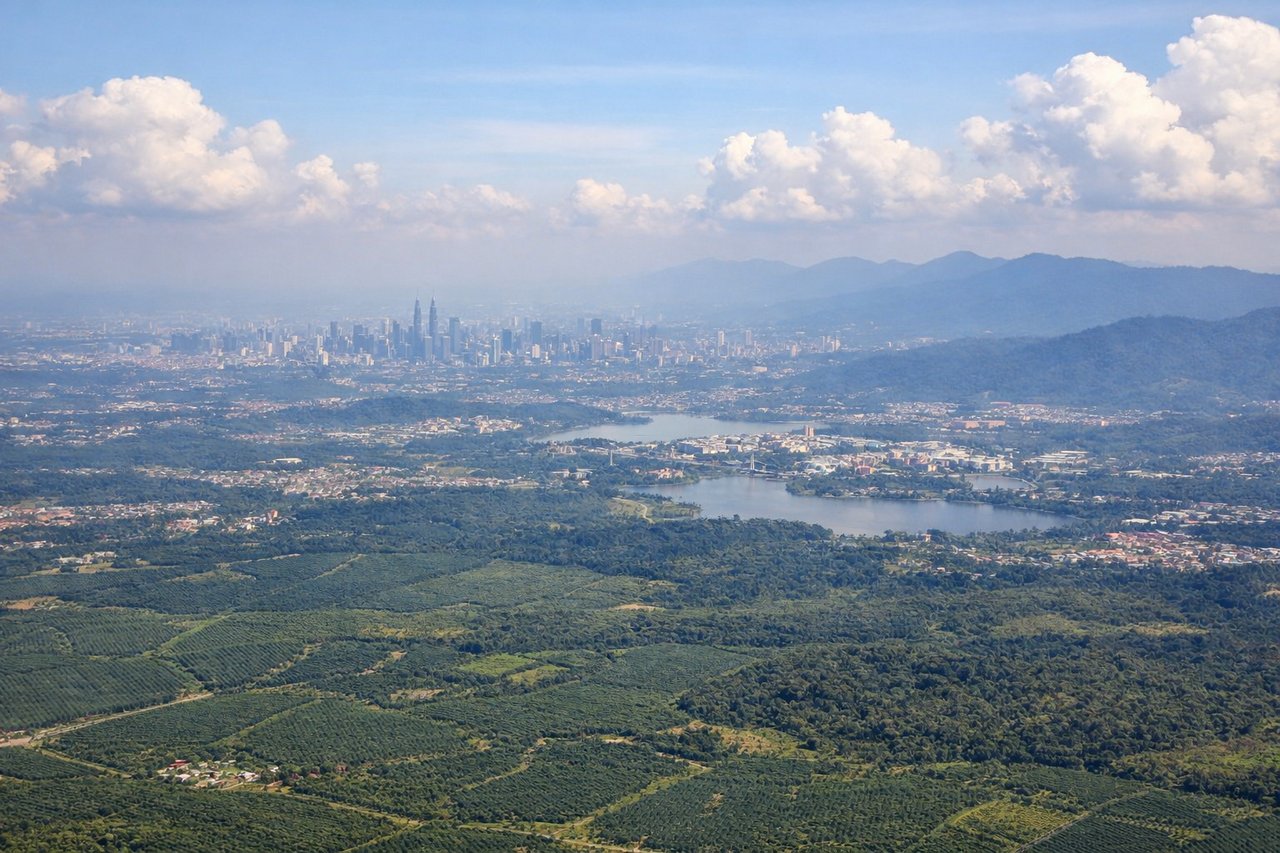
Takeoff from KUL
RIGHTRight side captures Kuala Lumpur's urban sprawl and the Klang Valley during departure, with the Strait of Malacca visible in the distance. Left side shows only open water and the Malay Peninsula's eastern coastline, which is less dramatic.
Landing at TAS
LEFTLeft side offers views of the Tashkent oasis and the city's urban landscape during approach. Right side shows the Kyzylkum Desert and steppe, which is visually monotonous—flat, sandy, and featureless for most of the descent.
Landmarks on this routeAll landmarks →
Will your flight be in sunlight?
Pick a date and time in the Sun Map to watch the sun move across your whole flight.
About This Route
Which side of the plane should I sit on flying from Kuala Lumpur International (KUL) to Tashkent International Airport (TAS)?
Sit on the Right side of the plane for the best views on flights from Kuala Lumpur to Tashkent. Right side scores higher due to superior takeoff scenery from Kuala Lumpur's urban and coastal features, which outweighs left side's advantage during landing. The KUL departure offers more visual interest (city skyline, Strait of Malacca) than the TAS landing's advantage over the monotonous desert approach. The flight's northern routing means right-side passengers see more varied terrain during the long cruise phase across Southeast Asia and into Central Asia.
What can I see during takeoff from Kuala Lumpur International in Kuala Lumpur?
During takeoff from Kuala Lumpur International (KUL), sit on the Right side for the best views. Right side captures Kuala Lumpur's urban sprawl and the Klang Valley during departure, with the Strait of Malacca visible in the distance. Left side shows only open water and the Malay Peninsula's eastern coastline, which is less dramatic. Notable sights include: Kuala Lumpur city center and Petronas Twin Towers, Klang Valley industrial zone, Strait of Malacca coastline.
What can I see when landing at Tashkent International Airport in Tashkent?
When landing at Tashkent International Airport (TAS), sit on the Left side for the best views. Left side offers views of the Tashkent oasis and the city's urban landscape during approach. Right side shows the Kyzylkum Desert and steppe, which is visually monotonous—flat, sandy, and featureless for most of the descent. Notable sights include: Tashkent city center and urban sprawl, Chirchik River valley, Tashkent International Airport runway complex.
How long is the flight from Kuala Lumpur to Tashkent?
The flight from Kuala Lumpur International (KUL) to Tashkent International Airport (TAS) takes about 6 hours 50 minutes. The shortest flight path between them is 3,336 miles (5,369 km); winds and air traffic control usually add a few percent.
What does the Kuala Lumpur to Tashkent flight path pass over?
Andaman Sea and Thai coastline (southern Thailand), Myanmar highlands and Irrawaddy River valley, Shan Plateau, northern Thailand and Laos border regions, Mekong River valley, Yunnan Province mountains (China), Tibetan Plateau eastern edge, Hindu Kush and Pamir mountain ranges, Amu Darya River valley (Afghanistan-Uzbekistan border)