Right-side seats offer superior scenery across both takeoff and landing phases. Departure provides immediate Persian Gulf coastal contrast, while arrival delivers the dramatic Andaman Sea and Phang Nga Bay limestone karsts—one of Southeast Asia's most visually distinctive geographical features. Left side is dominated by flat desert (takeoff) and inland jungle (landing), both relatively monotonous from altitude.
Flown KWI to HKT? Did we get it right?
Flight Path
Kuwait to Phuket is 3,570 miles (5,745 km), a flight of about 5 hours 50 minutes.
Arabian Sea coastline near Muscat, Oman; transition over Arabian Peninsula interior (Rub' al Khali desert edge); Strait of Hormuz region; Iranian coastline along Persian Gulf; transition to Arabian Sea proper; Indian Ocean crossing with occasional shipping lanes visible; approach to Thailand via Andaman Sea with scattered islands and coastal features of southern Myanmar and Thailand visible in final descent phase
Great circle distance and headings ›


Phase by phase
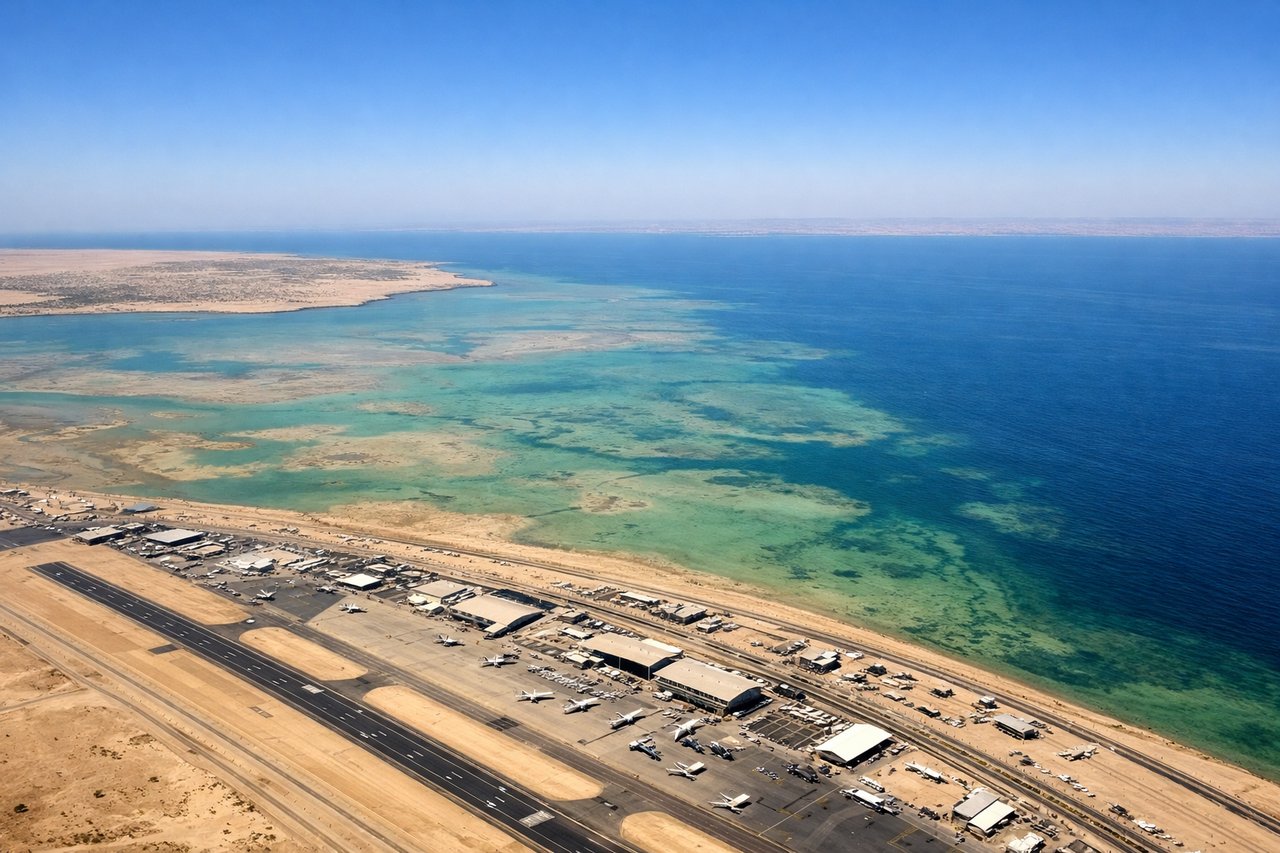
Takeoff from KWI
RIGHTRight-side departures from KWI typically climb southeastward over the Persian Gulf, offering immediate coastal views and the contrast between Kuwait's urban sprawl and open water. Left-side departures climb over flat inland desert with minimal visual interest.
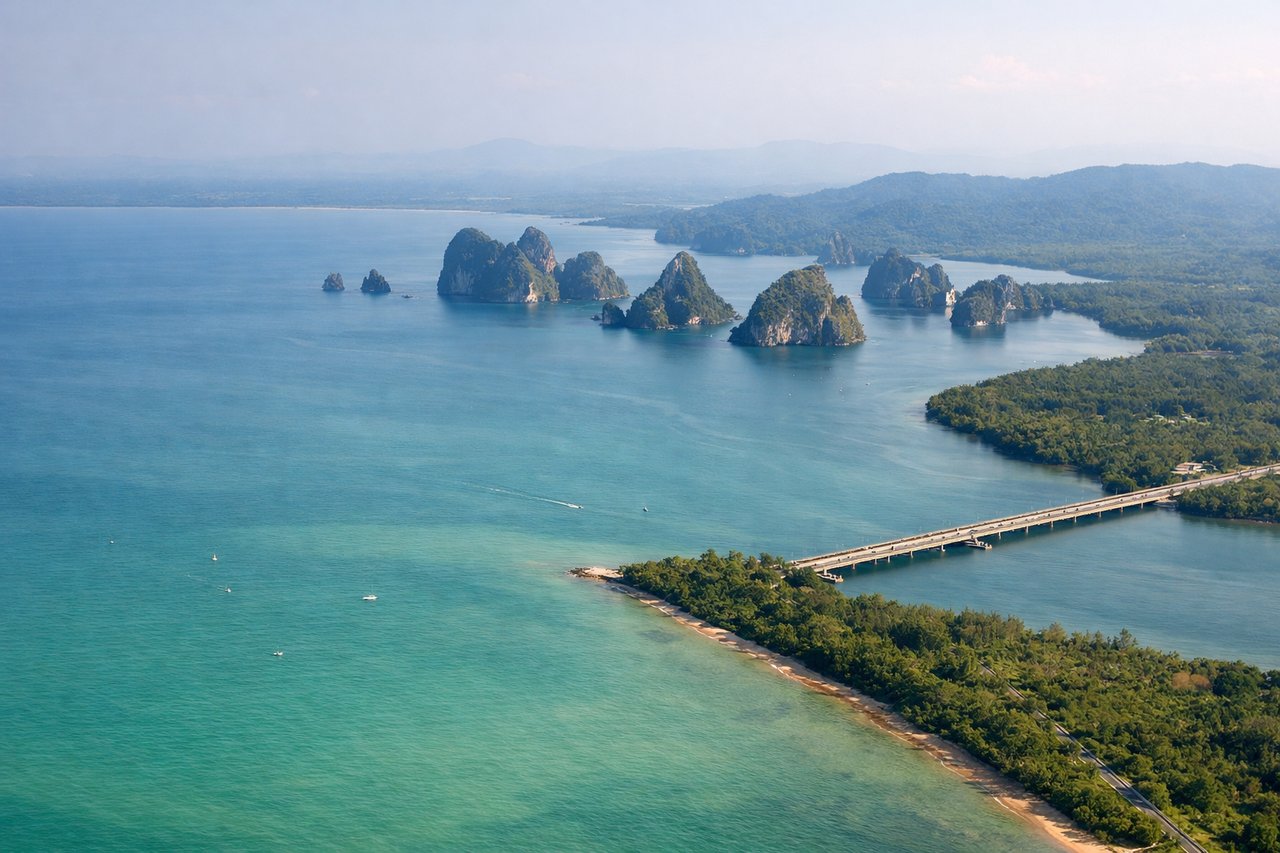
Landing at HKT
RIGHTRight-side approaches to HKT typically descend over the Andaman Sea and Mai Khao Beach before landing on runway 27, providing dramatic coastal scenery and the distinctive sight of Phang Nga Bay's limestone karsts. Left-side approaches descend over inland jungle and mountains with less visual drama.
Will your flight be in sunlight?
Pick a date and time in the Sun Map to watch the sun move across your whole flight.
About This Route
Which side of the plane should I sit on flying from Kuwait International Airport (KWI) to Phuket International (HKT)?
Sit on the Right side of the plane for the best views on flights from Kuwait to Phuket. Right-side seats offer superior scenery across both takeoff and landing phases. Departure provides immediate Persian Gulf coastal contrast, while arrival delivers the dramatic Andaman Sea and Phang Nga Bay limestone karsts—one of Southeast Asia's most visually distinctive geographical features. Left side is dominated by flat desert (takeoff) and inland jungle (landing), both relatively monotonous from altitude.
What can I see during takeoff from Kuwait International Airport in Kuwait?
During takeoff from Kuwait International Airport (KWI), sit on the Right side for the best views. Right-side departures from KWI typically climb southeastward over the Persian Gulf, offering immediate coastal views and the contrast between Kuwait's urban sprawl and open water. Left-side departures climb over flat inland desert with minimal visual interest. Notable sights include: Persian Gulf coastline, Kuwait City skyline receding behind, Bubiyan Island to the north, flat desert plateau extending inland.
What can I see when landing at Phuket International in Phuket?
When landing at Phuket International (HKT), sit on the Right side for the best views. Right-side approaches to HKT typically descend over the Andaman Sea and Mai Khao Beach before landing on runway 27, providing dramatic coastal scenery and the distinctive sight of Phang Nga Bay's limestone karsts. Left-side approaches descend over inland jungle and mountains with less visual drama. Notable sights include: Andaman Sea with limestone karst islands, Mai Khao Beach and coastal wetlands, Phang Nga Bay's distinctive peaked islands, Phuket's northern coastline.
How long is the flight from Kuwait to Phuket?
The flight from Kuwait International Airport (KWI) to Phuket International (HKT) takes about 5 hours 50 minutes. The shortest flight path between them is 3,570 miles (5,745 km); winds and air traffic control usually add a few percent.
What does the Kuwait to Phuket flight path pass over?
Arabian Sea coastline near Muscat, Oman; transition over Arabian Peninsula interior (Rub' al Khali desert edge); Strait of Hormuz region; Iranian coastline along Persian Gulf; transition to Arabian Sea proper; Indian Ocean crossing with occasional shipping lanes visible; approach to Thailand via Andaman Sea with scattered islands and coastal features of southern Myanmar and Thailand visible in final descent phase