The right side wins at takeoff over London, but the left side delivers the superior landing experience into Tokyo with the city panorama and potential Fuji view. Across the full flight, the left side also tracks better over Siberian river systems and the Sea of Okhotsk coastline on the polar routing. Left is the stronger overall pick.
Flight Path
The polar great-circle route tracks northeast over Denmark and southern Scandinavia, then across the Baltic and into Russia over the Ural Mountains. The flight then crosses the vast West Siberian Plain with its braided river systems — the Ob and Yenisei rivers are visible as enormous silver ribbons cutting through boreal forest and tundra. Over eastern Siberia the route passes near Lake Baikal (the world's deepest lake, visibly distinct as a long narrow dark blue body of water). The flight then crosses the Sea of Okhotsk and descends over the Japanese archipelago, crossing Hokkaido before tracking south over Honshu toward Tokyo.
Great circle distance and headings ›.jpeg?width=600)


Phase by phase
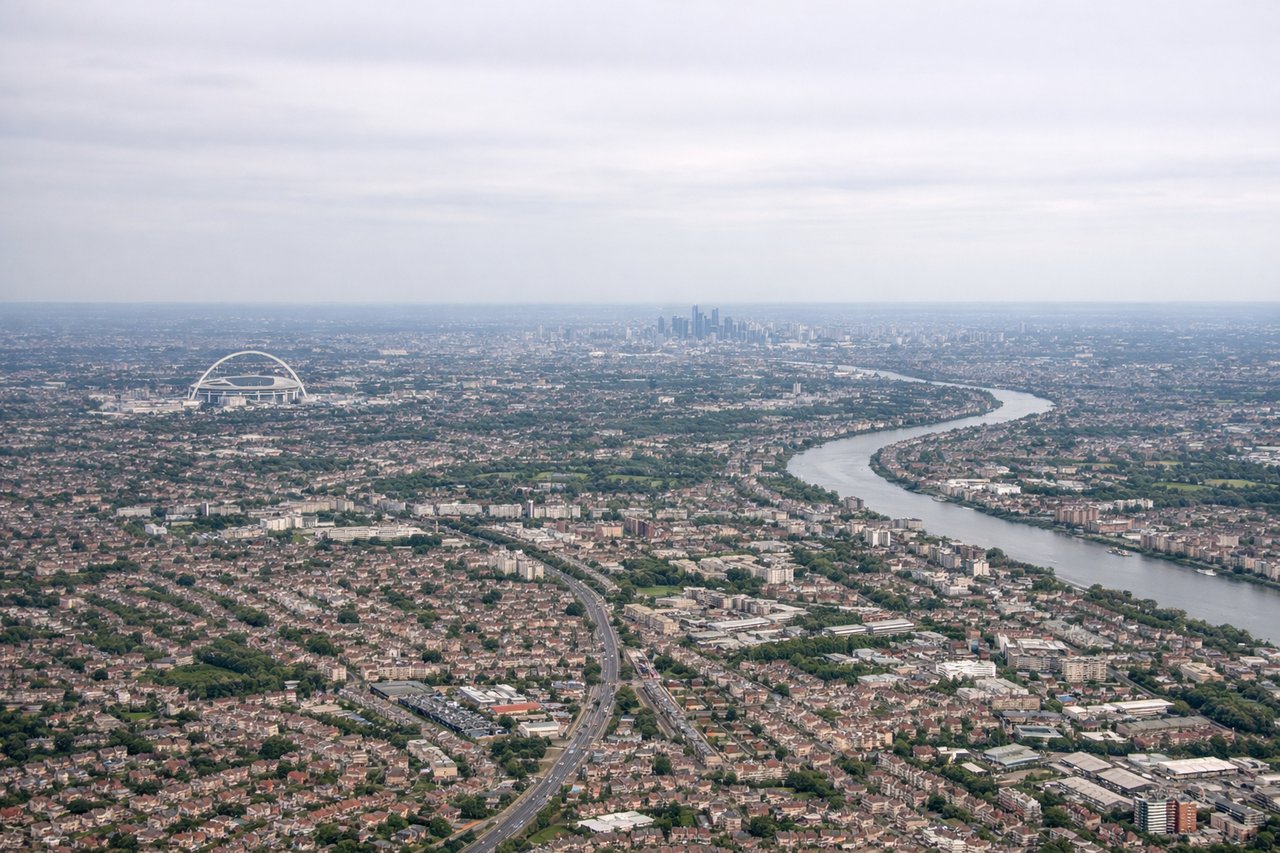
Takeoff from LHR
RIGHTHeathrow departures on the eastbound runways (09L/09R) head east over London. The right side gives you the Thames snaking through central London, with the City and Canary Wharf visible as you climb. Left side faces north toward suburban sprawl with far less to see.
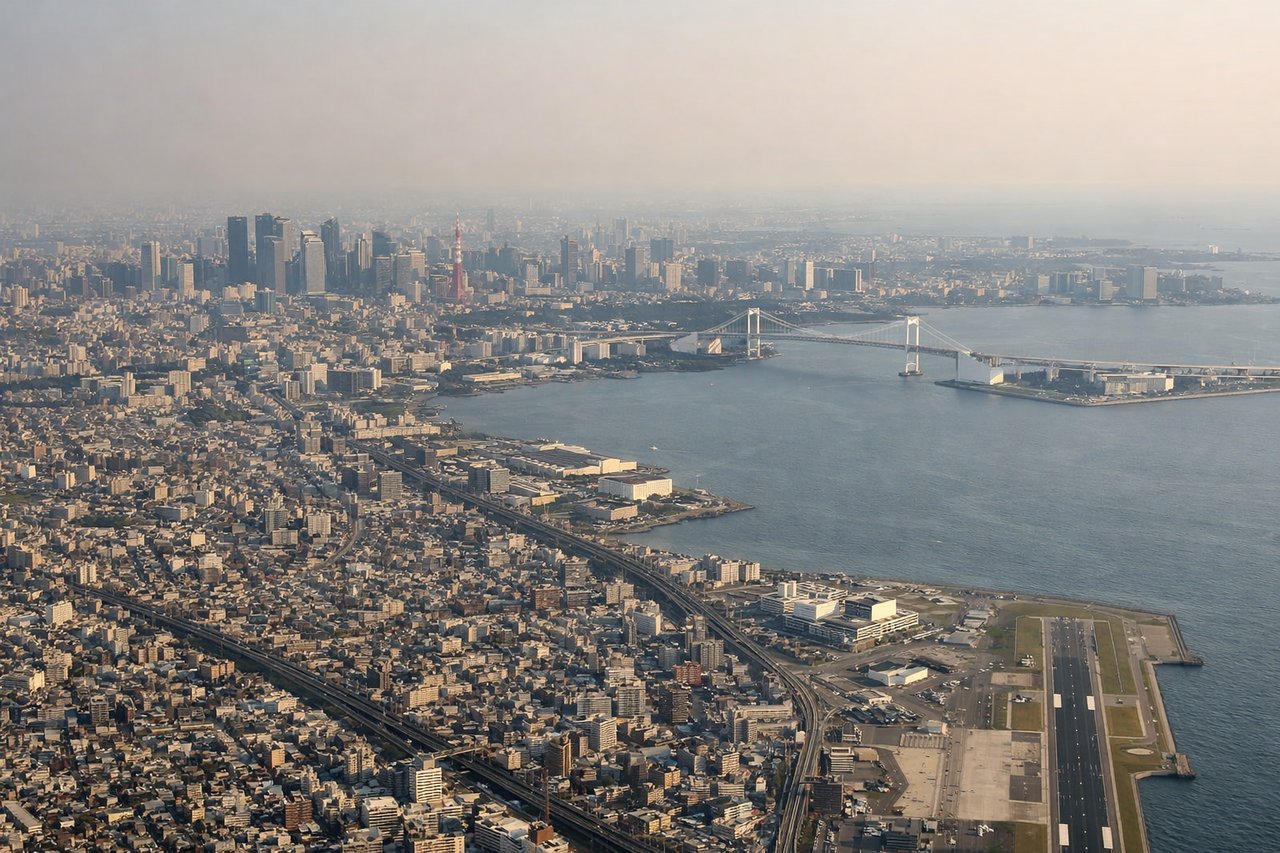
Landing at HND
LEFTTokyo Haneda typically uses runways 34L/34R or 16L/16R depending on wind. On the common southerly approach over Tokyo Bay (landing on 34s), the left side faces west toward central Tokyo — you get the full panorama of the city grid, Tokyo Tower, and on clear days Mount Fuji on the distant horizon. Right side faces east over Tokyo Bay with much less urban interest.
Landmarks on this routeAll landmarks →
Will your flight be in sunlight?
See exactly which side of the plane gets sun and shade at your departure time.
About This Route
Which side of the plane should I sit on flying from Heathrow (LHR) to Tokyo International (HND)?
Sit on the Left side of the plane for the best views on flights from London to Tokyo. The right side wins at takeoff over London, but the left side delivers the superior landing experience into Tokyo with the city panorama and potential Fuji view. Across the full flight, the left side also tracks better over Siberian river systems and the Sea of Okhotsk coastline on the polar routing. Left is the stronger overall pick.
What can I see during takeoff from Heathrow in London?
During takeoff from Heathrow (LHR), sit on the Right side for the best views. Heathrow departures on the eastbound runways (09L/09R) head east over London. The right side gives you the Thames snaking through central London, with the City and Canary Wharf visible as you climb. Left side faces north toward suburban sprawl with far less to see. Notable sights include: Thames River bends through central London, Canary Wharf tower cluster, The City of London financial district, Queen Elizabeth Olympic Park area in Stratford.
What can I see when landing at Tokyo International in Tokyo?
When landing at Tokyo International (HND), sit on the Left side for the best views. Tokyo Haneda typically uses runways 34L/34R or 16L/16R depending on wind. On the common southerly approach over Tokyo Bay (landing on 34s), the left side faces west toward central Tokyo — you get the full panorama of the city grid, Tokyo Tower, and on clear days Mount Fuji on the distant horizon. Right side faces east over Tokyo Bay with much less urban interest. Notable sights include: Mount Fuji on the western horizon (on clear days), Tokyo city grid and urban sprawl, Tokyo Tower visible among the dense cityscape, Tokyo Bay and its reclaimed land causeways.
How long is the flight from London to Tokyo?
The flight from Heathrow (LHR) to Tokyo International (HND) takes Approximately 11.5 to 12.5 hours.
What does the London to Tokyo flight path pass over?
The polar great-circle route tracks northeast over Denmark and southern Scandinavia, then across the Baltic and into Russia over the Ural Mountains. The flight then crosses the vast West Siberian Plain with its braided river systems — the Ob and Yenisei rivers are visible as enormous silver ribbons cutting through boreal forest and tundra. Over eastern Siberia the route passes near Lake Baikal (the world's deepest lake, visibly distinct as a long narrow dark blue body of water). The flight then crosses the Sea of Okhotsk and descends over the Japanese archipelago, crossing Hokkaido before tracking south over Honshu toward Tokyo.