London to St. Louis is 4,189 miles (6,742 km), a flight of about 7 hours 45 minutes.
While the left offers a scenic departure over the Thames estuary, the right side delivers superior views during the longer descent phase into St. Louis, where the Mississippi River and the city itself provide dramatic focal points. The landing approach is more visually rewarding than the takeoff.
Flight Path
The flight crosses the Atlantic at high altitude with no visible landmarks for approximately 4-5 hours. As you approach North America, the Canadian Maritime provinces and Newfoundland become visible on the left (north) side during the descent phase. The Appalachian Mountains appear as a distant ridge on the right (south) as you cross into the continental US. The Ohio River valley and its tributaries become visible in the final 90 minutes of flight, with the landscape transitioning from forested hills to increasingly flat terrain as you approach the Mississippi River basin.
Great circle distance and headings ›.jpeg?width=600)


Phase by phase
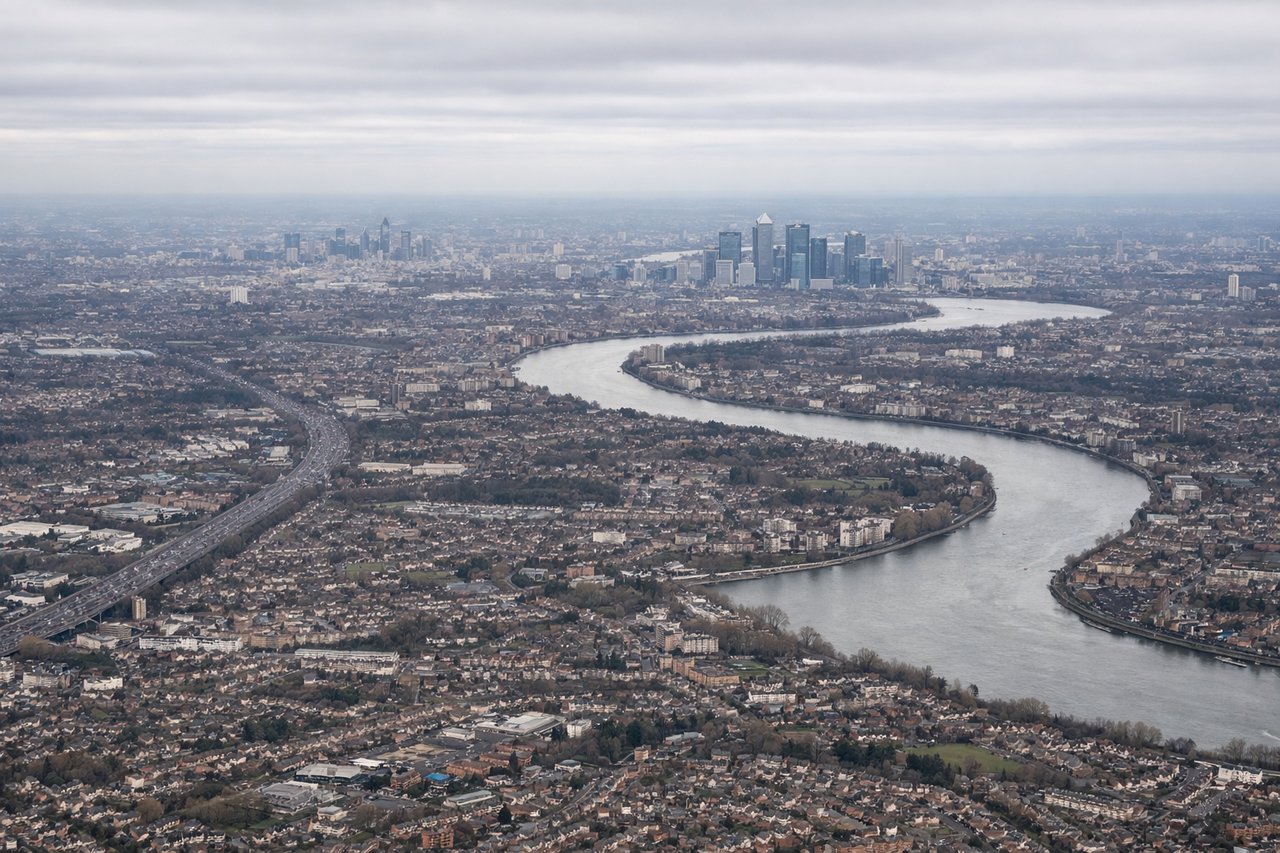
Takeoff from LHR
LEFTLeft seats offer views of the Thames estuary and the English coastline as the aircraft climbs westbound out of Heathrow. You'll see the river's distinctive meanders and the Kent/Essex marshlands spreading below before heading out over the Atlantic approaches.
Landing at STL
RIGHTRight seats provide excellent views of the Mississippi River and the St. Louis metropolitan area during the descent and approach. The river's dramatic curves and the Gateway Arch area are clearly visible from altitude as you descend toward Lambert Field from the east.
Landmarks on this routeAll landmarks →
Will your flight be in sunlight?
Pick a date and time in the Sun Map to watch the sun move across your whole flight.
About This Route
Which side of the plane should I sit on flying from Heathrow (LHR) to Lambert St Louis International (STL)?
Sit on the Right side of the plane for the best views on flights from London to St. Louis. While the left offers a scenic departure over the Thames estuary, the right side delivers superior views during the longer descent phase into St. Louis, where the Mississippi River and the city itself provide dramatic focal points. The landing approach is more visually rewarding than the takeoff.
What can I see during takeoff from Heathrow in London?
During takeoff from Heathrow (LHR), sit on the Left side for the best views. Left seats offer views of the Thames estuary and the English coastline as the aircraft climbs westbound out of Heathrow. You'll see the river's distinctive meanders and the Kent/Essex marshlands spreading below before heading out over the Atlantic approaches. Notable sights include: River Thames estuary, North Sea coast, Essex marshlands, English Channel.
What can I see when landing at Lambert St Louis International in St. Louis?
When landing at Lambert St Louis International (STL), sit on the Right side for the best views. Right seats provide excellent views of the Mississippi River and the St. Louis metropolitan area during the descent and approach. The river's dramatic curves and the Gateway Arch area are clearly visible from altitude as you descend toward Lambert Field from the east. Notable sights include: Mississippi River, St. Louis downtown and Gateway Arch, Illinois bluffs, Missouri River confluence.
How long is the flight from London to St. Louis?
The flight from Heathrow (LHR) to Lambert St Louis International (STL) takes about 7 hours 45 minutes. The shortest flight path between them is 4,189 miles (6,742 km); winds and air traffic control usually add a few percent.
What does the London to St. Louis flight path pass over?
The flight crosses the Atlantic at high altitude with no visible landmarks for approximately 4-5 hours. As you approach North America, the Canadian Maritime provinces and Newfoundland become visible on the left (north) side during the descent phase. The Appalachian Mountains appear as a distant ridge on the right (south) as you cross into the continental US. The Ohio River valley and its tributaries become visible in the final 90 minutes of flight, with the landscape transitioning from forested hills to increasingly flat terrain as you approach the Mississippi River basin.