Both sides are limited by the long mid-ocean crossing, but the right side edges ahead thanks to clear coastal views of Wales during departure, complementing the otherwise featureless Atlantic cruise; the left side's Halifax approach is scenic but shorter in duration.
Flight Path
Open North Atlantic Ocean for the majority of the crossing, with no land visible between the Irish coast and the approach to Nova Scotia; occasional cloud decks or, in season, drifting sea ice near the Grand Banks as the coast nears.
Great circle distance and headings ›Phase by phase
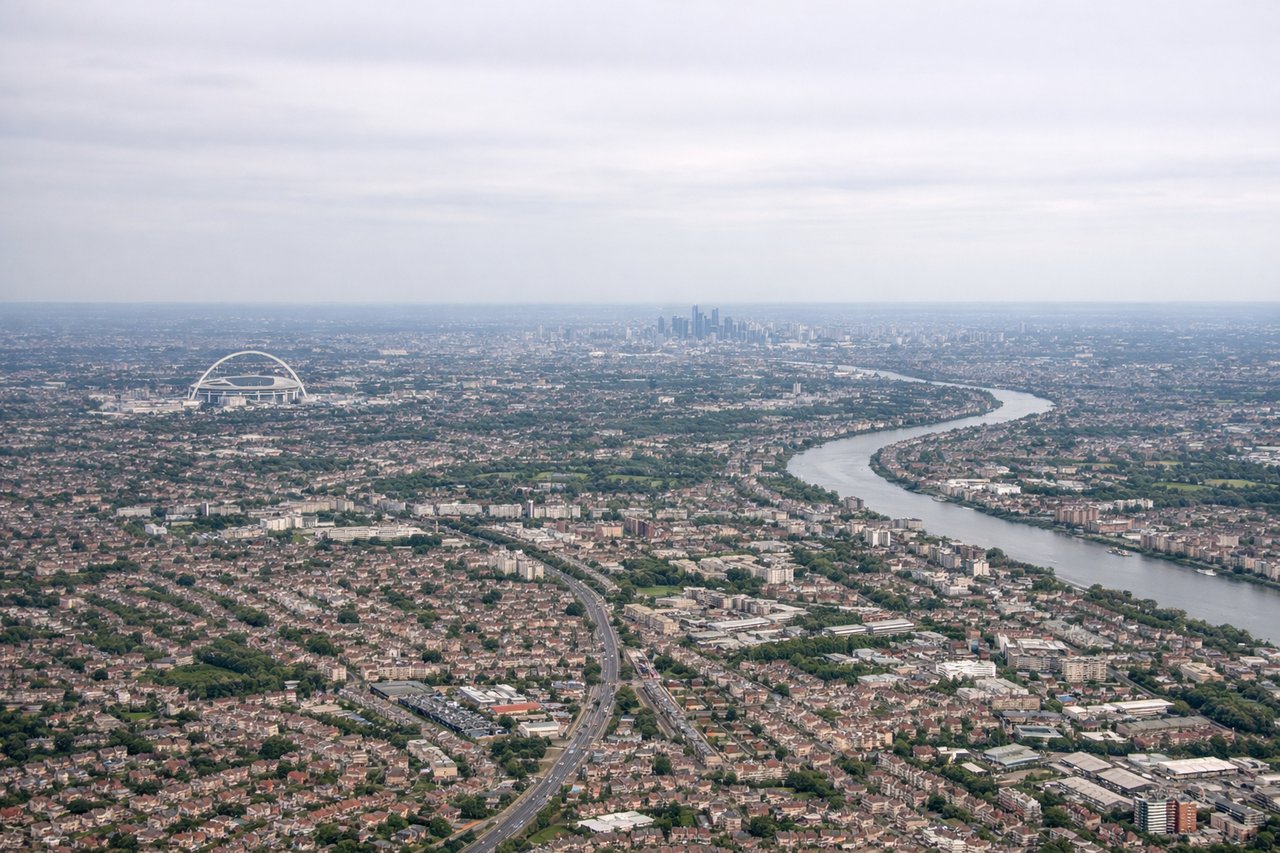
Takeoff from LHR
RIGHTOn the typical westerly departure from Heathrow, the aircraft climbs west then curves slightly north-of-west toward the oceanic track. Passengers on the right (north-facing) side get a good look at the Cotswolds edge, the Severn Estuary, and the Welsh coastline before the land disappears beneath the wing.
Landing at YHZ
LEFTArriving into Halifax on runway 23, the descent path comes in from the northeast over Nova Scotia's forested interior before crossing near Bedford Basin. Passengers on the left (south-facing) side see the Atlantic coastline, Halifax Harbour, and the city skyline as the plane turns onto final approach.
Landmarks on this routeAll landmarks →
Will your flight be in sunlight?
See exactly which side of the plane gets sun and shade at your departure time.
About This Route
Which side of the plane should I sit on flying from Heathrow (LHR) to Halifax International (YHZ)?
Sit on the Right side of the plane for the best views on flights from London to Halifax. Both sides are limited by the long mid-ocean crossing, but the right side edges ahead thanks to clear coastal views of Wales during departure, complementing the otherwise featureless Atlantic cruise; the left side's Halifax approach is scenic but shorter in duration.
What can I see during takeoff from Heathrow in London?
During takeoff from Heathrow (LHR), sit on the Right side for the best views. On the typical westerly departure from Heathrow, the aircraft climbs west then curves slightly north-of-west toward the oceanic track. Passengers on the right (north-facing) side get a good look at the Cotswolds edge, the Severn Estuary, and the Welsh coastline before the land disappears beneath the wing. Notable sights include: Severn Estuary, Bristol Channel, South Wales coastline (Swansea Bay area), patchwork Cotswold countryside.
What can I see when landing at Halifax International in Halifax?
When landing at Halifax International (YHZ), sit on the Left side for the best views. Arriving into Halifax on runway 23, the descent path comes in from the northeast over Nova Scotia's forested interior before crossing near Bedford Basin. Passengers on the left (south-facing) side see the Atlantic coastline, Halifax Harbour, and the city skyline as the plane turns onto final approach. Notable sights include: Bedford Basin, Halifax Harbour, Halifax downtown skyline, Atlantic coastline dotted with inlets.
How long is the flight from London to Halifax?
The flight from Heathrow (LHR) to Halifax International (YHZ) takes 6h 55m.
What does the London to Halifax flight path pass over?
Open North Atlantic Ocean for the majority of the crossing, with no land visible between the Irish coast and the approach to Nova Scotia; occasional cloud decks or, in season, drifting sea ice near the Grand Banks as the coast nears.