While the Lisbon departure offers good river and coastal views, the approach to São Vicente Island provides more dramatic and distinctive scenery—the volcanic landscape and island geography are far more visually striking than the relatively flat Portuguese coastline.
Flight Path
Open Atlantic Ocean for the majority of the flight; the Canary Islands (Tenerife and Gran Canaria) may be visible to the right/south if flying at higher altitude around the midpoint; the African coast (Morocco/Western Sahara) remains distant to the south; the flight path crosses the Atlantic in a southwest direction with no significant landmasses visible for approximately 4 hours of the journey.
Great circle distance and headings ›Phase by phase
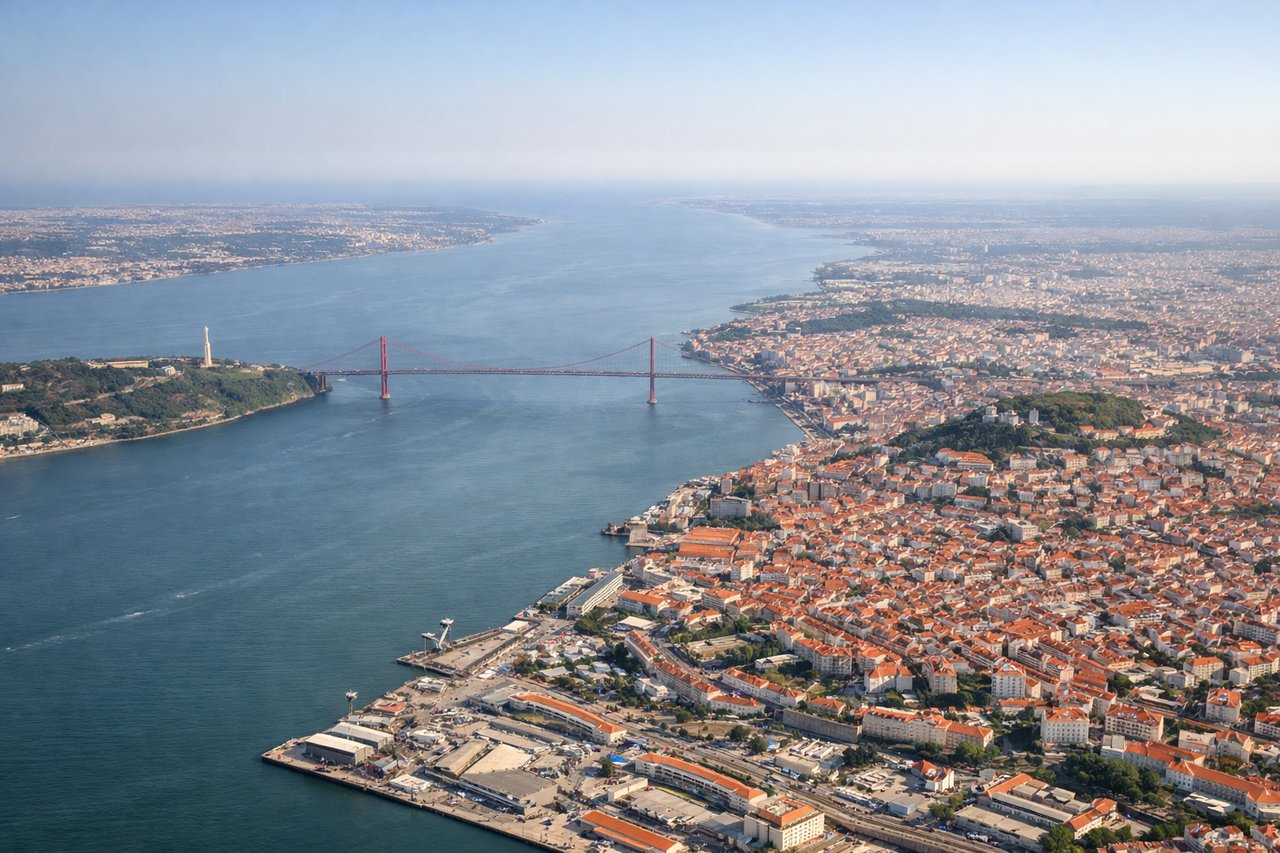
Takeoff from LIS
LEFTLeft side captures the Tagus River estuary and Lisbon's waterfront as the aircraft climbs northwest over the Atlantic. The river's distinctive wide mouth and the city's layout along both banks are clearly visible during initial climb.
Landing at VXE
RIGHTRight side offers the best approach view of São Vicente Island's dramatic volcanic terrain and the island's position within the Cape Verde archipelago. The island's steep cliffs and central peak become increasingly visible during descent.
Landmarks on this routeAll landmarks →
Will your flight be in sunlight?
See exactly which side of the plane gets sun and shade at your departure time.
About This Route
Which side of the plane should I sit on flying from Lisboa (LIS) to Sao Pedro (VXE)?
Sit on the Right side of the plane for the best views on flights from Lisbon to Sao Vicente Island. While the Lisbon departure offers good river and coastal views, the approach to São Vicente Island provides more dramatic and distinctive scenery—the volcanic landscape and island geography are far more visually striking than the relatively flat Portuguese coastline.
What can I see during takeoff from Lisboa in Lisbon?
During takeoff from Lisboa (LIS), sit on the Left side for the best views. Left side captures the Tagus River estuary and Lisbon's waterfront as the aircraft climbs northwest over the Atlantic. The river's distinctive wide mouth and the city's layout along both banks are clearly visible during initial climb. Notable sights include: Tagus River estuary, Lisbon city center and waterfront districts, Atlantic coastline north of Lisbon, Serra da Arrábida mountains (distant, south of the river).
What can I see when landing at Sao Pedro in Sao Vicente Island?
When landing at Sao Pedro (VXE), sit on the Right side for the best views. Right side offers the best approach view of São Vicente Island's dramatic volcanic terrain and the island's position within the Cape Verde archipelago. The island's steep cliffs and central peak become increasingly visible during descent. Notable sights include: São Vicente Island's volcanic peak (Monte Verde, ~774m), island's rugged coastline and cliffs, neighboring Santo Antão Island (visible to the northwest), Atlantic Ocean surrounding the islands.
How long is the flight from Lisbon to Sao Vicente Island?
The flight from Lisboa (LIS) to Sao Pedro (VXE) takes 5h 45m.
What does the Lisbon to Sao Vicente Island flight path pass over?
Open Atlantic Ocean for the majority of the flight; the Canary Islands (Tenerife and Gran Canaria) may be visible to the right/south if flying at higher altitude around the midpoint; the African coast (Morocco/Western Sahara) remains distant to the south; the flight path crosses the Atlantic in a southwest direction with no significant landmasses visible for approximately 4 hours of the journey.