While the takeoff offers volcanic island scenery, the landing approach into Lisbon provides more dramatic and varied visual interest: a major river estuary, a significant European capital city, and the Sintra hills. The left side captures these features most effectively during descent.
Flight Path
Open Atlantic Ocean with occasional shipping traffic; the Azores archipelago (São Miguel, Terceira, Pico) may be visible as distant islands if the flight passes near them depending on routing; the Portuguese coast approaching from the southwest with the Alentejo region's flat terrain visible before reaching the Lisbon approach zone
Great circle distance and headings ›Phase by phase
Takeoff from VXE
RIGHTRight-side seats offer views of São Vicente Island's dramatic volcanic terrain and the broader Cape Verde archipelago as the aircraft climbs northwestward. The island's rugged interior and surrounding Atlantic waters dominate the initial climb-out.
Landing at LIS
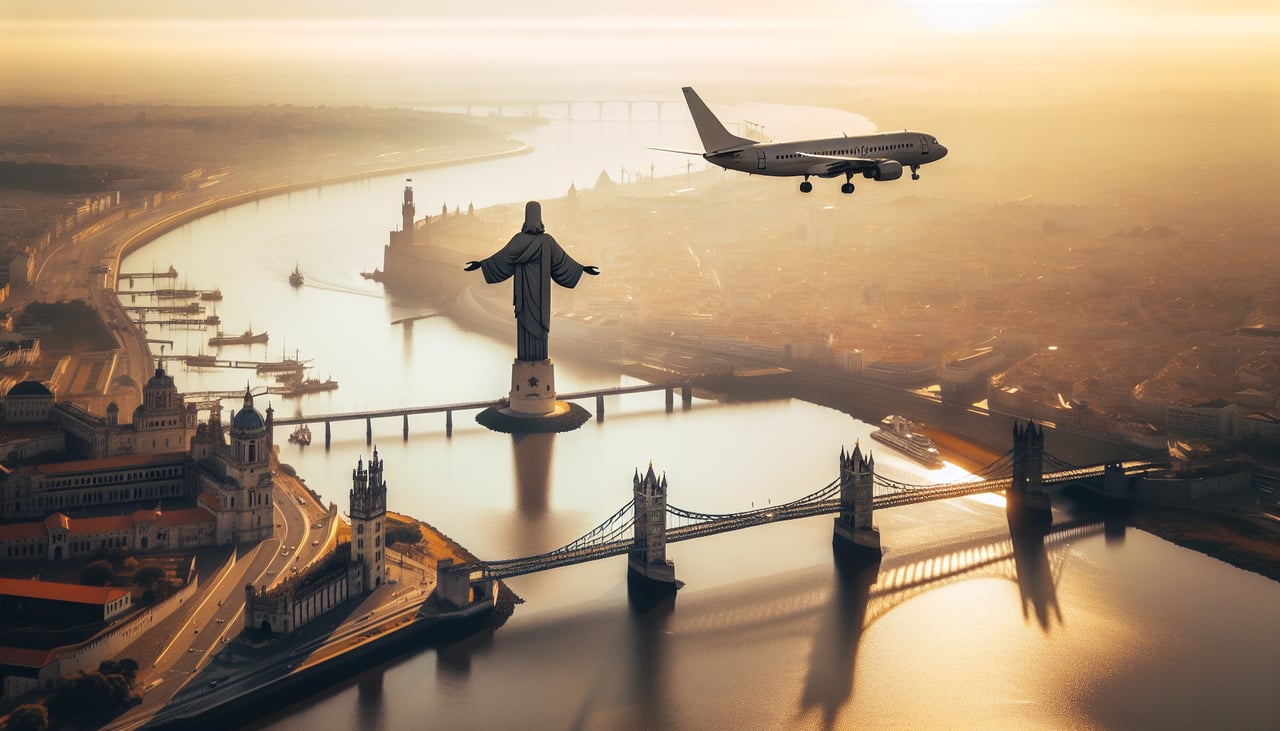
LEFTLeft-side seats provide excellent views during the final approach into Lisbon, including the Tagus River estuary, the city's waterfront districts, and the surrounding hills of the Sintra-Cascais region. The aircraft descends from the northeast, making the left side optimal for viewing these features.
Landmarks on this routeAll landmarks →
Will your flight be in sunlight?
See exactly which side of the plane gets sun and shade at your departure time.
About This Route
Which side of the plane should I sit on flying from Sao Pedro (VXE) to Lisboa (LIS)?
Sit on the Left side of the plane for the best views on flights from Sao Vicente Island to Lisbon. While the takeoff offers volcanic island scenery, the landing approach into Lisbon provides more dramatic and varied visual interest: a major river estuary, a significant European capital city, and the Sintra hills. The left side captures these features most effectively during descent.
What can I see during takeoff from Sao Pedro in Sao Vicente Island?
During takeoff from Sao Pedro (VXE), sit on the Right side for the best views. Right-side seats offer views of São Vicente Island's dramatic volcanic terrain and the broader Cape Verde archipelago as the aircraft climbs northwestward. The island's rugged interior and surrounding Atlantic waters dominate the initial climb-out. Notable sights include: São Vicente Island volcanic peaks, Santo Antão Island (visible to the northwest), Atlantic Ocean, Cape Verde archipelago coastline.
What can I see when landing at Lisboa in Lisbon?
When landing at Lisboa (LIS), sit on the Left side for the best views. Left-side seats provide excellent views during the final approach into Lisbon, including the Tagus River estuary, the city's waterfront districts, and the surrounding hills of the Sintra-Cascais region. The aircraft descends from the northeast, making the left side optimal for viewing these features. Notable sights include: Tagus River estuary, Lisbon city center and waterfront, Sintra hills (northeast), Cascais coastal cliffs.
How long is the flight from Sao Vicente Island to Lisbon?
The flight from Sao Pedro (VXE) to Lisboa (LIS) takes 5h 15m.
What does the Sao Vicente Island to Lisbon flight path pass over?
Open Atlantic Ocean with occasional shipping traffic; the Azores archipelago (São Miguel, Terceira, Pico) may be visible as distant islands if the flight passes near them depending on routing; the Portuguese coast approaching from the southwest with the Alentejo region's flat terrain visible before reaching the Lisbon approach zone